







PH, US armies test HIMARS rocket launcher under China's gaze


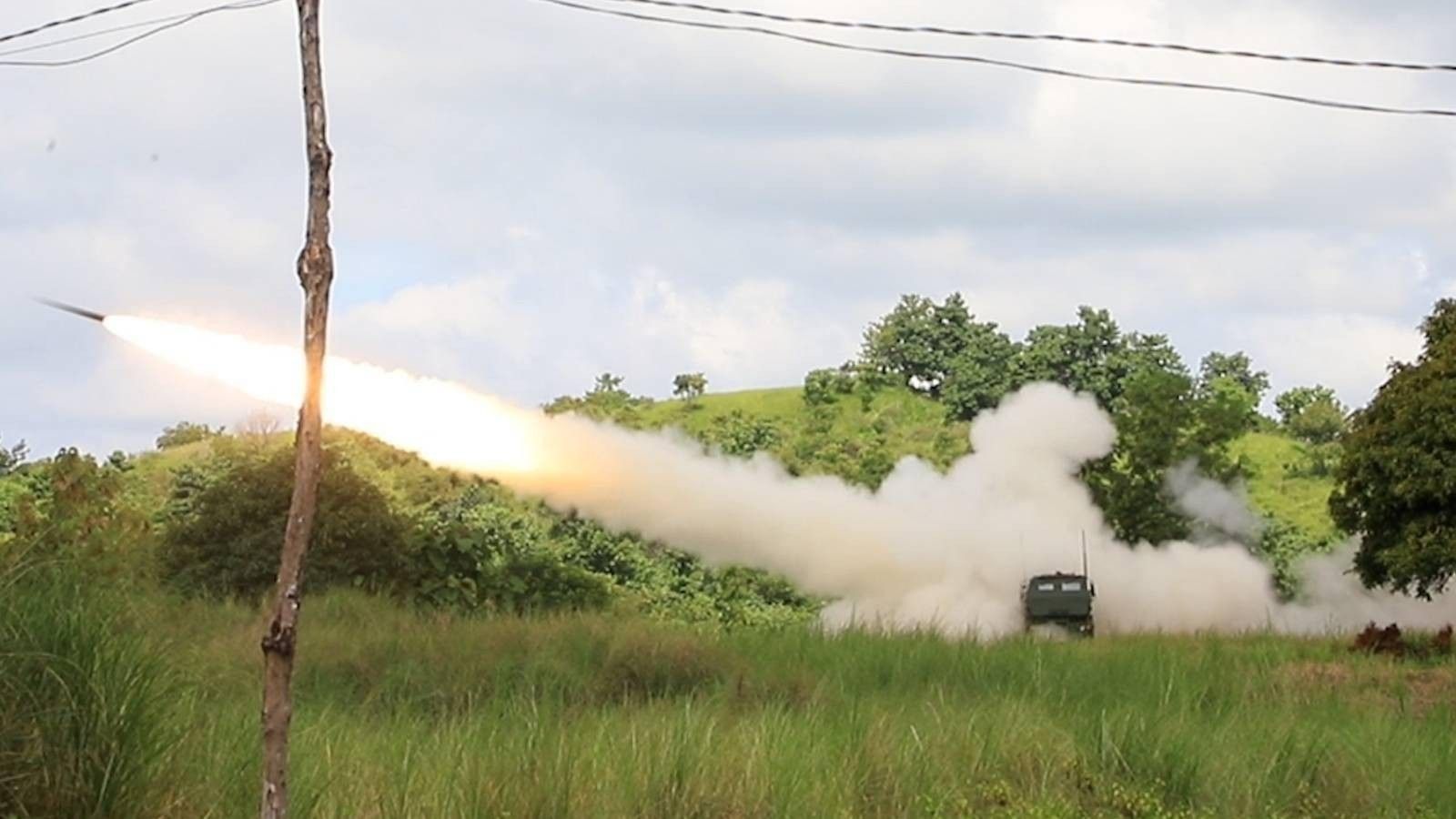
At the backdrop of China’s watchful eyes, the Philippine Army (PA) conducted a live fire exercise using the High Mobility Artillery Rocket System (HIMARS) with the United States Army Pacific (USARPAC) on Friday, Aug. 9.
The use of HIMARS was the highlight of the second phase of the ongoing SALAKNIB Exercise at the Canantong Fire Base in Laur, Nueva Ecija.
The HIMARS is a US-made missile launcher mounted on a five-ton truck that is capable of firing six guided missiles in rapid succession. Its precision was proven during the Ukraine war as it was heavily utilized in neutralizing Russian targets.
During the Salaknib training, the Army Artillery Regiment worked closely together with the field artillery personnel from the US Army's Multi-Domain Task Force to maneuver, reload, and fire the HIMARS batteries, according to PA spokesperson Col. Louie Dema-ala.
“The exercise is a significant component of SALAKNIB, a bilateral training exercise designed to enhance the interoperability and readiness of the Philippine Army and U.S. Army Pacific forces,” Dema-ala said.
PA Commanding General Lt. Gen. Roy Galido commended the “dedication and professionalism” of the Army troops who participated in the exercise.
“Their unwavering commitment to excellence ensures that the Philippine Army remains a formidable force, capable of responding to the evolving challenges of national security,” he noted.
China has yet to react about the use of the HIMARS during the bilateral exercise between the Philippines and US.
But China previously warned the Philippines after the US deployed to Manila another missile system called Typhon for the first phase of the Salaknib Exercise back in April. The midrange missile system was also deployed for the Balikatan Exercise from April to May.
Chinese Foreign Minister Wang Yi was quoted as saying that the US’ deployment of its missile systems to the Philippines “will create tension and confrontation in the region, and trigger an arms race”.
Since July, Manila and Beijing have been renegotiating to de-escalate the tension in the West Philippine Sea (WPS) through their diplomatic channels.
However, Dema-ala earlier downplayed the Chinese official’s remarks as he explained that the deployment of the US missile systems to the Philippines were defensive in nature.