








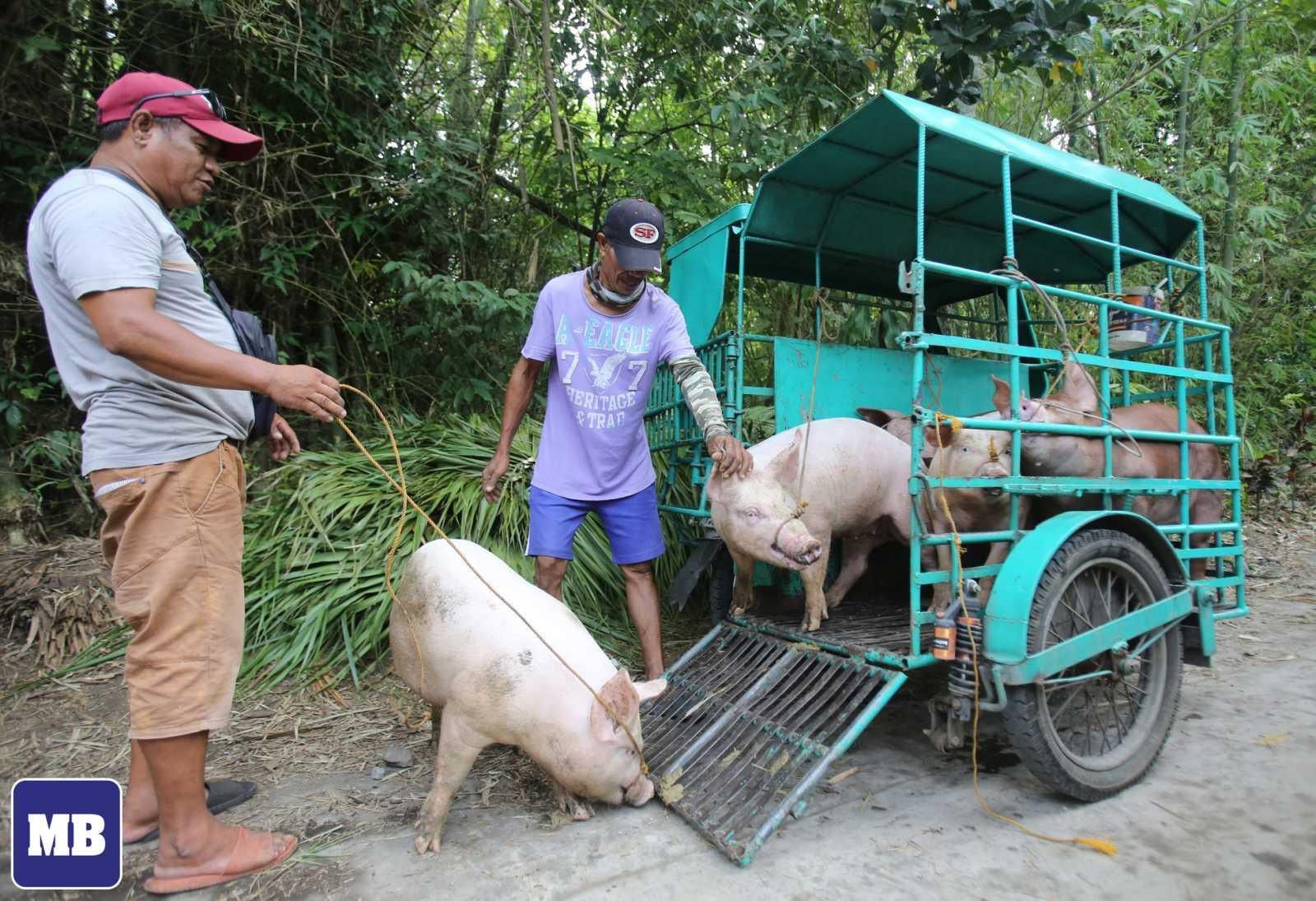
Eight towns in Batangas have been struck by the fatal African Swine Fever (ASF), the Department of Agriculture (DA) disclosed on Friday, August 9.
Agriculture Assistant Secretary Arnel de Mesa, the spokesperson of the DA, identified the eight areas as Lobo, Lian, Calatagan, Rosario, Lipa, Talisay, San Juan, and Tuy.
“Almost 40 barangays ‘yung nagkaroon agad ng ASF sa walong bayan ng Batangas (Almost 40 barangays were immediately affected by ASF in the eight towns of Batangas),” he said during a press briefing.
De Mesa said the towns of Lobo and Calatagan have already declared a state of calamity due to the outbreak of ASF in their areas.
In a bid to stop the spread of the fatal disease to other areas, the agriculture department said a total of 1,523 hogs were depopulated in Batangas.
Data from the DA showed that Batangas has around one million hogs, accounting for 10 percent of the country's total population.
The DA spokesperson highlighted the high mortality rate of ASF, noting that almost 100 percent of hogs affected by the virus do not survive.
Emergency procurement
Earlier, DA Secretary Francisco “Kiko” Tiu Laurel Jr. said that the agriculture department is in the process of arranging for the emergency procurement of ASF vaccines to handle the situation urgently.
“The local government units may need to declare a state of emergency in these Batangas municipalities to enable the DA to respond swiftly to the situation and release funds for the urgent purchase of vaccines,” he said.
In addition to vaccines, he noted that the DA will also supply hog producers in Batangas with industrial lime to treat the areas where condemned swine are buried.
As such, Laurel said that the DA is coordinating with both the police and military to enforce checkpoints to curb the spread of ASF-infected animals.
Per DA Assistant Secretary Dante Palabrica, who oversees swine and poultry and holds a veterinary medicine degree, the DA may need to buy at least 10,000 doses of ASF vaccines for the emergency response.
The DA also noted that emergency procurement could cut the purchase period by about two weeks.
'Not zoonotic'
The ASF virus, according to De Mesa, is not zoonotic in nature, meaning it cannot be transmitted from pigs to humans.
However, he emphasized that in accordance with the Food Safety Act, the slaughtering, selling, or cooking of infected animals is not tolerated.
“So, dapat itong i-dispose properly sa pamamagitan ng paglibing at pagsunog [ang ASF-infected hogs] (So, these ASF-infected hogs should be disposed of properly through burial and incineration),” he said.
“Sa pagkakataon naman na hindi alam na karne ng may sakit na baboy, madali namang mamatay ang virus basta lutuing mabuti. But again, nevertheless gusto natin ay ma-properly ma-dispose iyong mga infected animals (In cases where the meat of infected pigs is not known, the virus can be easily killed if the meat is cooked thoroughly. However, we still prefer to properly dispose of the infected animals),” he went on.
ASF is highly contagious and deadly swine disease that has been devastating swine industries around the world since its resurgence in 2018.
In 2019, ASF resurfaced in the Philippines and has since spread across more than 3,800 barangays in 53 provinces by July 2022.
Due to ASF, local pork production in the Philippines fell by almost a fourth from June to October 2021 against the comparative period in 2020.