






 Opinion
Rising inflation still needs to be tamed; social safety nets for poorest households imperative
Opinion
Rising inflation still needs to be tamed; social safety nets for poorest households imperative
Rising inflation still needs to be tamed; social safety nets for poorest households imperative


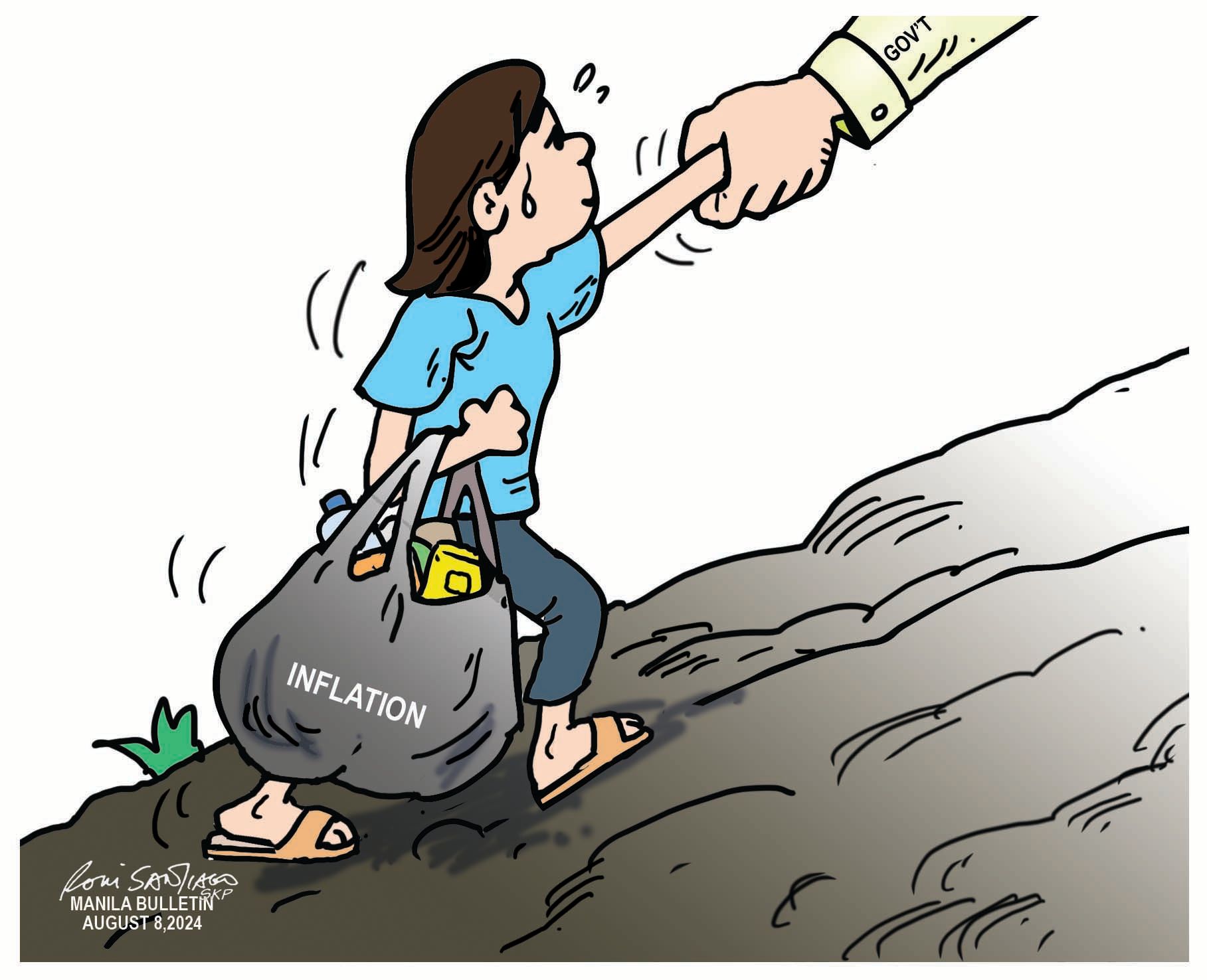
For the first time this year, the inflation rate exceeded the government’s target range of 2.0 percent to 4.0 percent, as it rose to 4.4 percent. Despite this increment, the average inflation rate for the first seven months remained within the target at 3.7 percent. This was the first time since November 2023 that headline inflation breached the 4.0 percent threshold.
According to the Philippine Statistics Authority, the increase was primarily driven by higher inflation rates in both food and non-food items, particularly in liquefied petroleum gas (LPG), fuel, meat, and fruits. The slower decline in electricity and fish prices also contributed to the overall inflation rise.
The National Economic and Development Authority (NEDA) pointed out: “While rice inflation slowed to 20.9 percent from 22.5 percent, it remained the top contributor to the July inflation with 1.9 percentage points (ppt), followed by food and beverages services (0.5 ppt), housing rental (0.3 ppt), and meat (0.3 ppt).”
Finance Secretary Ralph Recto assured that this was likely to be a “one-time uptick,” as he cited the base effect of lower rice prices in July 2023. He pointed out that the amount of rice imported at lower tariffs will increase in the coming months and result in a drop in retail prices of rice.
The Department of Agriculture (DA) has mounted initiatives to ease the burden of high rice prices. Last Aug. 1, it launched the Rice-for-All Program to ease the burden of high rice prices. Under the program, rice will be sold at ₱45 per kilo at selected KADIWA centers, with prices adjusted according to the fluctuations in rice prices. In preparation for La Niña, DA has prepared an array of programs including the availability of the quick response fund, technical and credit assistance, and seed buffer stock. It has also expedited the unclogging of farm drainage systems and constructing water-impounding projects and post-harvest facilities.
Focusing on the big picture, Economic Planning Secretary Arsenio M. Balisacan emphasized: “Between 2023 and 2021, about 2.5 million Filipinos were lifted out of poverty, bringing our country’s poverty incidence down to 15.5 percent from 18.1 percent. Our goal now is to sustain this momentum by addressing the constraints to food security and economic development more broadly.”
Yet, it must be noted that the inflation rate for the bottom 30 percent income households increased to 5.8 percent in July 2024 from 5.5 percent in June 2024, driven by the higher year-on-year growth rate of the housing, water, electricity, gas and other fuels index. Another major pressure on the poorest families was the high price of rice which accounts for 18 percent of their consumption basket compared to 8.9 percent for all-income households.
To address this situation, the Department of Budget and Management released the other day an additional ₱5 billion for the Pantawid Pamilyang Pilipino Program (4Ps) that will be used to assist 703,888 household beneficiaries. This beams the spotlight on the imperative for social safety nets to enable those struggling at the margins to cope with the continuing challenge of meeting their basic needs and seeking a brighter future.