

ADVERTISEMENT

Hair loss: Expert insights on causes and prevention

We talked to Wendy Ng, a hair expert from haircare brand Aveda

Published Aug 6, 2024 01:40 pm

Our hair is our crowning glory.

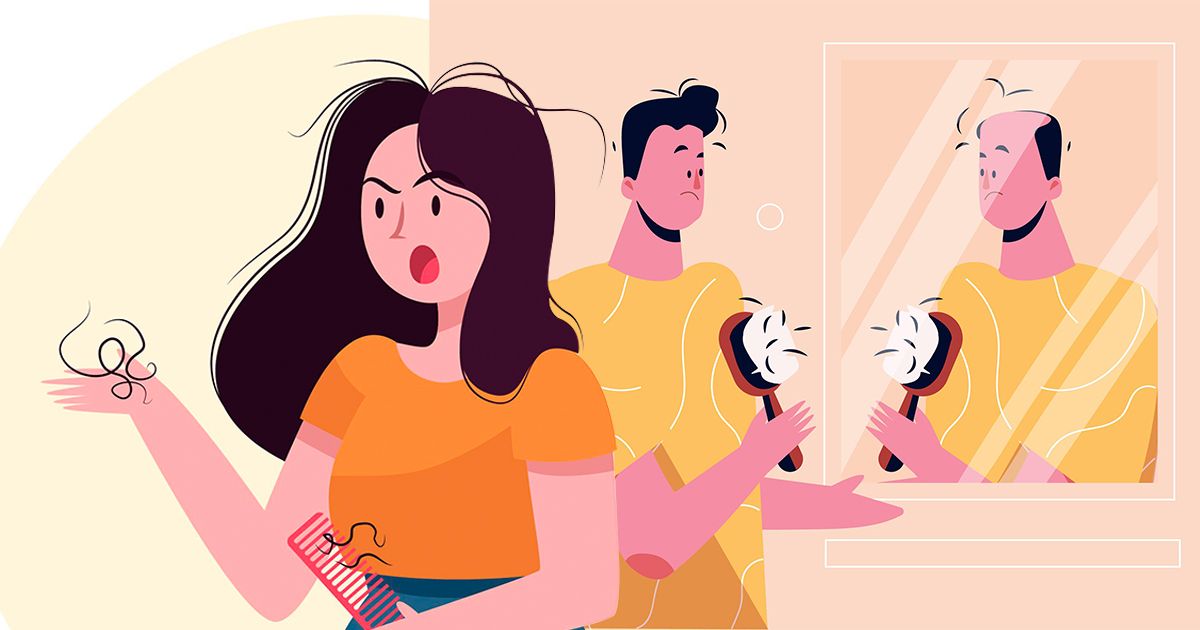
Studies have shown that hair health has a direct impact on self-esteem. An article from Unitedcare Clinic stated that 17 to 81 percent of women feel most confident when their hair looks great. Meanwhile, 14 to 43 percent of men think they lose part of their attractiveness due to hair loss.
AVEDA featured image.jpg

The reality is that it is completely natural for a person to lose 50 to 100 hair strands per day. However, some may lose more, raising concerns about hair loss and thinning. To shed light on this natural bodily phenomenon, we spoke with Wendy Ng, a hair expert from the haircare brand Aveda. She discussed possible causes and preventive measures one can take to combat hair loss.

What are the common causes of hair loss?

There are many reasons that the hair and scalp can change over time, such as environment, lifestyle, diet, hormones, aging, etc. 

Let’s begin with the “Origin story” of hair. Our bodily functions run on cycles: skin renewal cycle (~28 days), circadian cycle (Sleep-wake cycle), menstrual cycle, sleep cycle (different stages of deep/ light sleep, etc.). One of the key factors that affect the Hair Lifecycle is the health of the hair follicle. When the follicle is unhealthy, the anagen (hair growth) phase can become shorter, and the telogen (resting) phase can become longer. In an unhealthy follicle environment, the timeline of the resting and shedding phase stays longer than before. Comparatively speaking, the growth phase is shortened. If this happens, the guest will experience noticeably increased hair fall and a general hair thinning. So, it is important to protect the follicles to help support a healthy hair lifecycle.

Aside from the above, other common factors that promote hair loss can also be derived from extrinsic stressors due to pollution and oxidative stress. Lacking support to the scalp’s natural antioxidant system due to poor nutritional deficiencies, lifestyle, hormonal imbalance, under medication, and genetics.

AvedaXPvfotographs-502.jpg

In what age bracket or stage/s of life does hair fall usually begin?

Thinning hair and hair loss can happen at any age and to anyone. According to market trends and studies, the underlying factors of thinning hair are getting more diverse in terms of age range and consumer profiles.

With the complexity of modern-day lifestyles, thinning hair and hair loss are becoming more common. The hair loss market is the fastest-growing sector globally and is projected to accelerate. 

Who is more susceptible to hair loss, men or women?

Men are much more likely to experience hair loss at some point in their lives than women. Because men tend to have naturally higher levels of testosterone than women, one explanation may be that this is what causes men to go bald quicker.

Some people think that the regular use of shampoo is a habit that leads to hair fall. Is it true?

There is no scientific proof that ‘regular use of shampoo is a habit that leads to hair fall’ and most shampoos will not cause actual hair loss. Pick a suitable shampoo that caters to your scalp/hair needs, and wash gently, especially on the scalp, if you are experiencing thinning hair issues.

To help those dealing with hair loss, Avenda launched its Invanti Ultra Advance line. With its four-step system, this collection promises to reduce hair loss by up to 85 percent while instantly thickening hair by up to 11 percent.

It is now available in Rustan's Makati, Greenbelt 5, Megamall, LOOK SM Aura & MOA, and Lazada. 

Related Tags

haircare hair loss
ADVERTISEMENT
.most-popular .layout-ratio{ padding-bottom: 79.13%; } @media (min-width: 768px) and (max-width: 1024px) { .widget-title { font-size: 15px !important; } }

{{ articles_filter_1561_widget.title }}

.most-popular .layout-ratio{ padding-bottom: 79.13%; } @media (min-width: 768px) and (max-width: 1024px) { .widget-title { font-size: 15px !important; } }

{{ articles_filter_1562_widget.title }}

.most-popular .layout-ratio{ padding-bottom: 79.13%; } @media (min-width: 768px) and (max-width: 1024px) { .widget-title { font-size: 15px !important; } }

{{ articles_filter_1563_widget.title }}

{{ articles_filter_1564_widget.title }}

.mb-article-details { position: relative; } .mb-article-details .article-body-preview, .mb-article-details .article-body-summary{ font-size: 17px; line-height: 30px; font-family: "Libre Caslon Text", serif; color: #000; } .mb-article-details .article-body-preview iframe , .mb-article-details .article-body-summary iframe{ width: 100%; margin: auto; } .read-more-background { background: linear-gradient(180deg, color(display-p3 1.000 1.000 1.000 / 0) 13.75%, color(display-p3 1.000 1.000 1.000 / 0.8) 30.79%, color(display-p3 1.000 1.000 1.000) 72.5%); position: absolute; height: 200px; width: 100%; bottom: 0; display: flex; justify-content: center; align-items: center; padding: 0; } .read-more-background a{ color: #000; } .read-more-btn { padding: 17px 45px; font-family: Inter; font-weight: 700; font-size: 18px; line-height: 16px; text-align: center; vertical-align: middle; border: 1px solid black; background-color: white; } .hidden { display: none; }
function initializeAllSwipers() { // Get all hidden inputs with cms_article_id document.querySelectorAll('[id^="cms_article_id_"]').forEach(function (input) { const cmsArticleId = input.value; const articleSelector = '#article-' + cmsArticleId + ' .body_images'; const swiperElement = document.querySelector(articleSelector); if (swiperElement && !swiperElement.classList.contains('swiper-initialized')) { new Swiper(articleSelector, { loop: true, pagination: false, navigation: { nextEl: '#article-' + cmsArticleId + ' .swiper-button-next', prevEl: '#article-' + cmsArticleId + ' .swiper-button-prev', }, }); } }); } setTimeout(initializeAllSwipers, 3000); const intersectionObserver = new IntersectionObserver( (entries) => { entries.forEach((entry) => { if (entry.isIntersecting) { const newUrl = entry.target.getAttribute("data-url"); if (newUrl) { history.pushState(null, null, newUrl); let article = entry.target; // Extract metadata const author = article.querySelector('.author-section').textContent.replace('By', '').trim(); const section = article.querySelector('.section-info ').textContent.replace(' ', ' '); const title = article.querySelector('.article-title h1').textContent; // Parse URL for Chartbeat path format const parsedUrl = new URL(newUrl, window.location.origin); const cleanUrl = parsedUrl.host + parsedUrl.pathname; // Update Chartbeat configuration if (typeof window._sf_async_config !== 'undefined') { window._sf_async_config.path = cleanUrl; window._sf_async_config.sections = section; window._sf_async_config.authors = author; } // Track virtual page view with Chartbeat if (typeof pSUPERFLY !== 'undefined' && typeof pSUPERFLY.virtualPage === 'function') { try { pSUPERFLY.virtualPage({ path: cleanUrl, title: title, sections: section, authors: author }); } catch (error) { console.error('ping error', error); } } // Optional: Update document title if (title && title !== document.title) { document.title = title; } } } }); }, { threshold: 0.1 } ); function showArticleBody(button) { const article = button.closest("article"); const summary = article.querySelector(".article-body-summary"); const body = article.querySelector(".article-body-preview"); const readMoreSection = article.querySelector(".read-more-background"); // Hide summary and read-more section summary.style.display = "none"; readMoreSection.style.display = "none"; // Show the full article body body.classList.remove("hidden"); } document.addEventListener("DOMContentLoaded", () => { let loadCount = 0; // Track how many times articles are loaded const offset = [1, 2, 3, 4, 5, 6, 7, 8, 9, 10]; // Offset values const currentUrl = window.location.pathname.substring(1); let isLoading = false; // Prevent multiple calls if (!currentUrl) { console.log("Current URL is invalid."); return; } const sentinel = document.getElementById("load-more-sentinel"); if (!sentinel) { console.log("Sentinel element not found."); return; } function isSentinelVisible() { const rect = sentinel.getBoundingClientRect(); return ( rect.top < window.innerHeight && rect.bottom >= 0 ); } function onScroll() { if (isLoading) return; if (isSentinelVisible()) { if (loadCount >= offset.length) { console.log("Maximum load attempts reached."); window.removeEventListener("scroll", onScroll); return; } isLoading = true; const currentOffset = offset[loadCount]; window.loadMoreItems().then(() => { let article = document.querySelector('#widget_1690 > div:nth-last-of-type(2) article'); intersectionObserver.observe(article) loadCount++; }).catch(error => { console.error("Error loading more items:", error); }).finally(() => { isLoading = false; }); } } window.addEventListener("scroll", onScroll); });

Sign up by email to receive news.