ADVERTISEMENT

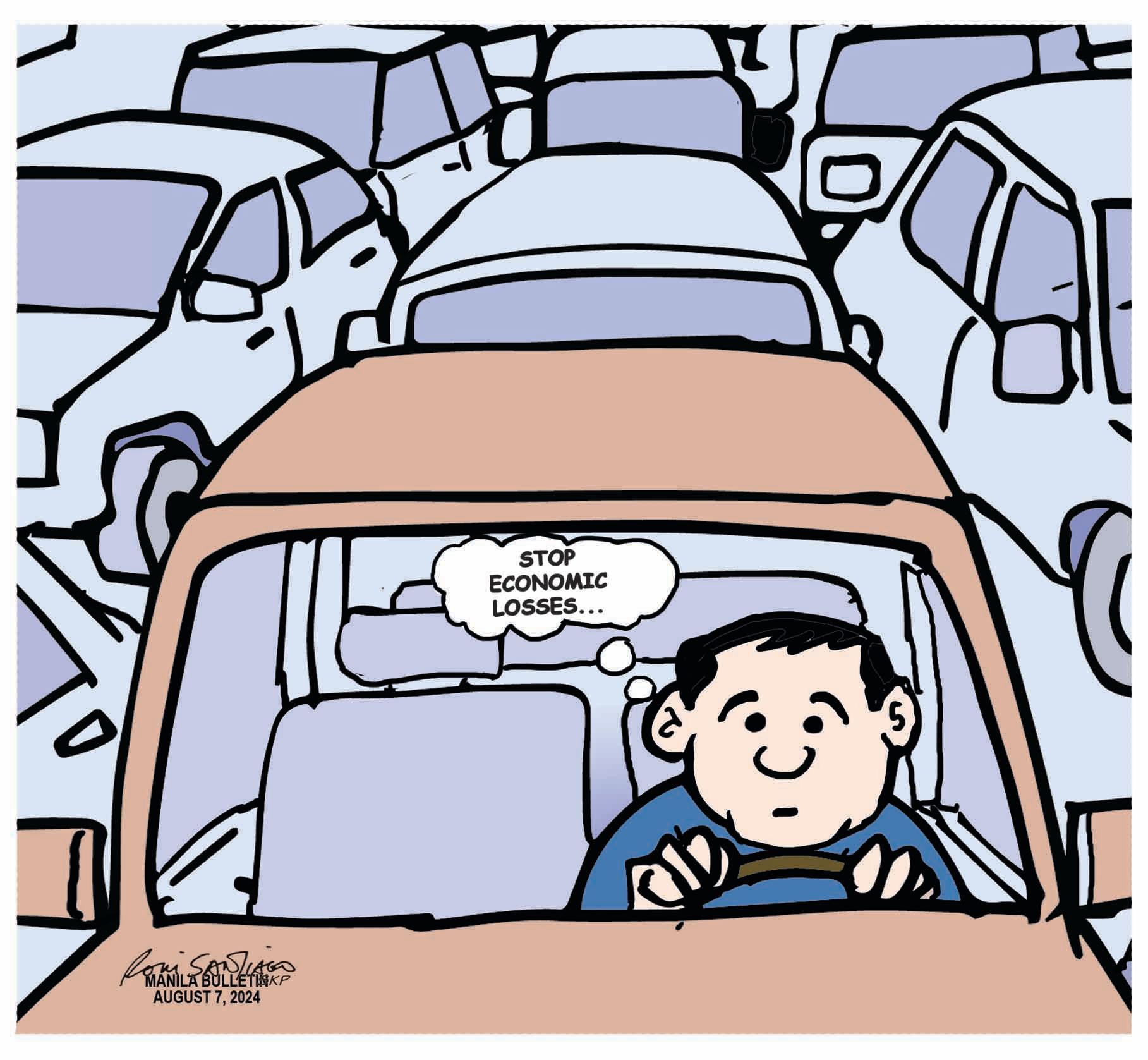
Decongest Metro Manila, shield economy from losses

Published Aug 6, 2024 04:12 pm

E CARTOON AUG 7, 2024_NEW.jpg


The traffic gridlock on Aug. 5, 2024, triggered by the “Unity Walk” staged by groups opposing a Senate resolution calling for the suspension of the public utility vehicle modernization plan, once again underscored the need to address congestion in Metro Manila.


Just imagine a protest action keeping Metro Manila almost at a standstill for hours. This should serve as a wake-up call.


In fact, in March this year, the Management Association of the Philippines said that the National Capital Region (NCR) is incurring economic losses of around ₱3.5 billion daily due to traffic congestion. And this could balloon to ₱6 billion daily in 2030, according to a separate study conducted by the Japan International Cooperation Agency (JICA), in conjunction with the National Economic and Development Authority.


This is how bad the traffic situation is in Metro Manila.


In a bid to address congestion in Metro Manila, Senate Bill No. 876 — a measure seeking to transfer the seat of the national government to New Clark City in Tarlac – was filed on Aug. 7, 2019.


The bill cited previous government efforts to ease traffic, including building more roads and bridges and implementing various traffic policies such as the number-coding scheme, the restriction against provincial buses in the NCR, and the ban on “driver-only” vehicles along EDSA.


However, these have minimal effect. In fact, with more roads, the more cars we have.


Beyond easing the congestion problems in Metro Manila, the bill noted that the transfer of the seat of government to New Clark City is also expected to spread development to other parts of the country, generate jobs for Filipinos, and help the economy achieve sustainable growth.
This could have been a step in the right direction. However, the bill never made any headway.


With Metro Manila already having a population density of 21,765 persons per square kilometer as of 2020, it is crucial to decongest the capital region. Metro Manila or the National Capital Region is composed of 16 highly urbanized cities and one municipality with a population of 13.5 million as of 2020 census, according to the Philippine Statistics Authority.


Recent PSA data shows that in the past five years, 500,000 residents have left Metro Manila; within the same period, there were 381,000 new entrants coming into the NCR. The net decrease is still not enough to ease congestion significantly, especially considering that it is the office and commercial workers, as well as transitory commuters, who form the bulk of the daytime population whose presence serves as a magnet for increased vehicular traffic.
Indeed, the national government must exercise political will in providing long-term solutions to this decades-old problem. A few decades ago, many government offices were relocated to Quezon City which was designated as the country’s capital for a few years. Just the other week, outgoing President Joko Widodo went to work in new offices built in Nusantara, East Kalimantan, Indonesia’s new capital city.


It is time that concrete actions be taken to decisively address urban congestion in Metro Manila that is detrimental to the citizens’ well-being.

Related Tags

Editorial
ADVERTISEMENT
.most-popular .layout-ratio{ padding-bottom: 79.13%; } @media (min-width: 768px) and (max-width: 1024px) { .widget-title { font-size: 15px !important; } }

{{ articles_filter_1561_widget.title }}

.most-popular .layout-ratio{ padding-bottom: 79.13%; } @media (min-width: 768px) and (max-width: 1024px) { .widget-title { font-size: 15px !important; } }

{{ articles_filter_1562_widget.title }}

.most-popular .layout-ratio{ padding-bottom: 79.13%; } @media (min-width: 768px) and (max-width: 1024px) { .widget-title { font-size: 15px !important; } }

{{ articles_filter_1563_widget.title }}

{{ articles_filter_1564_widget.title }}

.mb-article-details { position: relative; } .mb-article-details .article-body-preview, .mb-article-details .article-body-summary{ font-size: 17px; line-height: 30px; font-family: "Libre Caslon Text", serif; color: #000; } .mb-article-details .article-body-preview iframe , .mb-article-details .article-body-summary iframe{ width: 100%; margin: auto; } .read-more-background { background: linear-gradient(180deg, color(display-p3 1.000 1.000 1.000 / 0) 13.75%, color(display-p3 1.000 1.000 1.000 / 0.8) 30.79%, color(display-p3 1.000 1.000 1.000) 72.5%); position: absolute; height: 200px; width: 100%; bottom: 0; display: flex; justify-content: center; align-items: center; padding: 0; } .read-more-background a{ color: #000; } .read-more-btn { padding: 17px 45px; font-family: Inter; font-weight: 700; font-size: 18px; line-height: 16px; text-align: center; vertical-align: middle; border: 1px solid black; background-color: white; } .hidden { display: none; }
function initializeAllSwipers() { // Get all hidden inputs with cms_article_id document.querySelectorAll('[id^="cms_article_id_"]').forEach(function (input) { const cmsArticleId = input.value; const articleSelector = '#article-' + cmsArticleId + ' .body_images'; const swiperElement = document.querySelector(articleSelector); if (swiperElement && !swiperElement.classList.contains('swiper-initialized')) { new Swiper(articleSelector, { loop: true, pagination: false, navigation: { nextEl: '#article-' + cmsArticleId + ' .swiper-button-next', prevEl: '#article-' + cmsArticleId + ' .swiper-button-prev', }, }); } }); } setTimeout(initializeAllSwipers, 3000); const intersectionObserver = new IntersectionObserver( (entries) => { entries.forEach((entry) => { if (entry.isIntersecting) { const newUrl = entry.target.getAttribute("data-url"); if (newUrl) { history.pushState(null, null, newUrl); let article = entry.target; // Extract metadata const author = article.querySelector('.author-section').textContent.replace('By', '').trim(); const section = article.querySelector('.section-info ').textContent.replace(' ', ' '); const title = article.querySelector('.article-title h1').textContent; // Parse URL for Chartbeat path format const parsedUrl = new URL(newUrl, window.location.origin); const cleanUrl = parsedUrl.host + parsedUrl.pathname; // Update Chartbeat configuration if (typeof window._sf_async_config !== 'undefined') { window._sf_async_config.path = cleanUrl; window._sf_async_config.sections = section; window._sf_async_config.authors = author; } // Track virtual page view with Chartbeat if (typeof pSUPERFLY !== 'undefined' && typeof pSUPERFLY.virtualPage === 'function') { try { pSUPERFLY.virtualPage({ path: cleanUrl, title: title, sections: section, authors: author }); } catch (error) { console.error('ping error', error); } } // Optional: Update document title if (title && title !== document.title) { document.title = title; } } } }); }, { threshold: 0.1 } ); function showArticleBody(button) { const article = button.closest("article"); const summary = article.querySelector(".article-body-summary"); const body = article.querySelector(".article-body-preview"); const readMoreSection = article.querySelector(".read-more-background"); // Hide summary and read-more section summary.style.display = "none"; readMoreSection.style.display = "none"; // Show the full article body body.classList.remove("hidden"); } document.addEventListener("DOMContentLoaded", () => { let loadCount = 0; // Track how many times articles are loaded const offset = [1, 2, 3, 4, 5, 6, 7, 8, 9, 10]; // Offset values const currentUrl = window.location.pathname.substring(1); let isLoading = false; // Prevent multiple calls if (!currentUrl) { console.log("Current URL is invalid."); return; } const sentinel = document.getElementById("load-more-sentinel"); if (!sentinel) { console.log("Sentinel element not found."); return; } function isSentinelVisible() { const rect = sentinel.getBoundingClientRect(); return ( rect.top < window.innerHeight && rect.bottom >= 0 ); } function onScroll() { if (isLoading) return; if (isSentinelVisible()) { if (loadCount >= offset.length) { console.log("Maximum load attempts reached."); window.removeEventListener("scroll", onScroll); return; } isLoading = true; const currentOffset = offset[loadCount]; window.loadMoreItems().then(() => { let article = document.querySelector('#widget_1690 > div:nth-last-of-type(2) article'); intersectionObserver.observe(article) loadCount++; }).catch(error => { console.error("Error loading more items:", error); }).finally(() => { isLoading = false; }); } } window.addEventListener("scroll", onScroll); });

Sign up by email to receive news.