ADVERTISEMENT

PCG observes Chinese research vessel with erratic AIS transmissions in WPS

Published Aug 4, 2024 03:34 am
Chinese research vessel.jpeg
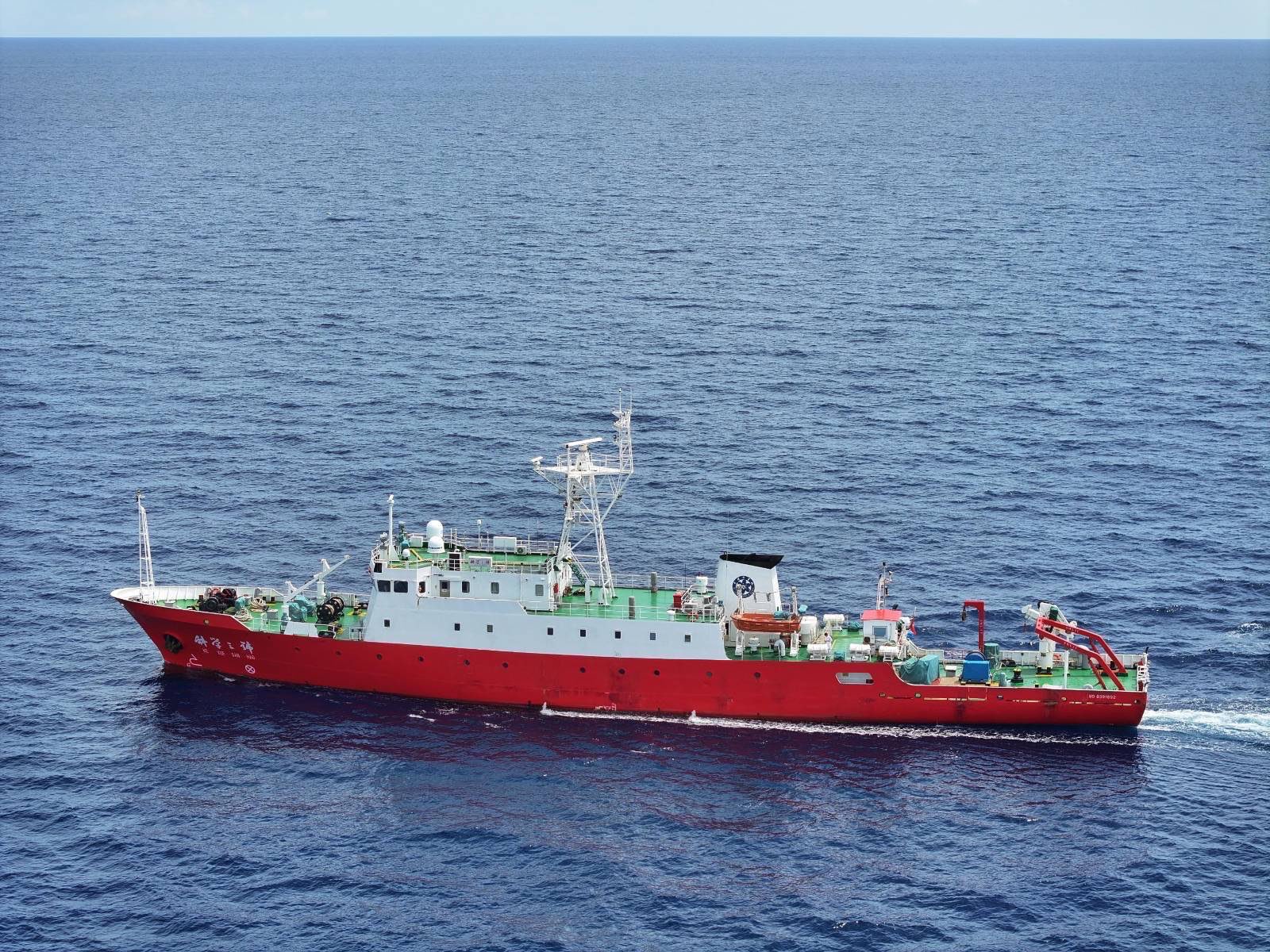
Chinese research vessel Ke Xue San Hao has been navigating throug several critical locations in the West Philippine Sea (WPS) since July 26, 2024, according to the Philippine Coast Guard.  (Courtesy of PCG)

A Chinese research vessel has been closely monitored by the Philippine Coast Guard (PCG) while sailing in different features of the West Philippine Sea (WPS), a coast guard spokesperson disclosed.

“Ke Xue San Hao,” a multi-purpose oceanographic research vessel, exhibited “irregular” Automatic Identification System (AIS) transmissions while navigating the northern part of Escoda (Sabina) Shoal at 4 p.m. Saturday, August 3, according to PCG spokesperson for WPS Commo. Jay Tarriela.

“Additionally, the BRP Teresa Magbanua (MRRV-9701) has been physically tracking the Chinese research vessel since it passed her dead astern approximately 5.5 nautical miles,” Tarriela said.

According to Tarriela, the Ke Xue San Hao is designed by the Marine Design and Research Institute of China.

It is equipped with advanced technology that enables comprehensive marine environment observation, detection, sampling, and analysis, the coast guard spokesman added.

Based on the PCG’s monitoring using the dark vessel detection program, the Chinese research vessel departed from Panganiban (Mischief) Reef on July 26. 

It has since passed through several critical locations including Ayungin (Second Thomas) Shoal, Raja Soliman Shoal (Boxall Reef), Bulig (First Thomas) Shoal, Hasa Hasa (Half Moon) Shoal, and Abad Santos Shoal, before it eventually reached Escoda Shoal.

Escoda Shoal is located just 75 nautical miles or about 140 kilometers from Palawan. It serves as the rendezvous point of the Armed Forces of the Philippines (AFP) whenever it conducts resupply missions to the BRP Sierra Madre outpost in Ayungin Shoal.

The PCG did not indicate why the Chinese research vessel was emitting irregular AIS transmissions while navigating the WPS.

AIS serves as the “eyes” of the ships as it helps them communicate with each other while sailing at sea, preventing potential maritime incidents. It transmits a ship's position to other vessels so they are aware of each other’s position.

Manila and Beijing have been working to de-escalate the tension in the WPS through diplomatic talks especially after the violent June 17 resupply mission where a Filipino sailor lost his thumb.

Related Tags

WPS PCG PH-China
ADVERTISEMENT
.most-popular .layout-ratio{ padding-bottom: 79.13%; } @media (min-width: 768px) and (max-width: 1024px) { .widget-title { font-size: 15px !important; } }

{{ articles_filter_1561_widget.title }}

.most-popular .layout-ratio{ padding-bottom: 79.13%; } @media (min-width: 768px) and (max-width: 1024px) { .widget-title { font-size: 15px !important; } }

{{ articles_filter_1562_widget.title }}

.most-popular .layout-ratio{ padding-bottom: 79.13%; } @media (min-width: 768px) and (max-width: 1024px) { .widget-title { font-size: 15px !important; } }

{{ articles_filter_1563_widget.title }}

{{ articles_filter_1564_widget.title }}

.mb-article-details { position: relative; } .mb-article-details .article-body-preview, .mb-article-details .article-body-summary{ font-size: 17px; line-height: 30px; font-family: "Libre Caslon Text", serif; color: #000; } .mb-article-details .article-body-preview iframe , .mb-article-details .article-body-summary iframe{ width: 100%; margin: auto; } .read-more-background { background: linear-gradient(180deg, color(display-p3 1.000 1.000 1.000 / 0) 13.75%, color(display-p3 1.000 1.000 1.000 / 0.8) 30.79%, color(display-p3 1.000 1.000 1.000) 72.5%); position: absolute; height: 200px; width: 100%; bottom: 0; display: flex; justify-content: center; align-items: center; padding: 0; } .read-more-background a{ color: #000; } .read-more-btn { padding: 17px 45px; font-family: Inter; font-weight: 700; font-size: 18px; line-height: 16px; text-align: center; vertical-align: middle; border: 1px solid black; background-color: white; } .hidden { display: none; }
function initializeAllSwipers() { // Get all hidden inputs with cms_article_id document.querySelectorAll('[id^="cms_article_id_"]').forEach(function (input) { const cmsArticleId = input.value; const articleSelector = '#article-' + cmsArticleId + ' .body_images'; const swiperElement = document.querySelector(articleSelector); if (swiperElement && !swiperElement.classList.contains('swiper-initialized')) { new Swiper(articleSelector, { loop: true, pagination: false, navigation: { nextEl: '#article-' + cmsArticleId + ' .swiper-button-next', prevEl: '#article-' + cmsArticleId + ' .swiper-button-prev', }, }); } }); } setTimeout(initializeAllSwipers, 3000); const intersectionObserver = new IntersectionObserver( (entries) => { entries.forEach((entry) => { if (entry.isIntersecting) { const newUrl = entry.target.getAttribute("data-url"); if (newUrl) { history.pushState(null, null, newUrl); let article = entry.target; // Extract metadata const author = article.querySelector('.author-section').textContent.replace('By', '').trim(); const section = article.querySelector('.section-info ').textContent.replace(' ', ' '); const title = article.querySelector('.article-title h1').textContent; // Parse URL for Chartbeat path format const parsedUrl = new URL(newUrl, window.location.origin); const cleanUrl = parsedUrl.host + parsedUrl.pathname; // Update Chartbeat configuration if (typeof window._sf_async_config !== 'undefined') { window._sf_async_config.path = cleanUrl; window._sf_async_config.sections = section; window._sf_async_config.authors = author; } // Track virtual page view with Chartbeat if (typeof pSUPERFLY !== 'undefined' && typeof pSUPERFLY.virtualPage === 'function') { try { pSUPERFLY.virtualPage({ path: cleanUrl, title: title, sections: section, authors: author }); } catch (error) { console.error('ping error', error); } } // Optional: Update document title if (title && title !== document.title) { document.title = title; } } } }); }, { threshold: 0.1 } ); function showArticleBody(button) { const article = button.closest("article"); const summary = article.querySelector(".article-body-summary"); const body = article.querySelector(".article-body-preview"); const readMoreSection = article.querySelector(".read-more-background"); // Hide summary and read-more section summary.style.display = "none"; readMoreSection.style.display = "none"; // Show the full article body body.classList.remove("hidden"); } document.addEventListener("DOMContentLoaded", () => { let loadCount = 0; // Track how many times articles are loaded const offset = [1, 2, 3, 4, 5, 6, 7, 8, 9, 10]; // Offset values const currentUrl = window.location.pathname.substring(1); let isLoading = false; // Prevent multiple calls if (!currentUrl) { console.log("Current URL is invalid."); return; } const sentinel = document.getElementById("load-more-sentinel"); if (!sentinel) { console.log("Sentinel element not found."); return; } function isSentinelVisible() { const rect = sentinel.getBoundingClientRect(); return ( rect.top < window.innerHeight && rect.bottom >= 0 ); } function onScroll() { if (isLoading) return; if (isSentinelVisible()) { if (loadCount >= offset.length) { console.log("Maximum load attempts reached."); window.removeEventListener("scroll", onScroll); return; } isLoading = true; const currentOffset = offset[loadCount]; window.loadMoreItems().then(() => { let article = document.querySelector('#widget_1690 > div:nth-last-of-type(2) article'); intersectionObserver.observe(article) loadCount++; }).catch(error => { console.error("Error loading more items:", error); }).finally(() => { isLoading = false; }); } } window.addEventListener("scroll", onScroll); });

Sign up by email to receive news.