







Marcos OKs increased fund for massive coconut planting


President Marcos has approved increasing the budget for the massive planting and replanting programs of the coconut industry for 2025.
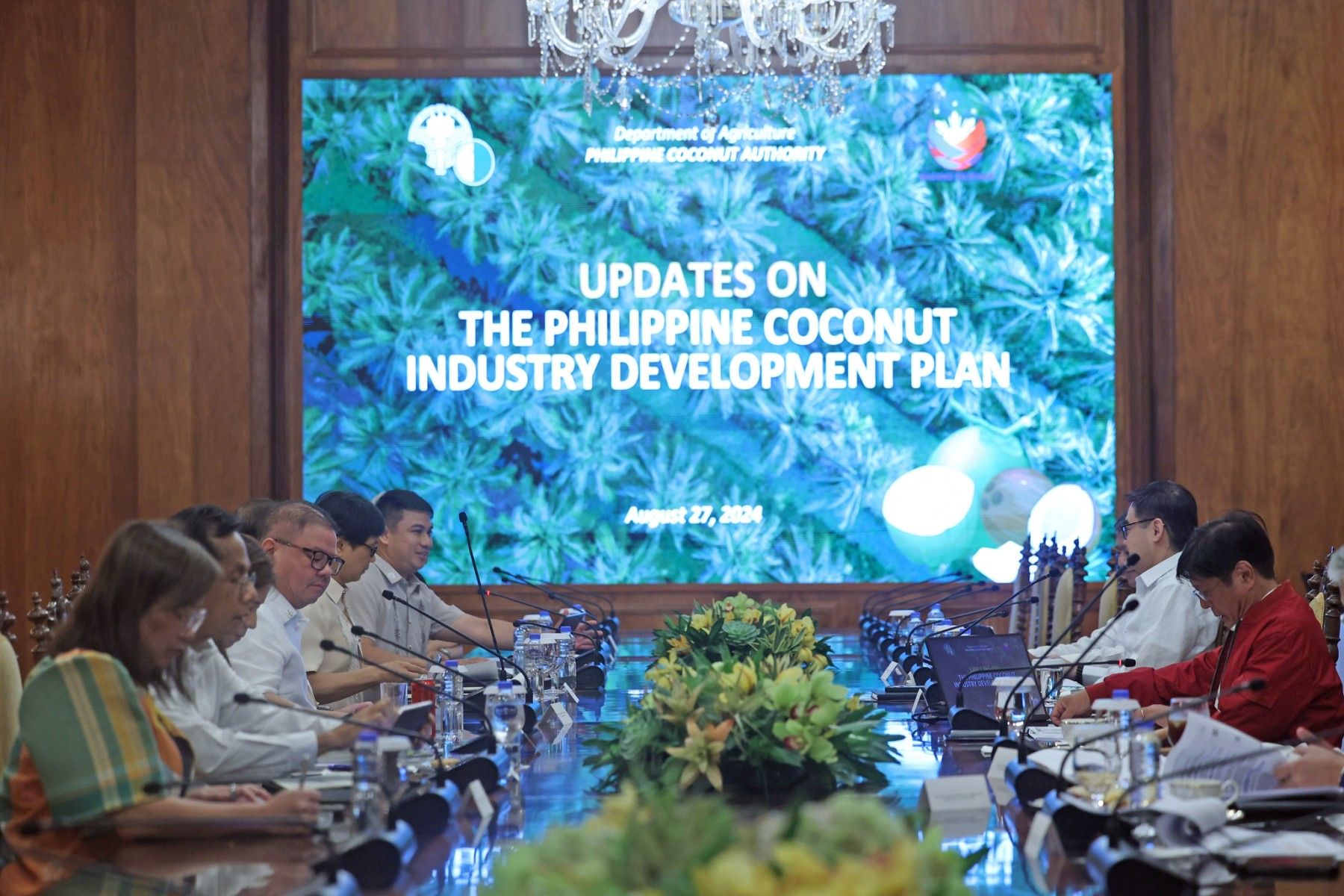
Malacañang said Marcos approved the increased budget for planting and replanting amounting to P1 billion and fertilization program amounting to P2.5 billion during a sectoral meeting on Tuesday, Aug. 27.
Under the Philippine Coconut Industry Development Plan 2024-2034 (PCIDP 2024-2034), the Philippine Coconut Industry aims to plant 100 million coconut trees by 2028.
The President made the approval in response to the directive in October last year for a detailed plan to develop the coconut industry in all areas of the value chain, together with the necessary funding and the timeline to accomplish its targets.
“So, that’s why I’m focusing on the production side and that’s what we have to increase. The critical part of that is the replanting,” he said.
Philippine Coconut Authority (PCA) Administrator Dexter Buted said the additional budget for the planting and replanting program of coconut trees will enable them to plant 15.3 million trees in 2025.
Under the program, the PCA will plant/replant a total of 100 million coconut seedlings in 700,000 hectares of land by 2028 all over the country to increase coconut production by 4.7 billion valued at P33.1 billion by 2034.
This year, the PCA will plant 8.5 million seedlings, 15.3 million seedlings in 2025, and 25.4 million every year from 2026 to 2028.
Marcos pointed out the replanting program is an important project because of the industry’s potential.
“That’s why we still maintain our very high position in terms of coconut products exports because despite the fact that we have neglected the coconut industry over so many years, we still, I think we’re number one,” he said.
“And despite the fact that we are really working with very limited raw material because nga hindi nag-replant puro matanda na yung mga trees natin (because we did not replant, our trees are old. That’s why this replanting is important,” he added.
According to the Chief Executive, there is a big market for coconut products as he expects the private sector to buy all the supply “because the market is so large and growing” and the industry has not reached the market’s limit on coconut product demand.
The Department of Agriculture (DA) will also implement intercropping while farmers wait for the trees to become productive. Among the crops that will be planted include coffee, cacao and bananas.
Marcos also ordered the PCA to work closely with the Cooperative Development Authority to consolidate farmers’ groups and associations to enable them to implement the massive planting and replanting program.
The 10-year PCIDP plan was developed to address the critical constraints of the low growth rate of the coconut industry in terms of production, low nut yield die to aging coconut tree population, natural calamities, pests and diseases, poor farming and insufficient budget allocation.
To implement the plan, the PCA has proposed a budget amounting to P102.02 billion within the 10-year period.
The Philippine coconut industry has contributed $3.22 billion to the country’s export earnings in 2022, which is 43 percent of the country’s total agricultural exports.