ADVERTISEMENT

A massive fire rages for a third day at a Russian oil depot targeted in a Ukrainian drone attack

Published Aug 20, 2024 11:41 am
AP24233298950432.jpg
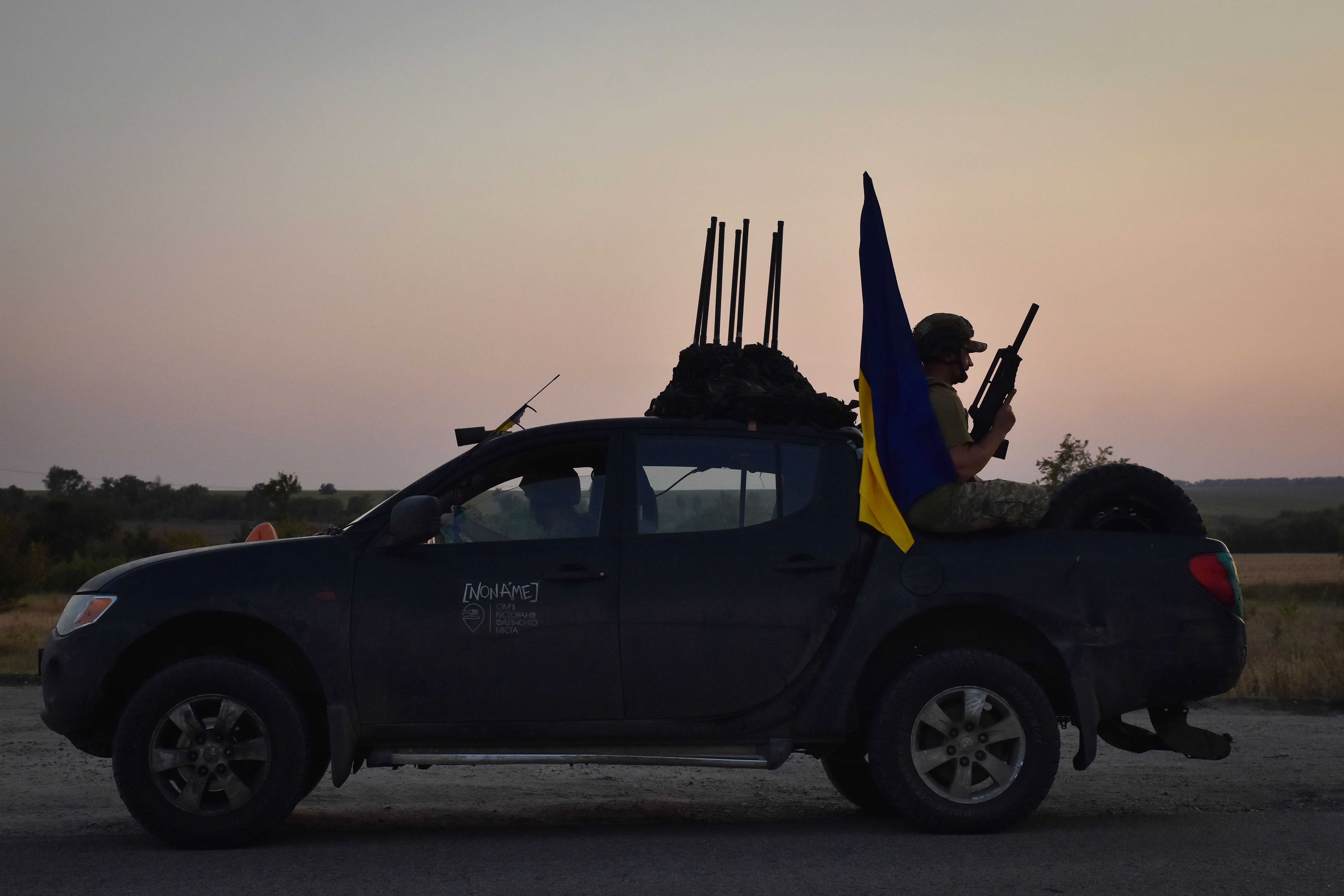
A soldier of Ukraine's 141st separate infantry brigade rides in a pickup truck at the frontline in Zaporizhzhia region, Ukraine, Monday, Aug. 19, 2024. (AP Photo/Andriy Andriyenko)

KYIV, Ukraine (AP) — Russian authorities struggled Tuesday to put out a massive fire in the southern Rostov region for a third consecutive day after an oil depot was hit by Ukrainian drones as Ukrainian forces push into Russia's Kursk region.

The fire at the depot in the town of Proletarsk burned across an area of 10,000 square meters, according to Russian state news agencies. There are 500 firefighters involved in the operation, and 41 of them already have been hospitalized with injuries, according to the Russian state-owned news agency TASS, citing local officials.

Ukraine’s Army General Staff claimed responsibility Sunday for attacking the oil depot, which was used to supply the needs of Russia’s army, calling it a measure “to undermine the military and economic potential of the Russian Federation.”

Ukrainian President Volodymyr Zelenskyy said the daring Kursk incursion has allowed his army to capture a significant number of prisoners who could be used in exchange for captured Ukrainians, expanding on Kyiv's objectives for the mission launched two weeks ago. He earlier said that Ukraine sought to create a buffer zone that might prevent further attacks by Moscow across the border, especially with long-range artillery, missiles and glide bombs.

“Overall, this (Kursk) operation became our largest investment in the process of freeing Ukrainian men and women from Russian captivity," Zelenskyy told diplomats Monday, according to a statement published on Telegram late in the day. “We have already captured the largest number of Russian prisoners in one operation.”

Zelenskyy said the Ukrainian army has captured 1,250 square kilometers (480 square miles) and 92 settlements of Russia’s Kursk region.

Ukraine's incursion into Kursk, the largest attack on Russia since World War II, has exposed Russian vulnerabilities.

“Our defensive actions across the border, as well as (Russian President Vladimir) Putin’s inability to defend his territory, are telling,” Zelenskyy said. “Our proactive defense is the most effective counter to Russian terror, causing significant difficulties for the aggressor.”

But as he hailed successes in Kursk, his troops face a bleak situation in the Donbas region, where Russia is bearing down on the city of Pokrovsk and forcing Ukrainian forces to pull back and Ukrainian civilians to flee their homes.

Russia’s relentless six-month slog across Ukraine’s Donetsk region following the capture of Avdiivka has cost Ukraine heavily in troops and armor. Ukrainian defenders have no choice but to pull back from positions blown to pieces by Russian artillery, missiles and bombs.

Pokrovsk is one of Ukraine’s main defensive strongholds and a key logistics hub in the Donetsk region. Its capture would compromise Ukraine’s defensive abilities and supply routes and would bring Russia closer to its stated aim of capturing the entire Donetsk region.

Russia wants control of all parts of Donetsk and neighboring Luhansk, which together make up the Donbas industrial region.

Related Tags

WORLDNEWS
ADVERTISEMENT
.most-popular .layout-ratio{ padding-bottom: 79.13%; } @media (min-width: 768px) and (max-width: 1024px) { .widget-title { font-size: 15px !important; } }

{{ articles_filter_1561_widget.title }}

.most-popular .layout-ratio{ padding-bottom: 79.13%; } @media (min-width: 768px) and (max-width: 1024px) { .widget-title { font-size: 15px !important; } }

{{ articles_filter_1562_widget.title }}

.most-popular .layout-ratio{ padding-bottom: 79.13%; } @media (min-width: 768px) and (max-width: 1024px) { .widget-title { font-size: 15px !important; } }

{{ articles_filter_1563_widget.title }}

{{ articles_filter_1564_widget.title }}

.mb-article-details { position: relative; } .mb-article-details .article-body-preview, .mb-article-details .article-body-summary{ font-size: 17px; line-height: 30px; font-family: "Libre Caslon Text", serif; color: #000; } .mb-article-details .article-body-preview iframe , .mb-article-details .article-body-summary iframe{ width: 100%; margin: auto; } .read-more-background { background: linear-gradient(180deg, color(display-p3 1.000 1.000 1.000 / 0) 13.75%, color(display-p3 1.000 1.000 1.000 / 0.8) 30.79%, color(display-p3 1.000 1.000 1.000) 72.5%); position: absolute; height: 200px; width: 100%; bottom: 0; display: flex; justify-content: center; align-items: center; padding: 0; } .read-more-background a{ color: #000; } .read-more-btn { padding: 17px 45px; font-family: Inter; font-weight: 700; font-size: 18px; line-height: 16px; text-align: center; vertical-align: middle; border: 1px solid black; background-color: white; } .hidden { display: none; }
function initializeAllSwipers() { // Get all hidden inputs with cms_article_id document.querySelectorAll('[id^="cms_article_id_"]').forEach(function (input) { const cmsArticleId = input.value; const articleSelector = '#article-' + cmsArticleId + ' .body_images'; const swiperElement = document.querySelector(articleSelector); if (swiperElement && !swiperElement.classList.contains('swiper-initialized')) { new Swiper(articleSelector, { loop: true, pagination: false, navigation: { nextEl: '#article-' + cmsArticleId + ' .swiper-button-next', prevEl: '#article-' + cmsArticleId + ' .swiper-button-prev', }, }); } }); } setTimeout(initializeAllSwipers, 3000); const intersectionObserver = new IntersectionObserver( (entries) => { entries.forEach((entry) => { if (entry.isIntersecting) { const newUrl = entry.target.getAttribute("data-url"); if (newUrl) { history.pushState(null, null, newUrl); let article = entry.target; // Extract metadata const author = article.querySelector('.author-section').textContent.replace('By', '').trim(); const section = article.querySelector('.section-info ').textContent.replace(' ', ' '); const title = article.querySelector('.article-title h1').textContent; // Parse URL for Chartbeat path format const parsedUrl = new URL(newUrl, window.location.origin); const cleanUrl = parsedUrl.host + parsedUrl.pathname; // Update Chartbeat configuration if (typeof window._sf_async_config !== 'undefined') { window._sf_async_config.path = cleanUrl; window._sf_async_config.sections = section; window._sf_async_config.authors = author; } // Track virtual page view with Chartbeat if (typeof pSUPERFLY !== 'undefined' && typeof pSUPERFLY.virtualPage === 'function') { try { pSUPERFLY.virtualPage({ path: cleanUrl, title: title, sections: section, authors: author }); } catch (error) { console.error('ping error', error); } } // Optional: Update document title if (title && title !== document.title) { document.title = title; } } } }); }, { threshold: 0.1 } ); function showArticleBody(button) { const article = button.closest("article"); const summary = article.querySelector(".article-body-summary"); const body = article.querySelector(".article-body-preview"); const readMoreSection = article.querySelector(".read-more-background"); // Hide summary and read-more section summary.style.display = "none"; readMoreSection.style.display = "none"; // Show the full article body body.classList.remove("hidden"); } document.addEventListener("DOMContentLoaded", () => { let loadCount = 0; // Track how many times articles are loaded const offset = [1, 2, 3, 4, 5, 6, 7, 8, 9, 10]; // Offset values const currentUrl = window.location.pathname.substring(1); let isLoading = false; // Prevent multiple calls if (!currentUrl) { console.log("Current URL is invalid."); return; } const sentinel = document.getElementById("load-more-sentinel"); if (!sentinel) { console.log("Sentinel element not found."); return; } function isSentinelVisible() { const rect = sentinel.getBoundingClientRect(); return ( rect.top < window.innerHeight && rect.bottom >= 0 ); } function onScroll() { if (isLoading) return; if (isSentinelVisible()) { if (loadCount >= offset.length) { console.log("Maximum load attempts reached."); window.removeEventListener("scroll", onScroll); return; } isLoading = true; const currentOffset = offset[loadCount]; window.loadMoreItems().then(() => { let article = document.querySelector('#widget_1690 > div:nth-last-of-type(2) article'); intersectionObserver.observe(article) loadCount++; }).catch(error => { console.error("Error loading more items:", error); }).finally(() => { isLoading = false; }); } } window.addEventListener("scroll", onScroll); });

Sign up by email to receive news.