






 Philippines
National
129 Chinese vessels monitored in WPS; Navy says still within 'acceptable range'
Philippines
National
129 Chinese vessels monitored in WPS; Navy says still within 'acceptable range'
129 Chinese vessels monitored in WPS; Navy says still within 'acceptable range'


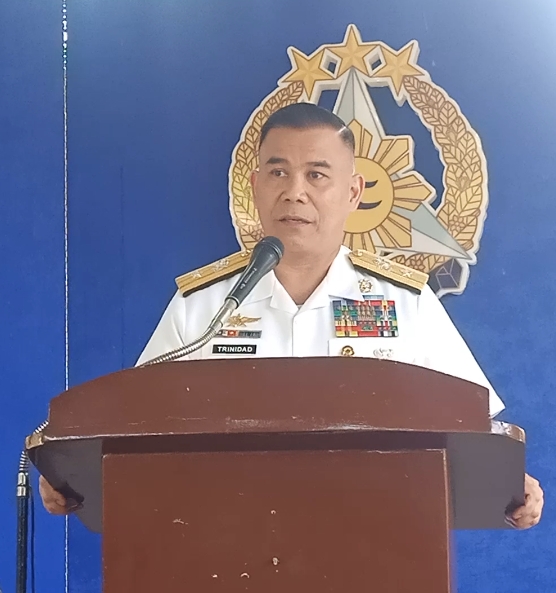
The Philippine Navy (PN) bared on Tuesday, Aug. 20, that it has monitored a sharp increase in the number of Chinese vessels operating in the West Philippine Sea (WPS) in the past week, ahead of the collision of Philippine Coast Guard (PCG) and China Coast Guard (CCG) ships in the tension-filled waters.
From Aug. 13 to 19, a total of 129 Chinese coast guard, navy, and maritime militia vessels were spotted in different features in the WPS including in Escoda Shoal where 2 PCG vessels collided with 2 CCG ships last Monday.
The number marked a 40-percent increase from the 92 Chinese vessels seen in the WPS from Aug. 6 to 12.
The biggest deployment of Chinese vessels was in Ayungin (Second Thomas) Shoal, where PN ship BRP Sierra Madre is beached, with 41 maritime militia boats and four coast guard ships.
In Pag-asa (Thitu) Island, there were 30 maritime militia boats, a coast guard ship, and a navy ship.
Meanwhile in Escoda Shoal, there were 12 maritime militia boats, five coast guard ships, and two navy vessels, including CCG vessels with tail number “3104” and “21551” which collided with BRP Bagacay and BRP Cape Cape Engaño during a resupply mission.
The other features with Chinese presence are Bajo de Masinloc (Scarborough or Panatag Shoal), Kota Island, Likas Island, Lawak Island, Panata Island, Patag Island, and Iroquois Reef.
However, Rear Adm. Roy Vincent Trinidad, PN spokesperson for WPS, said the Chinese deployment is still within an “acceptable range”.
“We constantly monitor their presence. The 129 total is still within the range, acceptable range that we have been monitoring for the past two to three months,” he said in a press conference in Camp Aguinaldo, Quezon City.
“Every now and then, there will be fluctuations from 92 to 132, the highest in the past three months [was] 156. Depending on the conditions of the water of the sea out there, then there will be changes but overall it is within acceptable limits,” he added.
The official also reiterated that Escoda Shoal is not the newest flashpoint in the WPS since tension could occur anywhere in the WPS due to China’s aggression.
“Sabina is not a flashpoint. It is the illegal, coercive, aggressive, and deceptive (ICAD) activities, presence and messages of the agents of the Chinese Communist Party [that’s causing tension],” he said.
“This is the cause of all the dynamics in the West Philippine Sea.”
Why China wants Escoda Shoal
Escoda Shoal, located just 75 nautical miles or about 140 kilometers from Palawan, is the rendezvous point for the AFP whenever it conducts resupply mission to BRP Sierra Madre in Ayungin Shoal.
From Palawan, the AFP supply boats carrying food and other provisions for the troops manning the BRP Sierra Madre outpost meet with PCG ships acting as security escorts in Escoda Shoal before they sail together en route to Ayungin Shoal.
Earlier this year, the PCG noticed an unusual dumping of dead and crushed corals on the sandbars of Escoda Shoal, which it suspected as initial stages for land reclamation activities.
According to Trinidad, China taking control of Escoda Shoal would effectively mean that the AFP will have a harder time conducting its resupply mission in Ayungin Shoal. This may lead to the starvation of troops onboard the BRP Sierra Madre.
He said the PN saw “alarming” moves by China since 1992 when it started conducting land reclamation activities in the Spratly Island or Kalayaan Island Group (KIG), including the Kagitingan (Fiery Cross) Reef, Mabini (Johnson South) Reef, Burgos (Gaven) Reef, Zamora (Subi) Reef, McKennan (Hughes) Reef and Panganiban (Mischief) Reef.
“The alarm started in 1992 when we noticed Chinese Communist Party features, markers in the West Philippine Sea. What is happening now is a broad scheme of sea control for the entire, the vast expanse of the South China Sea,” he explained.
AFP spokesperson Col. Francel Margareth Padilla said the military has coordinated with the PCG following Monday’s collision in Escoda Shoal “to enhance our maritime patrols and strengthen our presence in the West Philippine Sea.”
“We are also working with our regional partners and allies to ensure that all actions are in line with international law and to promote stability in the region,” she said.