







BARMM no longer poorest region in PH


DAVAO CITY – The Bangsamoro Autonomous Region in Muslim Mindanao (BARMM) is no longer the poorest region in the country based on the latest poverty incidence report of the Philippine Statistics Authority (PSA).
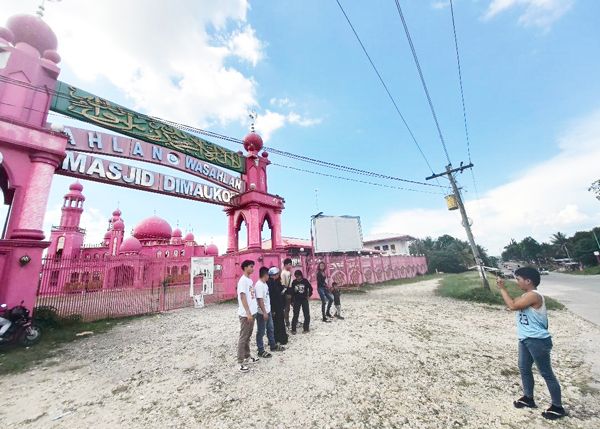
TOURISTS pose for a photo at Pink Mosque in Datu Saudi Ampatuan, Maguindanao del Sur. The mosque is a popular stopover of travelers on the Cotabato-Isulan Highway. (Keith Bacongco)
In a report released on Thursday, August 15, PSA stated that poverty incidence among families in the BARMM dropped significantly from 52.9 percent in 2018 to 28 percent in 2021 to 23.5 percent in 2023.
Region 9 or the Zamboanga Peninsula is now the poorest region with a poverty incidence of 24.2 percent.
The Bangsamoro government attributed the lower poverty incidence to moral governance.
“This significant improvement reflects the region's commitment to moral governance in its continued efforts to develop and empower its people,” the Bangsamoro government said on its Facebook page.
The PSA also reported that 11 of 18 regions have recorded statistically significant decreases in poverty incidence in 2023 compared to 2021.
The Caraga region showed the most notable improvement with a poverty incidence of 14.9 percent in 2023, a decrease of 11 percentage points from 25.9 percent in 2021.
Caraga, a mineral rich-region, is composed of the provinces of Agusan del Norte, Agusan del Sur, Dinagat Island, Surigao del Norte, and Surigao del Sur.
However, poverty incidence in other regions went up, the PSA noted.
”Meanwhile, increasing trends were recorded in the poverty incidence among families in Mimaropa at 1.2 percentage point difference, Negros Island Region at 4.4 percentage point difference, and Region 9 (Zamboanga Peninsula) at 0.8 percentage point difference, with only NIR exhibiting statistically significant increase,” the PSA said.
The PSA also said that the national poverty incidence in 2023 was 10.9 percent. “This is equivalent to 2.99 million Filipino families without enough income to meet their basic food and non-food needs.”
The Bangsamoro region had been the poorest region in country due to the cycle of violence resulting to massive internal displacements and sluggish growth in local economy.
The significant turnaround on the poverty incidence level in the region was attributed to the stabilization of peace and order situation following the signing of the peace accord 10 years ago.
Last month, BARMM Cabinet Secretary Mohd Asnin Pendatun reported that investments in the region have reached P3.5 billion since the start of 2024.
Pendatun attributed the flow of investments in the region to the improving peace and security situation, adding the figure has surpassed the BARMM’s target for the year by 42 percent.
Bangsamoro Board of Investments (BBOI) Chairperson Mohamad Pasigan projected that the collective influx of investments in the region will inject P3.7 billion into the local economy in the fiscal year 2024.
“Beyond monetary gains, the ripple effect of these investments is poised to create tangible opportunities for employment,” Pasigan said.
BARMM is composed of the provinces of Basilan, Lanao del Sur, Maguindanao del Sur, Maguindanao del Norte, and Sulu.