ADVERTISEMENT

147 hogs intercepted at border controls test positive for ASF — DA

Published Aug 16, 2024 09:02 am
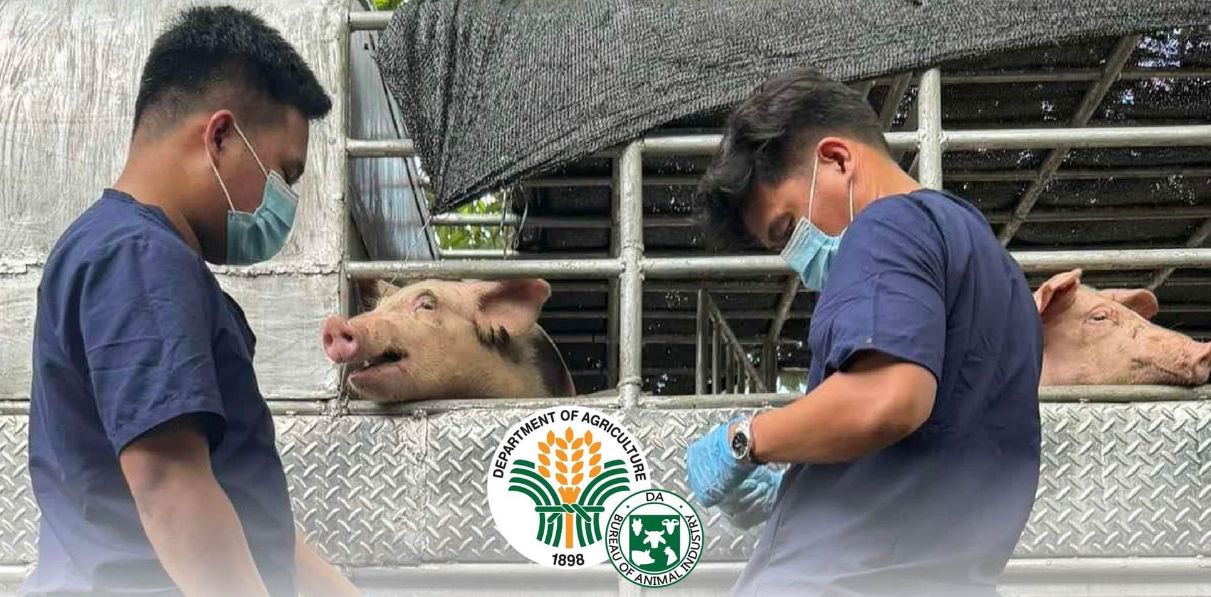
IMG_4852.jpeg
(DA-BAI PHOTO)

A total of 147 hogs from Quezon province have tested positive for the fatal African swine fever (ASF), the Department of Agriculture (DA) disclosed on Friday, August 16.

Due to the outbreak of ASF in Batangas, the DA and local governments have set up border controls in a bid to stop the spread of ASF.

Assistant Secretary Arnel De Mesa, the spokesperson of the DA, said the first truck intercepted along Mindanao Avenue in Quezon City was carrying 60 hogs; the second one had 87; and the third was transporting 14. They all presented fake shipping papers.

He noted that all the trucks are from Quezon province and are bound for Pangasinan.

“Iyong dalawang trucks na nahuli na walang kaukulang papel, parehas galing Sariaya, papuntang Pangasinan, turned out to be positive sa ASF upon conduct ng laboratory test (The two trucks that were caught without the proper papers, both coming from Sariaya and headed to Pangasinan, turned out to be positive for ASF after laboratory testing),” he said in a press briefing.

“Na-notice ng mga quarantine officers natin ‘yung sizes ng mga baboy—maliliit, mga 30 kilograms lang. May mga apparent signs ng ASF (Our quarantine officers noticed the sizes of the pigs—they were small, only around 30 kilograms. There were apparent signs of ASF),” he went on.

According to De Mesa, the results of the laboratory tests for the 14 hogs have yet to come out.

Aside from Batangas, the agriculture department noted that they have monitored positive cases of ASF in the provinces of Laguna and Rizal.

Tighter border controls, checkpoints

De Mesa said the interception of the ASF-positive hogs is a clear sign that the government’s border controls and checkpoints are “very effective.”

He said that the DA is in close coordination with the Philippine National Police (PNP) and local governments to implement their strict monitoring.

“Ito ay patunay lamang na mabisang paraan itong mga border control. Kung hindi ito napigilan, pupunta ito sa mga destination nila that might cause ‘yung pagkalat pa lalo ng ASF (This only proves that these border controls are an effective method. If this hadn't been stopped, the pigs would have reached their destinations, which might have further spread ASF),” he stated.

De Mesa said the DA has also increased the amount of indemnification for hog raisers for them to be enticed to surrender hogs that are suspected to be positive for ASF.

Per De Mesa, the indemnification was previously set at P5,000, regardless of the hogs' age and size. The DA has since increased this amount to ₱8,000 for medium-sized hogs and ₱12,000 for large ones.

“Malaking incentive na ‘yun sa mga magbababoy na huwag ipuslit at isuko na ‘yung mga baboy na nakita nila na may potential na may ASF para hindi na katayin, hindi na ibenta sa mga biyahero, at i-depopulate na lang (That’s a significant incentive for hog raisers not to smuggle and to surrender pigs they suspect might have ASF, so they won’t be slaughtered, sold to traders, and will instead be depopulated),” he noted.

Warning

Although the ASF virus cannot be transmitted from pigs to humans, De Mesa stressed that, in accordance with the Food Safety Act, the slaughtering, selling, or cooking of infected animals is prohibited.

“So, dapat itong i-dispose properly sa pamamagitan ng paglibing at pagsunog [ang ASF-infected hogs] (So, these ASF-infected hogs should be disposed of properly through burial and incineration),” he said.

The spokesperson said that while the virus can be killed by thoroughly cooking the meat from infected hogs, in cases where the infection isn't known, it’s still better to properly dispose of the infected hogs.

ASF is a highly contagious and deadly swine disease that has been devastating swine industries around the world since its resurgence in 2018.

In 2019, ASF resurfaced in the Philippines and has since spread across more than 3,800 barangays in 53 provinces by July 2022.

Due to ASF, local pork production in the Philippines fell by almost a fourth from June to October 2021 against the comparative period in 2020.

ADVERTISEMENT
.most-popular .layout-ratio{ padding-bottom: 79.13%; } @media (min-width: 768px) and (max-width: 1024px) { .widget-title { font-size: 15px !important; } }

{{ articles_filter_1561_widget.title }}

.most-popular .layout-ratio{ padding-bottom: 79.13%; } @media (min-width: 768px) and (max-width: 1024px) { .widget-title { font-size: 15px !important; } }

{{ articles_filter_1562_widget.title }}

.most-popular .layout-ratio{ padding-bottom: 79.13%; } @media (min-width: 768px) and (max-width: 1024px) { .widget-title { font-size: 15px !important; } }

{{ articles_filter_1563_widget.title }}

{{ articles_filter_1564_widget.title }}

.mb-article-details { position: relative; } .mb-article-details .article-body-preview, .mb-article-details .article-body-summary{ font-size: 17px; line-height: 30px; font-family: "Libre Caslon Text", serif; color: #000; } .mb-article-details .article-body-preview iframe , .mb-article-details .article-body-summary iframe{ width: 100%; margin: auto; } .read-more-background { background: linear-gradient(180deg, color(display-p3 1.000 1.000 1.000 / 0) 13.75%, color(display-p3 1.000 1.000 1.000 / 0.8) 30.79%, color(display-p3 1.000 1.000 1.000) 72.5%); position: absolute; height: 200px; width: 100%; bottom: 0; display: flex; justify-content: center; align-items: center; padding: 0; } .read-more-background a{ color: #000; } .read-more-btn { padding: 17px 45px; font-family: Inter; font-weight: 700; font-size: 18px; line-height: 16px; text-align: center; vertical-align: middle; border: 1px solid black; background-color: white; } .hidden { display: none; }
function initializeAllSwipers() { // Get all hidden inputs with cms_article_id document.querySelectorAll('[id^="cms_article_id_"]').forEach(function (input) { const cmsArticleId = input.value; const articleSelector = '#article-' + cmsArticleId + ' .body_images'; const swiperElement = document.querySelector(articleSelector); if (swiperElement && !swiperElement.classList.contains('swiper-initialized')) { new Swiper(articleSelector, { loop: true, pagination: false, navigation: { nextEl: '#article-' + cmsArticleId + ' .swiper-button-next', prevEl: '#article-' + cmsArticleId + ' .swiper-button-prev', }, }); } }); } setTimeout(initializeAllSwipers, 3000); const intersectionObserver = new IntersectionObserver( (entries) => { entries.forEach((entry) => { if (entry.isIntersecting) { const newUrl = entry.target.getAttribute("data-url"); if (newUrl) { history.pushState(null, null, newUrl); let article = entry.target; // Extract metadata const author = article.querySelector('.author-section').textContent.replace('By', '').trim(); const section = article.querySelector('.section-info ').textContent.replace(' ', ' '); const title = article.querySelector('.article-title h1').textContent; // Parse URL for Chartbeat path format const parsedUrl = new URL(newUrl, window.location.origin); const cleanUrl = parsedUrl.host + parsedUrl.pathname; // Update Chartbeat configuration if (typeof window._sf_async_config !== 'undefined') { window._sf_async_config.path = cleanUrl; window._sf_async_config.sections = section; window._sf_async_config.authors = author; } // Track virtual page view with Chartbeat if (typeof pSUPERFLY !== 'undefined' && typeof pSUPERFLY.virtualPage === 'function') { try { pSUPERFLY.virtualPage({ path: cleanUrl, title: title, sections: section, authors: author }); } catch (error) { console.error('ping error', error); } } // Optional: Update document title if (title && title !== document.title) { document.title = title; } } } }); }, { threshold: 0.1 } ); function showArticleBody(button) { const article = button.closest("article"); const summary = article.querySelector(".article-body-summary"); const body = article.querySelector(".article-body-preview"); const readMoreSection = article.querySelector(".read-more-background"); // Hide summary and read-more section summary.style.display = "none"; readMoreSection.style.display = "none"; // Show the full article body body.classList.remove("hidden"); } document.addEventListener("DOMContentLoaded", () => { let loadCount = 0; // Track how many times articles are loaded const offset = [1, 2, 3, 4, 5, 6, 7, 8, 9, 10]; // Offset values const currentUrl = window.location.pathname.substring(1); let isLoading = false; // Prevent multiple calls if (!currentUrl) { console.log("Current URL is invalid."); return; } const sentinel = document.getElementById("load-more-sentinel"); if (!sentinel) { console.log("Sentinel element not found."); return; } function isSentinelVisible() { const rect = sentinel.getBoundingClientRect(); return ( rect.top < window.innerHeight && rect.bottom >= 0 ); } function onScroll() { if (isLoading) return; if (isSentinelVisible()) { if (loadCount >= offset.length) { console.log("Maximum load attempts reached."); window.removeEventListener("scroll", onScroll); return; } isLoading = true; const currentOffset = offset[loadCount]; window.loadMoreItems().then(() => { let article = document.querySelector('#widget_1690 > div:nth-last-of-type(2) article'); intersectionObserver.observe(article) loadCount++; }).catch(error => { console.error("Error loading more items:", error); }).finally(() => { isLoading = false; }); } } window.addEventListener("scroll", onScroll); });

Sign up by email to receive news.