







Winning hearts and minds of Filipinos in the countryside
By Sonny Coloma


ENDEAVOR
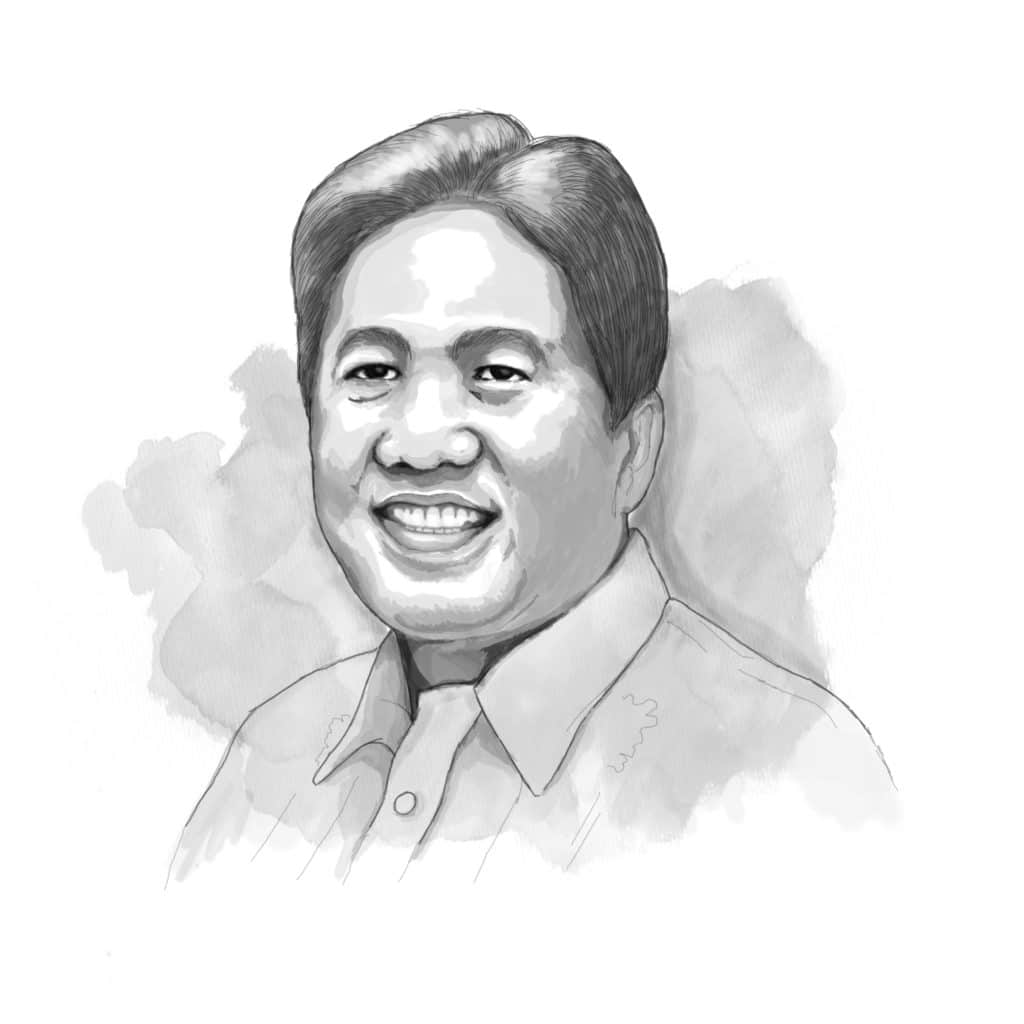
In a dialogue with media the other night, National Security Adviser Eduardo Año pointed out that good governance is key in ending the decades-old insurgency in the country. The antidote to armed struggle is delivering essential public services to the most needy Filipinos in the countryside — and this has been achieved by adopting a whole- of-government and whole-of-nation approach.
He recalled that when he was Local Government and Interior Secretary during the previous administration, he focused on mayors of cities and towns in which there was insurgent activity. It was common to hear then of “permits to campaign” being given by the New People’s Army (NPA), and their continuing influence on elected officials enabled armed insurgency to thrive in the countryside. This was the rationale for the issuance of Executive Order No. 70 (series of 2018) on the establishment of the National Task Force to End Local Communist Armed Conflict (NTF-ELCAC).
By patiently threshing out their concerns, solutions were found in terms of better delivery of essential public services. The NTF-ELCAC is presently structured similar to the National Economic and Development Authority (NEDA) which Board which is chaired by the President, and its membership composed of Cabinet secretaries. As presently constituted it is made up of all the Cabinet secretaries, such that all aspects of governance could be covered.
The CORD approach has also been adopted. Each member of the President’s official family is designated as a Cabinet Officer for Regional Development to oversee the implementation of budgeted government programs in all the regions and provinces of the country. Immediate action is assured as concerns are relayed to action officers designated by the Cabinet secretaries.
Among all the armed conflicts in the country, the communist insurgency has festered for the longest period. Recall that in the aftermath of the EDSA People Power Revolution, former priest Conrado Balweg signed a ceasefire agreement with the government that ultimately led to the establishment of the Cordillera Autonomous Region.
During the Ramos administration, a ceasefire was also forged with the Moro National Liberation Front (MNLF) led by former UP professor Nur Misuari who eventually became the first governor of the autonomous region for Mindanao. He was ousted after he escaped to Malaysia, following a failed rebellion in November 2001.
In August 2011, President Benigno Aquino III conducted talks with MILF Chairman Al Haj Murad Ibrahim that led to the signing of a framework agreement in October 2012 that provided propulsion to the establishment of the Bangsamoro Autonomous Region of Muslim Mindanao (BARMM). The peace process was derailed as an offshoot of the bloody encounter in Mamasapano, Maguindanao in which an entire company of Philippine National Police (PNP) scout rangers was wiped out, hours after the killing of Malaysian international terrorist Zulkifli bin hir, also known as Marwan. The peace process was restarted by the Duterte administration and a peace agreement was forged.
After plebiscites conducted on April 13, 2024, the Office of the Presidential Adviser on Peace, Reconciliation and Unity reported that with a voter turnout of 81 percent, 99.62 percent of valid votes cast were in favor of ratification of the creation of the Bangsamoro Autonomous Region of Muslim Mindanao (BARMM). This was achieved through years of painstaking negotiations over two administrations that achieved full fruition after the successful demilitarization and decommissioning processes, include the surrender and laying down of arms and weapons.
Back to the ongoing efforts to finally put an end to armed conflict with Communist elements, the Armed Forces of the Philippines reported last July that a total of 1,311 New People's Army (NPA) members and supporters were “neutralized” from January to July this year, broken down as follows: 93 killed, 97 apprehended and 1,121 surrendered. Also reported by the AFP spokesperson were the following: "728 firearms and 225 anti-personnel mines were either captured or surrendered, and 157 encampments were seized.”
Secretary Año said the AFP has been successful in destroying the politico-military component of the insurgency. Since 2018 when the anti-insurgency body was created under EO No. 70, 82 out of 89 active NPA guerilla fronts have been dismantled. He said the ELCAC is now “on the verge of completely dismantling the remaining seven weakened guerilla fronts” and expressed confidence that “these will be dismantled within the year or the next.”
Good governance is the key. When the governed discern and feel that their government is sincere in enabling them to rise above poverty by securing their basic needs, they attain a measure of self-respect and chart their future with faith and enthusiasm.