






 Philippines
National
'Our policy is engagement': UP defends cooperation agreement with AFP
Philippines
National
'Our policy is engagement': UP defends cooperation agreement with AFP
'Our policy is engagement': UP defends cooperation agreement with AFP


The University of the Philippines (UP) on Wednesday, Aug. 14, maintained that its cooperation agreement with the Armed Forces of the Philippines (AFP) “does not violate academic freedom” and is consistent with its mandate as the country’s premier institution of higher learning.
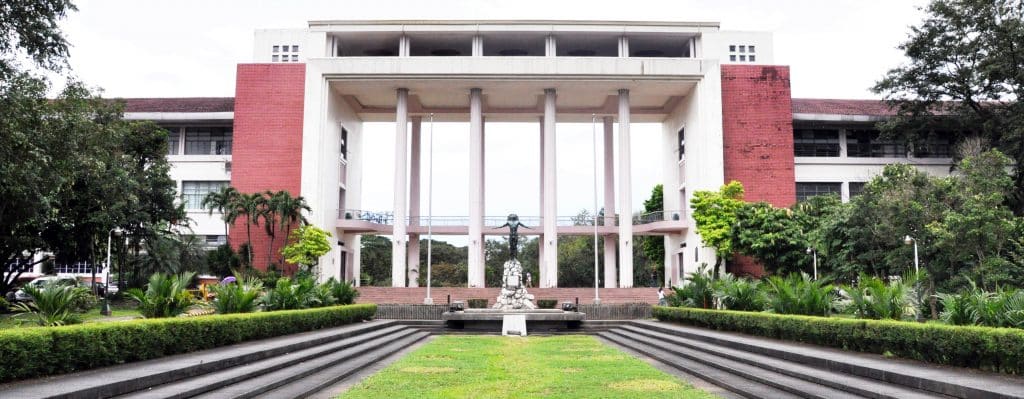
UP President Angelo Jimenez, in a statement, explained that the UP-AFP declaration signed on Aug. 8 serves as the initial framework to guide future areas of cooperation.
“It won’t curtail academic freedom because UP researchers can choose and define their specific terms of engagement,” Jimenez said. “Any activity undertaken shall be mutually agreed upon by both participants,” he added.
Jimenez issued the statement to address concerns raised by certain sectors of the UP community.
UP, he added, has worked with the defense sector in the past “as part of a whole-of-society engagement to help inform public policy, influence thinking, and improve lives through UP’s renowned scholarship.”
Not an enemy
UP also expressed optimism about working with the AFP on research, training, and publications.
“We welcome this cooperation with the AFP because UP’s strength in academics and research can serve as an instrument of national unity,” Jimenez said. “Our policy is engagement,” he added, noting that the national defense establishment, as an institution, is “not an enemy.”
Jimenez pointed out that AFP Chief of Staff LtGen. Romeo Brawner and Secretary of National Defense Gilbert Teodoro are both from UP.
He added that the recently signed declaration is “similar to previous research collaborations of the university,” including the memorandum of understanding between the UP College of Engineering and the Philippine National Police Research and Development Center signed in June 2023, involving studies to enhance ballistic defense materials and other cooperation activities.
Jimenez noted that the university think tank, the UP Center for Integrative Development Studies (UP CIDS), will lead the latest collaborative effort.
“UP CIDS is free to pursue research interests with the AFP in areas that are relevant to UP’s role, mission, and mandate,” Jimenez said.
“This in itself is an exercise in academic freedom, and the only thing required is conformity to the highest standards of academic rigor in the pursuit of truth,” he added.
Under the agreement, UP CIDS is expected to:
- Provide technical expertise by offering resource persons for forums and workshops
- Invite AFP personnel to submit articles to the UP CIDS-published Philippine Journal of Public Policy, with all submissions subject to peer review
- Participate as guest editors to review article submissions for the Quarterly Digest of the AFP Office of Strategic Studies and Strategy Management (OSSM)
- Organize the dissemination of UP CIDS research and conduct capacity-building initiatives for AFP OSM personnel and affiliates in strategic studies and security
- Host AFP personnel for visits, exchanges, and research fellowships
Jimenez noted that both parties also reaffirmed their “shared commitment” to dialogue and intellectual freedom.
Open dialogue
Meanwhile, Jimenez noted that UP academic officials and UP CIDS researchers are welcome to “clarify questions and doubts” through open dialogue—particularly with critics of the declaration.
The AFP and UP Manila signed a five-year Memorandum of Agreement to train civilian and military dentists at the UP College of Dentistry in May 2023.
Similarly, the history department of UP Diliman has co-published books on Philippine military history with the Philippine Veterans Affairs Office, which is an attached agency of the Department of National Defense.