

ADVERTISEMENT

Are lab-grown gemstones better?

Davao-based brand Pristine Paradigm brings jewelry pieces adorned with man-made gemstones closer to Filipinos

Published Aug 14, 2024 12:04 am

Jewelry pieces adorned with lab-grown diamonds have been around for years. While their glimmer has caught the eyes of select luxury brands and jewelry fans, their allure is yet to make it big in the Philippines’ fashion scene. But it looks like things are about to change as a new player enters the scene with its attainable jewelry pieces made with lab-grown gemstones.

454878725_323481137426303_5175341055492542250_n.jpg
Juni Rollan and Katriana Batu

Established in 2023 by Katriana Batu and Juni Rollan, Pristine Paradigm merges sustainability with luxury through its dainty jewelry pieces featuring man-made gemstones. The inspiration behind the creation of the Davao-based brand can be traced back to Katriana’s rural upbringing and her grandmother’s penchant for collecting jewelry.

“It is funny because she is 72 now, and she was the one who told me about lab-grown gemstones. I had no idea that lab-grown gemstones existed,” Katriana recalls. “It was in late 2022 and early 2023 [that I learned about them], and at the time, I was also working on our farm in Davao Oriental. Even before Pristine Paradigm, I was already into sustainability and the environment.”

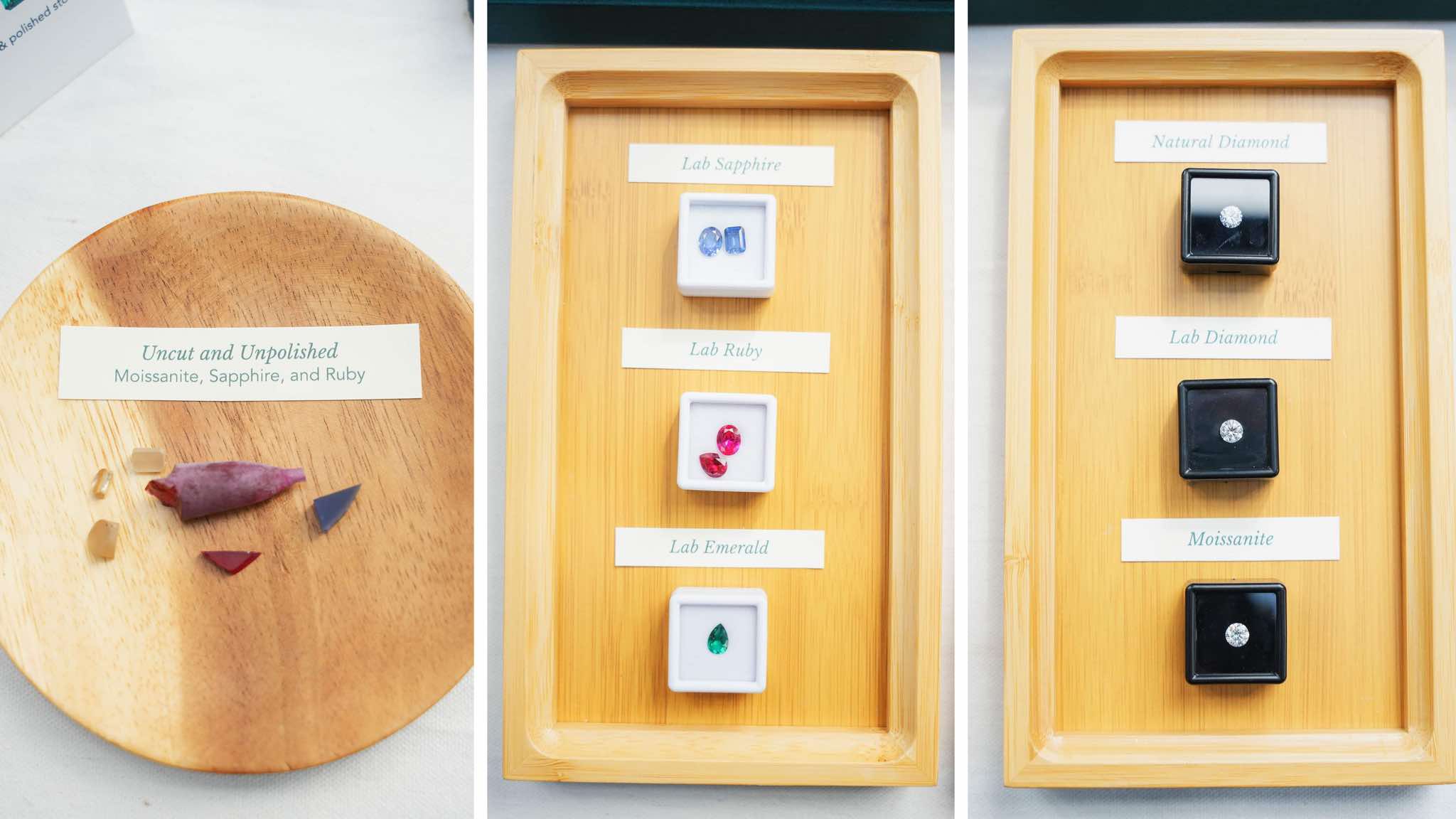
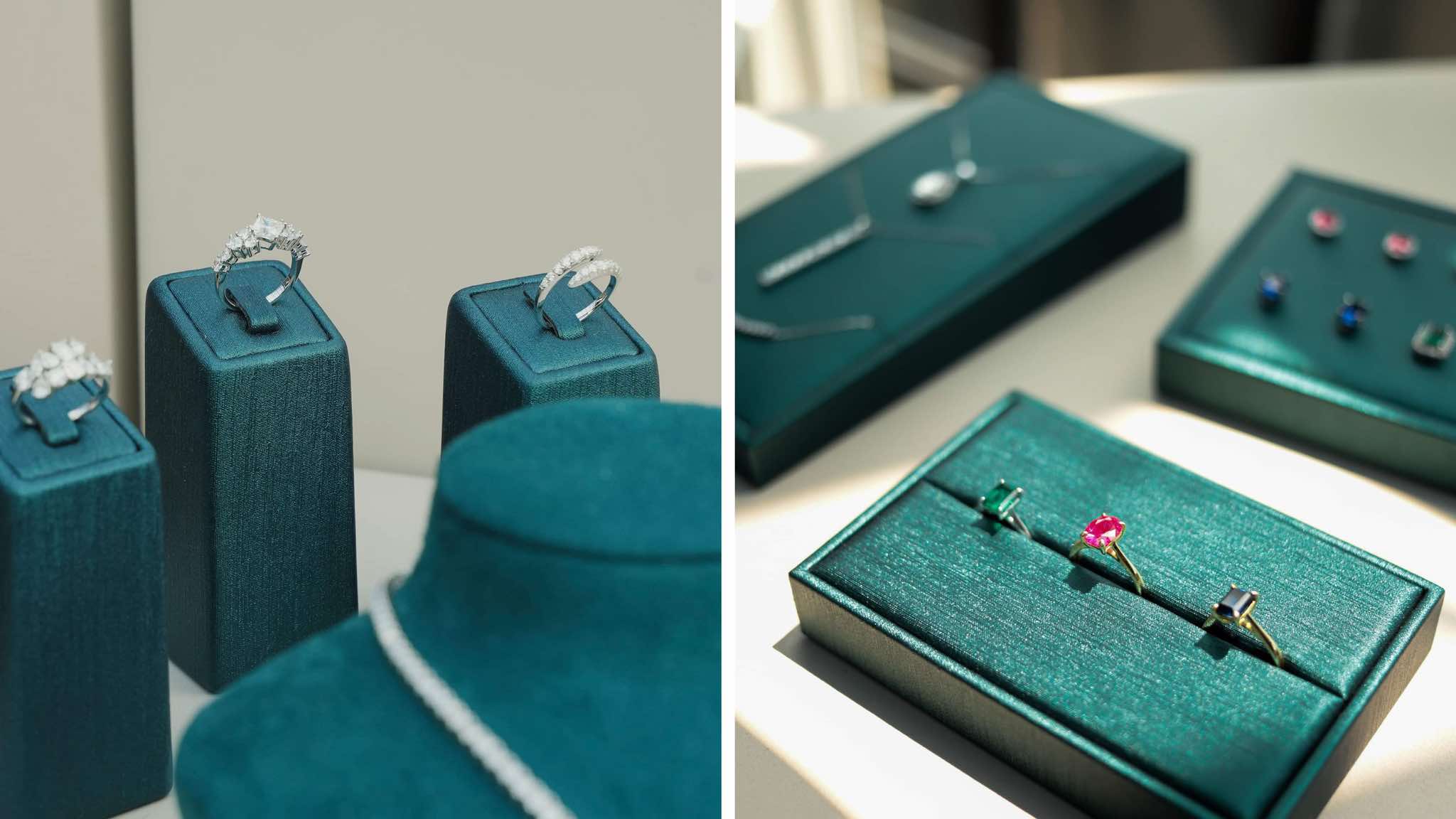
Since its inception, the brand has produced jewelry designs using man-made gemstones sourced from abroad. These lab-grown gems are handcrafted into jewelry pieces by Davao-based artisans. After operating online for some time, Pristine Paradigm’s pieces made their way to Manila for an event marking the brand’s anniversary. The curated collection includes lab-grown diamonds, rubies, sapphires, emeralds, and moissanite, among others.
454401162_875911451106861_1342310034199328234_n.jpg
Lab-grown gemstones and diamonds

Design possibilities

According to Katriana, the brand’s goal is to provide quality jewelry that you can feel good about wearing. Much like other luxury labels such as Prada and Josie Natori, who have produced jewelry collections featuring lab-grown diamonds, Pristine Paradigm likes how they can design freely using man-made gems. Natural diamonds take billions of years to form underneath the Earth’s mantle, and finding one with great color, clarity, and carat is always a challenge. But that is not the case in lab-grown diamonds and other gems.

“Lab-grown gemstones are chemically, physically, and optically the same as natural gemstones,” Katriana explains. “The exact, same condition from which a diamond grown on the Earth is replicated in a laboratory. It is a more controlled environment,  more environment-friendly, and the carbon footprint is significantly lower.”

Lab-grown gemstones are also known for their economic diversity. Compared to naturally sourced gemstones, man-made ones are inexpensive. In Pristine Paradigm, attaining pieces with lab-grown gems is even more achievable with its line of jewelry in gold and platinum vermeil setting, apart from its 14k and 18k solid gold designs.
454033514_1876964662803834_856595943705020140_n.jpg
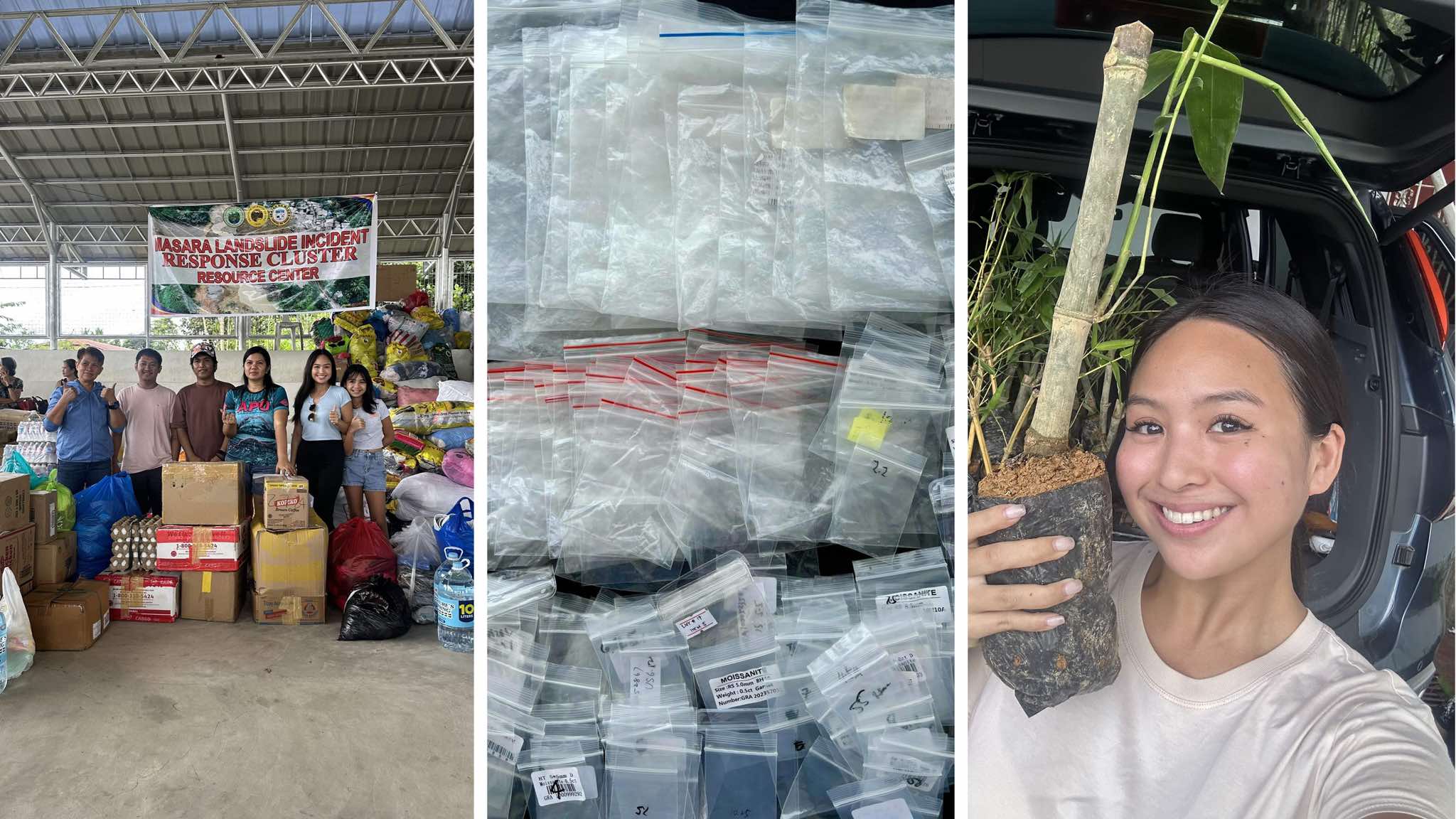
Pristine Paradigm's donation drive, plastic waste recycling project, and tree-planting initiative

Commitment to a greener future

While the “green” aspect of creating lab-grown gemstones is still in question, what the Pristine Paradigm does is balance it out with its key initiatives, from eco-friendly packaging to plastic waste recycling projects with Envirotech Waste Recycling Inc. One of the things Katriana is proud of is the brand’s One Tree for Every Order initiative, where they plant one tree for every order placed.

“With the creation of lab-grown gem, there is still energy that is being used up,” the 25-year-old entrepreneur says. “We try to balance it out and give back to the environment and communities. Ever since we started, we have planted one tree in every order or every ring. We’ve planted more than 8,500 trees already.”
454401162_1045282956935466_5569876847915382030_n.jpg
Pristine Paradigm's jewelry pieces featuring lab-grown gemstones

Natural vs. Lab-grown

While the discussion on which is better continues. Katriana believes that everyone deserves to know about the latest innovations in the jewelry scene. She shares that through educational content posted in her platform and Pristine Paradigm’s website and social media pages.

“I do understand that some people prefer natural diamonds over lab-grown. I’m just here to put out that lab-grown diamonds exist and it is up to them if they want it or not,” she says. “We are not lying here, we are not saying that we are selling pieces that would pass as natural diamonds. What we are saying is that there’s an alternative option that is cheaper but still as beautiful.”

To learn more about Pristine Paradigm, visit www.pristineparadigm.com or @pristine.paradigm on Instagram, Tiktok, and Facebook.

Hello, readers! Do you have a story you want us to feature? Send us a message on Facebook, Instagram, Tiktok, and X and let’s talk about it.

Related Tags

Jewelry Style Weekend Fashion and Beauty Pristine Paradigm
ADVERTISEMENT
.most-popular .layout-ratio{ padding-bottom: 79.13%; } @media (min-width: 768px) and (max-width: 1024px) { .widget-title { font-size: 15px !important; } }

{{ articles_filter_1561_widget.title }}

.most-popular .layout-ratio{ padding-bottom: 79.13%; } @media (min-width: 768px) and (max-width: 1024px) { .widget-title { font-size: 15px !important; } }

{{ articles_filter_1562_widget.title }}

.most-popular .layout-ratio{ padding-bottom: 79.13%; } @media (min-width: 768px) and (max-width: 1024px) { .widget-title { font-size: 15px !important; } }

{{ articles_filter_1563_widget.title }}

{{ articles_filter_1564_widget.title }}

.mb-article-details { position: relative; } .mb-article-details .article-body-preview, .mb-article-details .article-body-summary{ font-size: 17px; line-height: 30px; font-family: "Libre Caslon Text", serif; color: #000; } .mb-article-details .article-body-preview iframe , .mb-article-details .article-body-summary iframe{ width: 100%; margin: auto; } .read-more-background { background: linear-gradient(180deg, color(display-p3 1.000 1.000 1.000 / 0) 13.75%, color(display-p3 1.000 1.000 1.000 / 0.8) 30.79%, color(display-p3 1.000 1.000 1.000) 72.5%); position: absolute; height: 200px; width: 100%; bottom: 0; display: flex; justify-content: center; align-items: center; padding: 0; } .read-more-background a{ color: #000; } .read-more-btn { padding: 17px 45px; font-family: Inter; font-weight: 700; font-size: 18px; line-height: 16px; text-align: center; vertical-align: middle; border: 1px solid black; background-color: white; } .hidden { display: none; }
function initializeAllSwipers() { // Get all hidden inputs with cms_article_id document.querySelectorAll('[id^="cms_article_id_"]').forEach(function (input) { const cmsArticleId = input.value; const articleSelector = '#article-' + cmsArticleId + ' .body_images'; const swiperElement = document.querySelector(articleSelector); if (swiperElement && !swiperElement.classList.contains('swiper-initialized')) { new Swiper(articleSelector, { loop: true, pagination: false, navigation: { nextEl: '#article-' + cmsArticleId + ' .swiper-button-next', prevEl: '#article-' + cmsArticleId + ' .swiper-button-prev', }, }); } }); } setTimeout(initializeAllSwipers, 3000); const intersectionObserver = new IntersectionObserver( (entries) => { entries.forEach((entry) => { if (entry.isIntersecting) { const newUrl = entry.target.getAttribute("data-url"); if (newUrl) { history.pushState(null, null, newUrl); let article = entry.target; // Extract metadata const author = article.querySelector('.author-section').textContent.replace('By', '').trim(); const section = article.querySelector('.section-info ').textContent.replace(' ', ' '); const title = article.querySelector('.article-title h1').textContent; // Parse URL for Chartbeat path format const parsedUrl = new URL(newUrl, window.location.origin); const cleanUrl = parsedUrl.host + parsedUrl.pathname; // Update Chartbeat configuration if (typeof window._sf_async_config !== 'undefined') { window._sf_async_config.path = cleanUrl; window._sf_async_config.sections = section; window._sf_async_config.authors = author; } // Track virtual page view with Chartbeat if (typeof pSUPERFLY !== 'undefined' && typeof pSUPERFLY.virtualPage === 'function') { try { pSUPERFLY.virtualPage({ path: cleanUrl, title: title, sections: section, authors: author }); } catch (error) { console.error('ping error', error); } } // Optional: Update document title if (title && title !== document.title) { document.title = title; } } } }); }, { threshold: 0.1 } ); function showArticleBody(button) { const article = button.closest("article"); const summary = article.querySelector(".article-body-summary"); const body = article.querySelector(".article-body-preview"); const readMoreSection = article.querySelector(".read-more-background"); // Hide summary and read-more section summary.style.display = "none"; readMoreSection.style.display = "none"; // Show the full article body body.classList.remove("hidden"); } document.addEventListener("DOMContentLoaded", () => { let loadCount = 0; // Track how many times articles are loaded const offset = [1, 2, 3, 4, 5, 6, 7, 8, 9, 10]; // Offset values const currentUrl = window.location.pathname.substring(1); let isLoading = false; // Prevent multiple calls if (!currentUrl) { console.log("Current URL is invalid."); return; } const sentinel = document.getElementById("load-more-sentinel"); if (!sentinel) { console.log("Sentinel element not found."); return; } function isSentinelVisible() { const rect = sentinel.getBoundingClientRect(); return ( rect.top < window.innerHeight && rect.bottom >= 0 ); } function onScroll() { if (isLoading) return; if (isSentinelVisible()) { if (loadCount >= offset.length) { console.log("Maximum load attempts reached."); window.removeEventListener("scroll", onScroll); return; } isLoading = true; const currentOffset = offset[loadCount]; window.loadMoreItems().then(() => { let article = document.querySelector('#widget_1690 > div:nth-last-of-type(2) article'); intersectionObserver.observe(article) loadCount++; }).catch(error => { console.error("Error loading more items:", error); }).finally(() => { isLoading = false; }); } } window.addEventListener("scroll", onScroll); });

Sign up by email to receive news.