







PH, US navies hold joint sail in WPS


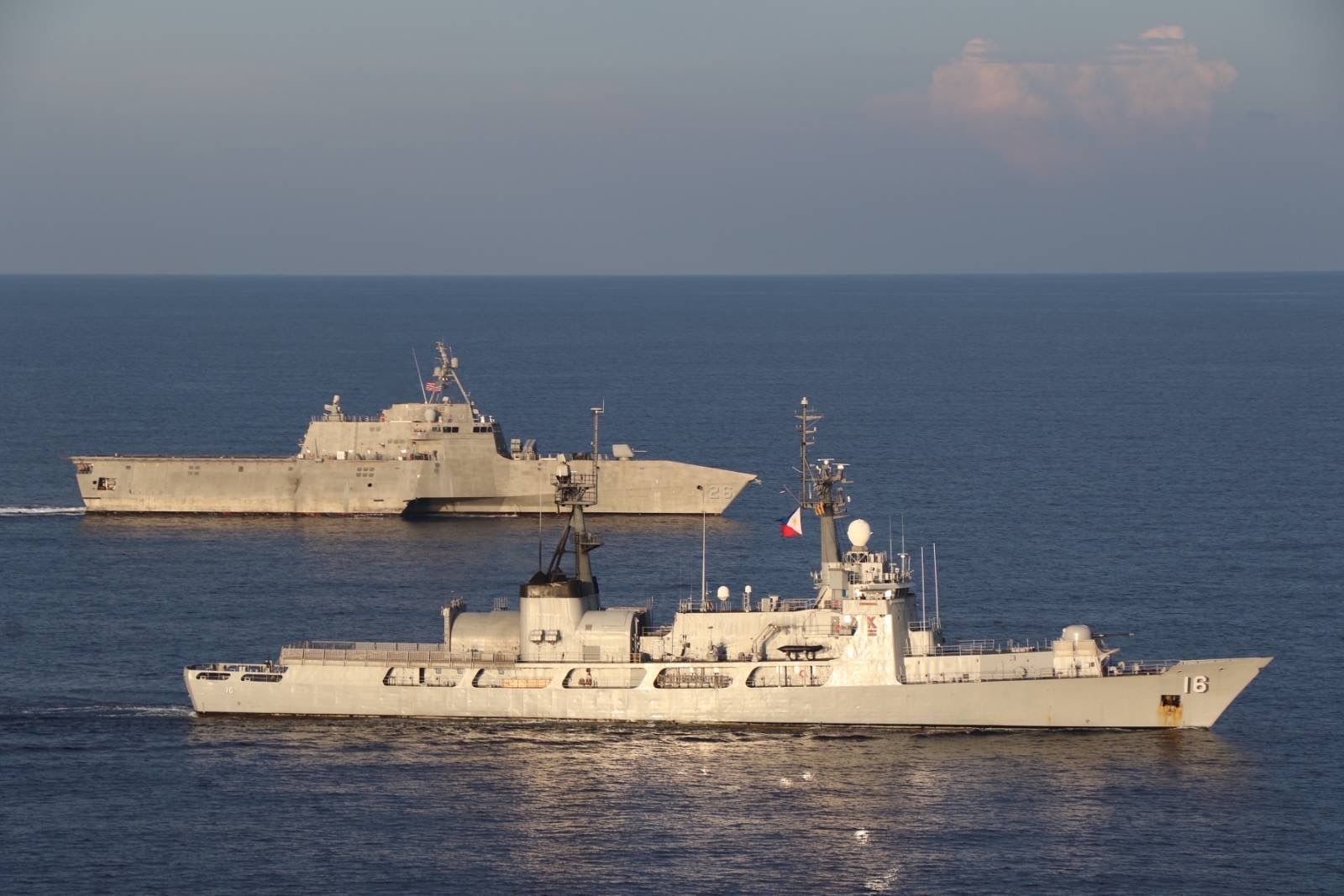
The Philippine Navy (PN) and the United States Navy (USN) sailed together anew in the West Philippine Sea (WPS) on Wednesday, July 31, in a move that will gauge China’s response amid efforts to de-escalate tension in the contested waters.
PN patrol ship BRP Ramon Alcaraz (PS16) and USN littoral combat ship USS Mobile (LCS 26) performed a bilateral maritime cooperative activity (MCA) in the waters west of Palawan, inside the country’s exclusive economic zone (EEZ).
The two ships conducted an array of drills including a communications check exercise, division tactics, officer of the watch maneuver exercise, photographic exercise, and cross deck exercise to “to enhance communication and operational coordination between the two navies.”
Armed Forces of the Philippines (AFP) Chief Gen. Romeo Brawner Jr. said the primary objective of the MCA was to improve the readiness and ability of the two navies to operate together in ensuring maritime security and stability in the region.
“These joint exercises with our ally are crucial in enhancing our naval capabilities and ensuring that we can effectively collaborate to safeguard our maritime interests. The partnership between the Philippine Navy and the United States Navy continues to be a pillar of regional stability," he said.
The MCA was concluded at 6 p.m. Wednesday and no Chinese vessel was detected in the exercise area both by visual and radar monitoring, according to AFP public affairs office chief Col. Xerxes Trinidad.
The MCA was held nearly a month after Manila and Beijing agreed to de-escalate tension in the WPS during diplomatic talks.
China has opposed the previous iterations of the MCA conducted by the Philippines and US with other countries as it accused Washington of creating small alliances in the Indo-Pacific region to isolate them.
However, the AFP earlier insisted that the MCA was being done in accordance with international law and established norms in pursuit of the country’s national interests in the WPS.
The previous MCAs included “like-minded” nations such as Australia and Japan.