ADVERTISEMENT

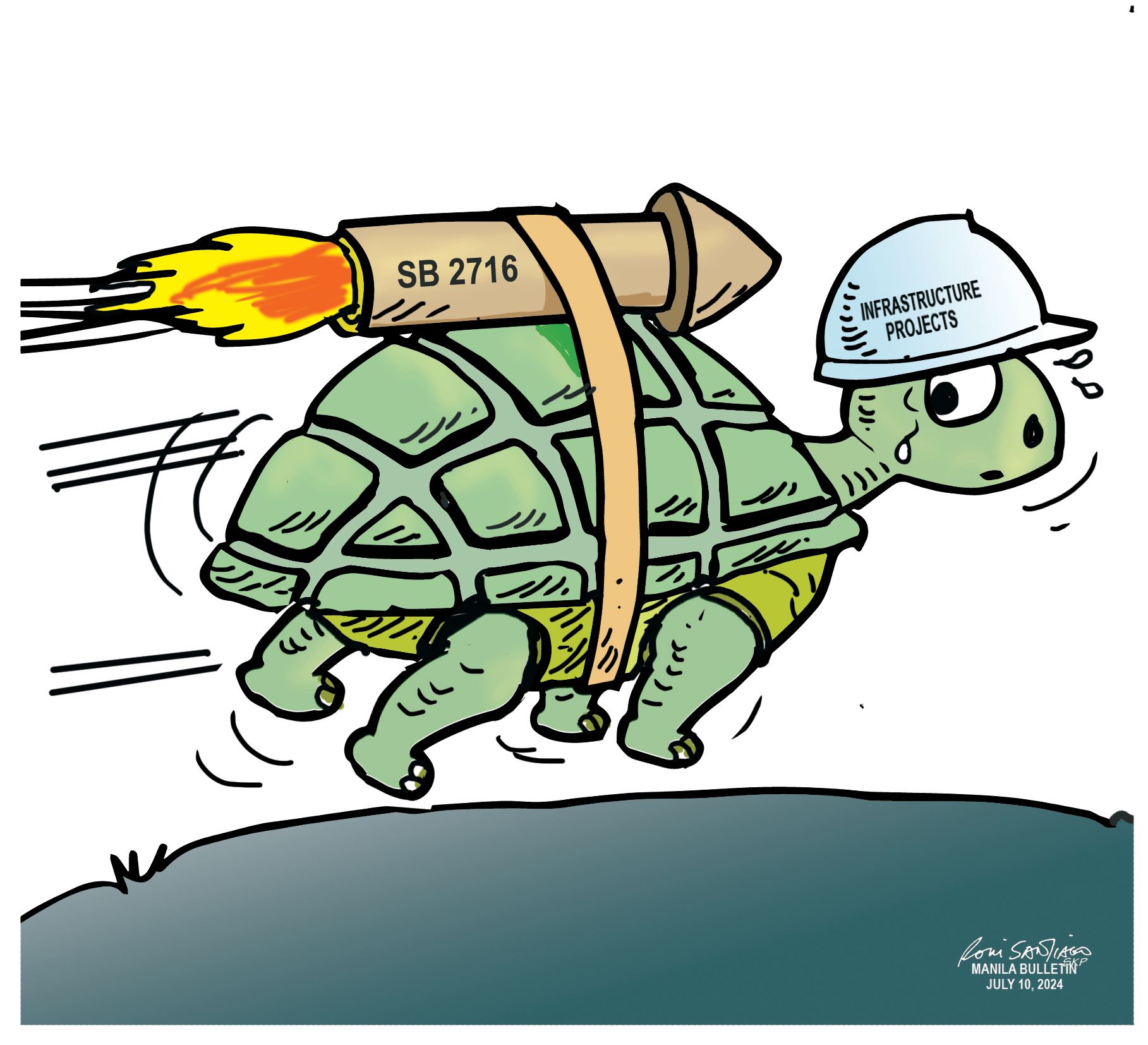
Fast-track infra dev't, ensure better future for Filipinos

Published Jul 9, 2024 10:41 pm

E CARTOON JUL 10, 2024.jpg

The efficient implementation of infrastructure projects is crucial for economic growth. However, delays and cost overruns often hinder progress. 
In fact, the Philippine government was required to pay ₱230.17 million in 2017 and ₱278 million in 2018 in penalties and commitment fees due to delays in the implementation of various government projects.


This is why the filing of Senate Bill No. 2716, the proposed Accelerated Infrastructure Delivery Act, is a welcome development. The measure seeks round-the-clock work for priority projects funded by the national government, local government units, and government-owned and -controlled corporations, particularly those involving hard infrastructure like the construction, repair, and maintenance of roads and bridges.


Apart from these penalties and commitment fees, delays inflate construction, maintenance, and repair costs, diverting much-needed resources from essential social programs.


“The millions of pesos that we will save through this proposed law can instead be reallocated to the government’s public services programs where they can make the most difference,” Senator Grace Poe said in justifying the filing of the measure.


Apart from channeling the savings out of unnecessary charges to social services, accelerated implementation of infrastructure projects helps boost economic growth as faster project completion stimulates economic activity and job creation; improve livelihoods as infrastructure enhances connectivity that enables people to access markets, education, and healthcare; reduce costs as timely completion minimizes maintenance expenses and ensures optimal use of funds; improve social equity as efficient infrastructure benefits marginalized communities by providing essential services.
What causes the delay in the implementation of projects?


Most often, the delay is blamed on bureaucratic hurdles. These include, but are not limited to, legal processes, court injunctions, and red tape.
To address this problem, it is crucial to streamline the system of approval by simplifying regulatory processes to expedite projects; strictly upholding Republic Act No. 8975, which prohibits lower courts from issuing restraining orders against government projects; engaging in more public-private partnerships for efficient project execution; and investing in technology by leveraging digital tools for project monitoring and management.


To motivate compliance and ensure efficiency, contractors and workers engaged in government infrastructure projects under the bill may be eligible for incentives based on the criteria and guidelines established by the appropriate implementing agency.


Once enacted, the measure hopes to accelerate infrastructure projects by addressing legal bottlenecks and ensuring timely implementation, thus significantly enhancing the country’s development.


We look forward to the enactment of the measure. Accelerating infrastructure is about building a better future for all Filipinos. By prioritizing timely implementation, we can help unlock social progress and create a more resilient nation.

Related Tags

Editorial
ADVERTISEMENT
.most-popular .layout-ratio{ padding-bottom: 79.13%; } @media (min-width: 768px) and (max-width: 1024px) { .widget-title { font-size: 15px !important; } }

{{ articles_filter_1561_widget.title }}

.most-popular .layout-ratio{ padding-bottom: 79.13%; } @media (min-width: 768px) and (max-width: 1024px) { .widget-title { font-size: 15px !important; } }

{{ articles_filter_1562_widget.title }}

.most-popular .layout-ratio{ padding-bottom: 79.13%; } @media (min-width: 768px) and (max-width: 1024px) { .widget-title { font-size: 15px !important; } }

{{ articles_filter_1563_widget.title }}

{{ articles_filter_1564_widget.title }}

.mb-article-details { position: relative; } .mb-article-details .article-body-preview, .mb-article-details .article-body-summary{ font-size: 17px; line-height: 30px; font-family: "Libre Caslon Text", serif; color: #000; } .mb-article-details .article-body-preview iframe , .mb-article-details .article-body-summary iframe{ width: 100%; margin: auto; } .read-more-background { background: linear-gradient(180deg, color(display-p3 1.000 1.000 1.000 / 0) 13.75%, color(display-p3 1.000 1.000 1.000 / 0.8) 30.79%, color(display-p3 1.000 1.000 1.000) 72.5%); position: absolute; height: 200px; width: 100%; bottom: 0; display: flex; justify-content: center; align-items: center; padding: 0; } .read-more-background a{ color: #000; } .read-more-btn { padding: 17px 45px; font-family: Inter; font-weight: 700; font-size: 18px; line-height: 16px; text-align: center; vertical-align: middle; border: 1px solid black; background-color: white; } .hidden { display: none; }
function initializeAllSwipers() { // Get all hidden inputs with cms_article_id document.querySelectorAll('[id^="cms_article_id_"]').forEach(function (input) { const cmsArticleId = input.value; const articleSelector = '#article-' + cmsArticleId + ' .body_images'; const swiperElement = document.querySelector(articleSelector); if (swiperElement && !swiperElement.classList.contains('swiper-initialized')) { new Swiper(articleSelector, { loop: true, pagination: false, navigation: { nextEl: '#article-' + cmsArticleId + ' .swiper-button-next', prevEl: '#article-' + cmsArticleId + ' .swiper-button-prev', }, }); } }); } setTimeout(initializeAllSwipers, 3000); const intersectionObserver = new IntersectionObserver( (entries) => { entries.forEach((entry) => { if (entry.isIntersecting) { const newUrl = entry.target.getAttribute("data-url"); if (newUrl) { history.pushState(null, null, newUrl); let article = entry.target; // Extract metadata const author = article.querySelector('.author-section').textContent.replace('By', '').trim(); const section = article.querySelector('.section-info ').textContent.replace(' ', ' '); const title = article.querySelector('.article-title h1').textContent; // Parse URL for Chartbeat path format const parsedUrl = new URL(newUrl, window.location.origin); const cleanUrl = parsedUrl.host + parsedUrl.pathname; // Update Chartbeat configuration if (typeof window._sf_async_config !== 'undefined') { window._sf_async_config.path = cleanUrl; window._sf_async_config.sections = section; window._sf_async_config.authors = author; } // Track virtual page view with Chartbeat if (typeof pSUPERFLY !== 'undefined' && typeof pSUPERFLY.virtualPage === 'function') { try { pSUPERFLY.virtualPage({ path: cleanUrl, title: title, sections: section, authors: author }); } catch (error) { console.error('ping error', error); } } // Optional: Update document title if (title && title !== document.title) { document.title = title; } } } }); }, { threshold: 0.1 } ); function showArticleBody(button) { const article = button.closest("article"); const summary = article.querySelector(".article-body-summary"); const body = article.querySelector(".article-body-preview"); const readMoreSection = article.querySelector(".read-more-background"); // Hide summary and read-more section summary.style.display = "none"; readMoreSection.style.display = "none"; // Show the full article body body.classList.remove("hidden"); } document.addEventListener("DOMContentLoaded", () => { let loadCount = 0; // Track how many times articles are loaded const offset = [1, 2, 3, 4, 5, 6, 7, 8, 9, 10]; // Offset values const currentUrl = window.location.pathname.substring(1); let isLoading = false; // Prevent multiple calls if (!currentUrl) { console.log("Current URL is invalid."); return; } const sentinel = document.getElementById("load-more-sentinel"); if (!sentinel) { console.log("Sentinel element not found."); return; } function isSentinelVisible() { const rect = sentinel.getBoundingClientRect(); return ( rect.top < window.innerHeight && rect.bottom >= 0 ); } function onScroll() { if (isLoading) return; if (isSentinelVisible()) { if (loadCount >= offset.length) { console.log("Maximum load attempts reached."); window.removeEventListener("scroll", onScroll); return; } isLoading = true; const currentOffset = offset[loadCount]; window.loadMoreItems().then(() => { let article = document.querySelector('#widget_1690 > div:nth-last-of-type(2) article'); intersectionObserver.observe(article) loadCount++; }).catch(error => { console.error("Error loading more items:", error); }).finally(() => { isLoading = false; }); } } window.addEventListener("scroll", onScroll); });

Sign up by email to receive news.