ADVERTISEMENT

Hamas clears the way for a possible cease-fire after dropping key demand, officials say

Published Jul 6, 2024 01:09 pm
AP24187535037597.jpg
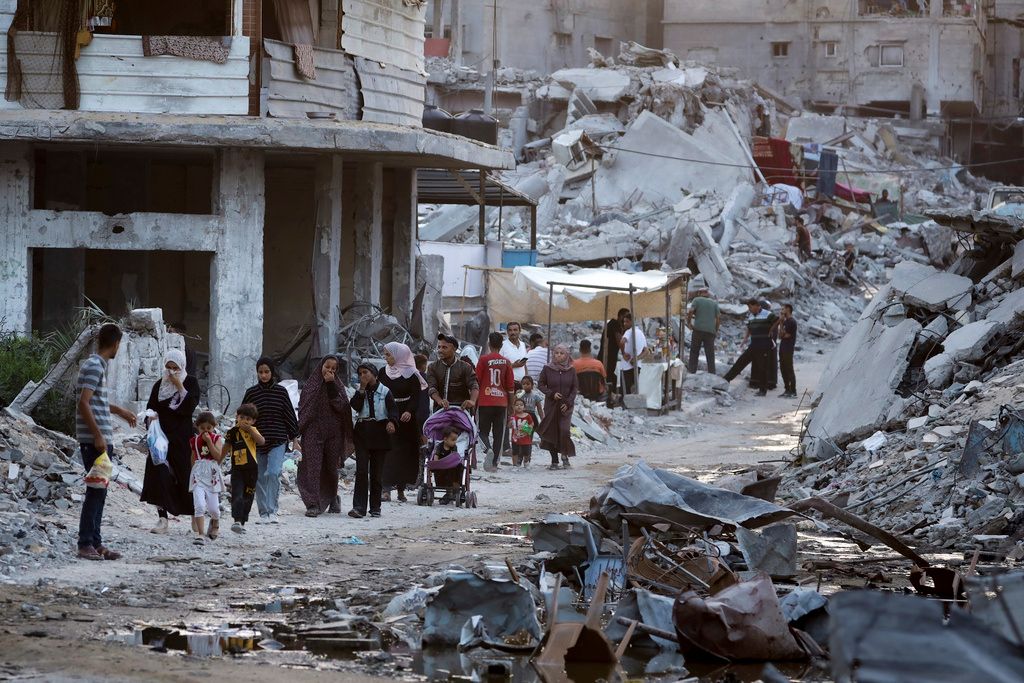
Palestinians displaced by the Israeli air and ground offensive on the Gaza Strip walk next to sewage flowing into the streets of the southern town of Khan Younis, Gaza Strip, July 4, 2024. Hamas has given initial approval for a U.S.-backed proposal for a phased cease-fire deal in Gaza, dropping a key demand that Israel gives an up-front commitment for a complete end to the war, a Hamas and an Egyptian official said Saturday July 6, 2024. (AP Photo/Jehad Alshrafi, File)

DEIR AL-BALAH, Gaza (AP) — Hamas has given initial approval for a U.S.-backed proposal for a phased cease-fire deal in Gaza, dropping a key demand that Israel give an up-front commitment for a complete end to the war, a Hamas and an Egyptian official said Saturday.

The apparent compromise by the militant group — which controlled Gaza before triggering the war with an Oct. 7 attack on Israel — could help deliver the first pause in fighting since last November and set the stage for further talks on ending a devastating nine-month war. But all sides cautioned that a deal is still not guaranteed.

The two officials, who spoke on conditions of anonymity to discuss the ongoing negotiations, said Washington's phased deal will first include a "full and complete" six-week cease-fire that would see the release of a number of hostages, including women, the elderly and the wounded, in exchange for the release of hundreds of Palestinian prisoners. During these 42 days, Israeli forces would also withdraw from densely populated areas of Gaza and allow the return of displaced people to their homes in northern Gaza, the pair said.

Over that period, Hamas, Israel and the mediators would also negotiate the terms of the second phase that could see the release of the remaining male hostages, both civilians and soldiers, the officials said. In return, Israel would free additional Palestinian prisoners and detainees. The third phase would see the return of any remaining hostages, including bodies of dead captives, and the start of a yearslong reconstruction project.

Hamas still wants "written guarantees" from mediators that Israel will continue to negotiate a permanent cease-fire deal once the first phase goes into effect, the two officials said.

The Hamas representative told The Associated Press the group's approval came after it received "verbal commitments and guarantees" from the mediators that the war won't be resumed and that negotiations will continue until a permanent cease-fire is reached.

"Now we want these guarantees on paper," he said.

Months of on-again off-again cease-fire talks have stumbled over Hamas' demand that any deal include a complete end to the war. Prime Minister Benjamin Netanyahu has offered to pause the fighting, but not end it altogether until Israel reaches its goals of destroying Hamas' military and governing capabilities and returning all hostages held by the militant group.

Hamas has previously expressed concern Israel will restart the war after the hostages are released. Likewise, Israeli officials have said they are worried Hamas will draw out the talks and the initial cease-fire indefinitely, without releasing all the hostages.

Netanyahu's office did not respond to requests for comment, and there was no immediate comment from Washington.

On Friday, the Israeli prime minister confirmed that the Mossad spy agency's chief had paid a lightning visit to Qatar, one of the key mediators. But his office said "gaps between the parties" remained.

Israel launched the war in Gaza after Hamas' October attack, in which militants stormed into southern Israel, killed some 1,200 people — mostly civilians — and abducted about 250.

Since then, the Israeli air and ground offensive has killed more than 38,000 people in Gaza, according to the territory's Health Ministry, which does not distinguish between combatants and civilians in its count. The offensive has caused widespread devastation and unleashed a humanitarian crisis that has left hundreds of thousands of people on the brink of famine, according to international officials. Israel says Hamas is still holding about 120 hostages — about a third of which Israel believes to have died.

In line with previous proposals, the deal would see around 600 trucks of humanitarian aid entering Gaza daily — including 50 fuel trucks — with 300 bound for the hard-hit northern of the enclave, the officials said. Following Israel's assault on the southernmost city of Rafah, aid supplies entering Gaza have been reduced to a trickle.

Saturday's news comes as fighting and Israel's ariel bombardment in Gaza continues unabated.

In the central city of Deir al-Balah, funeral prayers were held for 12 Palestinians, including five children and two women, killed in three separate strikes in central Gaza on Friday and Saturday, according to hospital officials. The bodies of the dead were taken to al-Aqsa Martyrs Hospital, where they were counted by AP journalists.

Two of those killed in one of the strikes that hit the Mughazi Refugee camp Friday were employees with the United Nations agency for Palestinian Refugees, the organization's director of communications told the AP. Juliette Touma added that a total of 194 workers with the U.N. agency have been killed by the conflict since October.

Earlier this week, some 250,000 Palestinians were affected by an Israeli evacuation order in the southern city of Khan Younis and the surrounding areas. Most Palestinians seeking safety are either heading to an Israeli-declared "safe zone" centered on a coastal area called Muwasi, or the nearby city of Deir al-Balah.

Ground fighting has also raged in the Shijaiyah neighborhood of Gaza City for the past two weeks, forcing tens of thousands of people to flee their homes. Many sheltered in the Yarmouk Sports Stadium, one of the strip's largest soccer arenas.


Related Tags

WORLDNEWS
ADVERTISEMENT
.most-popular .layout-ratio{ padding-bottom: 79.13%; } @media (min-width: 768px) and (max-width: 1024px) { .widget-title { font-size: 15px !important; } }

{{ articles_filter_1561_widget.title }}

.most-popular .layout-ratio{ padding-bottom: 79.13%; } @media (min-width: 768px) and (max-width: 1024px) { .widget-title { font-size: 15px !important; } }

{{ articles_filter_1562_widget.title }}

.most-popular .layout-ratio{ padding-bottom: 79.13%; } @media (min-width: 768px) and (max-width: 1024px) { .widget-title { font-size: 15px !important; } }

{{ articles_filter_1563_widget.title }}

{{ articles_filter_1564_widget.title }}

.mb-article-details { position: relative; } .mb-article-details .article-body-preview, .mb-article-details .article-body-summary{ font-size: 17px; line-height: 30px; font-family: "Libre Caslon Text", serif; color: #000; } .mb-article-details .article-body-preview iframe , .mb-article-details .article-body-summary iframe{ width: 100%; margin: auto; } .read-more-background { background: linear-gradient(180deg, color(display-p3 1.000 1.000 1.000 / 0) 13.75%, color(display-p3 1.000 1.000 1.000 / 0.8) 30.79%, color(display-p3 1.000 1.000 1.000) 72.5%); position: absolute; height: 200px; width: 100%; bottom: 0; display: flex; justify-content: center; align-items: center; padding: 0; } .read-more-background a{ color: #000; } .read-more-btn { padding: 17px 45px; font-family: Inter; font-weight: 700; font-size: 18px; line-height: 16px; text-align: center; vertical-align: middle; border: 1px solid black; background-color: white; } .hidden { display: none; }
function initializeAllSwipers() { // Get all hidden inputs with cms_article_id document.querySelectorAll('[id^="cms_article_id_"]').forEach(function (input) { const cmsArticleId = input.value; const articleSelector = '#article-' + cmsArticleId + ' .body_images'; const swiperElement = document.querySelector(articleSelector); if (swiperElement && !swiperElement.classList.contains('swiper-initialized')) { new Swiper(articleSelector, { loop: true, pagination: false, navigation: { nextEl: '#article-' + cmsArticleId + ' .swiper-button-next', prevEl: '#article-' + cmsArticleId + ' .swiper-button-prev', }, }); } }); } setTimeout(initializeAllSwipers, 3000); const intersectionObserver = new IntersectionObserver( (entries) => { entries.forEach((entry) => { if (entry.isIntersecting) { const newUrl = entry.target.getAttribute("data-url"); if (newUrl) { history.pushState(null, null, newUrl); let article = entry.target; // Extract metadata const author = article.querySelector('.author-section').textContent.replace('By', '').trim(); const section = article.querySelector('.section-info ').textContent.replace(' ', ' '); const title = article.querySelector('.article-title h1').textContent; // Parse URL for Chartbeat path format const parsedUrl = new URL(newUrl, window.location.origin); const cleanUrl = parsedUrl.host + parsedUrl.pathname; // Update Chartbeat configuration if (typeof window._sf_async_config !== 'undefined') { window._sf_async_config.path = cleanUrl; window._sf_async_config.sections = section; window._sf_async_config.authors = author; } // Track virtual page view with Chartbeat if (typeof pSUPERFLY !== 'undefined' && typeof pSUPERFLY.virtualPage === 'function') { try { pSUPERFLY.virtualPage({ path: cleanUrl, title: title, sections: section, authors: author }); } catch (error) { console.error('ping error', error); } } // Optional: Update document title if (title && title !== document.title) { document.title = title; } } } }); }, { threshold: 0.1 } ); function showArticleBody(button) { const article = button.closest("article"); const summary = article.querySelector(".article-body-summary"); const body = article.querySelector(".article-body-preview"); const readMoreSection = article.querySelector(".read-more-background"); // Hide summary and read-more section summary.style.display = "none"; readMoreSection.style.display = "none"; // Show the full article body body.classList.remove("hidden"); } document.addEventListener("DOMContentLoaded", () => { let loadCount = 0; // Track how many times articles are loaded const offset = [1, 2, 3, 4, 5, 6, 7, 8, 9, 10]; // Offset values const currentUrl = window.location.pathname.substring(1); let isLoading = false; // Prevent multiple calls if (!currentUrl) { console.log("Current URL is invalid."); return; } const sentinel = document.getElementById("load-more-sentinel"); if (!sentinel) { console.log("Sentinel element not found."); return; } function isSentinelVisible() { const rect = sentinel.getBoundingClientRect(); return ( rect.top < window.innerHeight && rect.bottom >= 0 ); } function onScroll() { if (isLoading) return; if (isSentinelVisible()) { if (loadCount >= offset.length) { console.log("Maximum load attempts reached."); window.removeEventListener("scroll", onScroll); return; } isLoading = true; const currentOffset = offset[loadCount]; window.loadMoreItems().then(() => { let article = document.querySelector('#widget_1690 > div:nth-last-of-type(2) article'); intersectionObserver.observe(article) loadCount++; }).catch(error => { console.error("Error loading more items:", error); }).finally(() => { isLoading = false; }); } } window.addEventListener("scroll", onScroll); });

Sign up by email to receive news.