

ADVERTISEMENT

'Lack of coordination' across agencies hinders equitable opportunities for health, nutrition

EDCOM 2 pushes for unified agency action to revamp early childhood nutrition programs

Published Jul 4, 2024 01:48 pm

Recognizing the urgent need to strengthen the implementation plans on early childhood nutrition programs, the Second Congressional Commission on Education (EDCOM 2) on Thursday, July 4, said that its members will meet with concerned agencies to ensure that their respective mandates to aligned with each other.
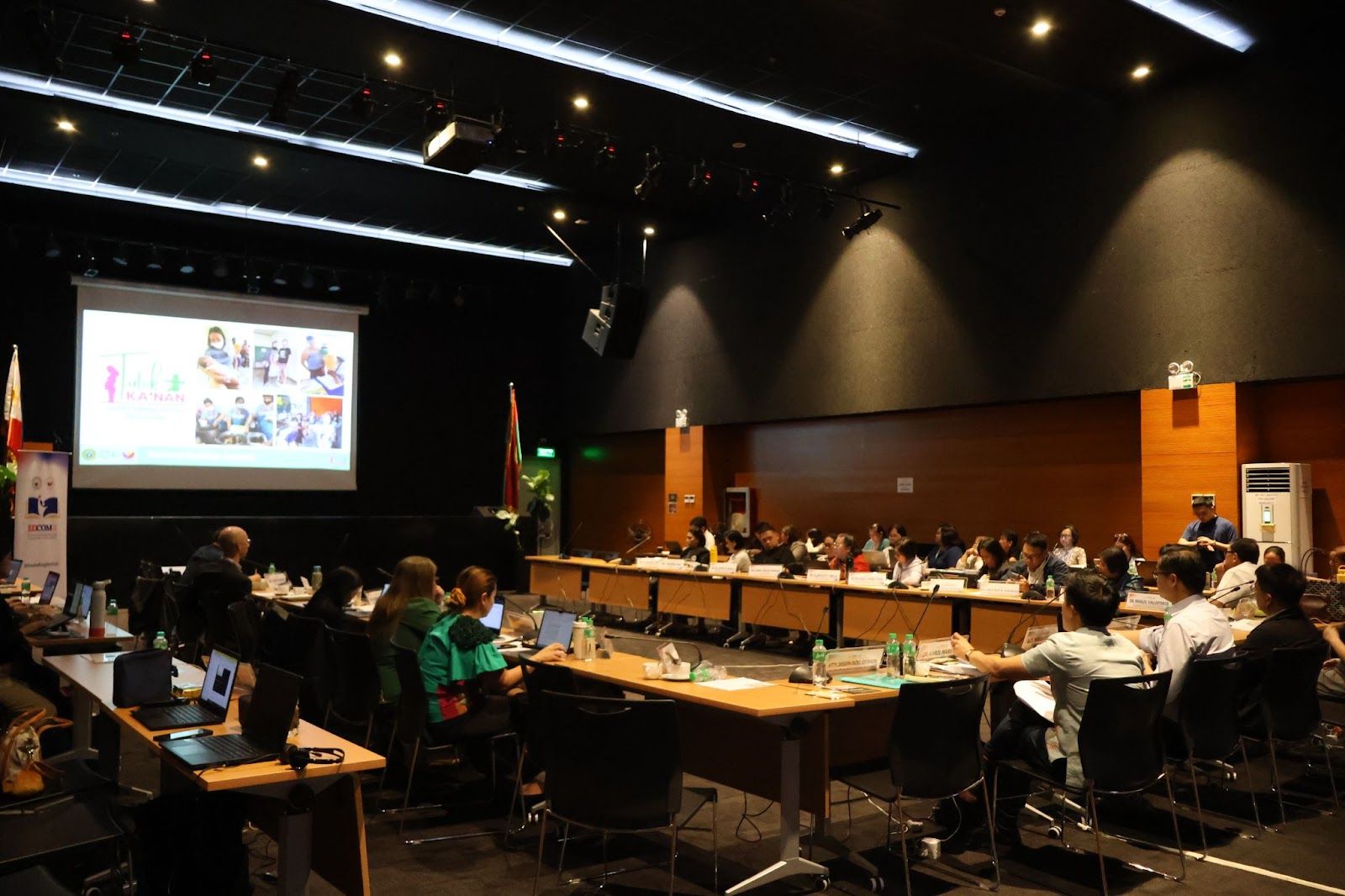
ecom2.jpg
(Photo from EDCOM 2)

EDCOM 2 Co-Chairperson Senator Win Gatchalian, during the Commission’s probe into the implementation of early childhood nutrition programs, said that the Department of Health (DOH), National Nutrition Council (NNC), and the Early Childhood Care and Development Council (ECCD), with mandates to oversee the implementation of critical nutrition programs, “should really coordinate and talk” to ensure that “policies and programs are not coordinated.”

“Once the child is stunted at pumasok siya [entered school], the game is over. It is important for agencies to communicate, and that is the mandate of the law,” Gatchalian said.

During an EDCOM 2 public hearing on nutrition, the Commissioners expressed disappointment about the lack of coordination across agencies implementing nutrition and feeding programs in the country.

Citing its Year 1 findings, EDCOM 2 emphasized the need to address governance, implementation, and resourcing issues as these impede the efficient monitoring, evaluation, and successful implementation of crucial health and nutrition programs.

“The lack of institutionalization of effective practices at the national level also hinders equitable access and opportunities in LGU practices for health and nutrition,” EDCOM 2 said.

Focus on malnutrition, stunting

EDCOM 2 noted that DOH is currently implementing various nutrition programs in an attempt to address the high prevalence of malnutrition and stunting in the country and reduce stunting prevalence to 13.5% in 2028.

Republic Act No. 11148 or the First 1,000 Days Law seeks to institutionalize the convergence and scale-up of programs from different sectors around the critical first 1,000 days of life, and also focuses on strengthening the implementation and enforcement of the existing nutrition-related laws and policies.

Aside from the existing nutrition programs, the Philippine Multisectoral Nutrition Project (PNMP) was also launched to increase the utilization of a package of nutrition-specific and nutrition-sensitive interventions and improve key behaviors and practices known to reduce stunting in targeted local government units (LGUs).

Out of 1,4888 municipalities, 235 municipalities are covered by the project, prioritizing LGUs with the highest burden of childhood stunting.

While the efforts on nutrition-specific interventions are commendable, EDCOM 2 pointed out “how the implementation of nutrition and feeding programs are fragmented, lacking coordination among agencies concerned.”

Lack of local oversight, data

EDCOM 2 Executive Director Karol Mark Yee pointed out several concerns on the monitoring and implementation of such programs at the local level.

Despite the regular coordination with their local counterparts, EDCOM 2 noted that the “lack of data about the status of the local implementation of these nutrition-related programs is apparent.”

“The universe is huge. And it is understandably a very difficult responsibility,” Yee said, noting that with more than 1,000 municipalities, it is difficult to grasp what is happening on the ground.

As cited in the First 1,000 Days law, DOH is mandated, in coordination with the concerned NGAs and LGUs, to implement provisions of the law and provide oversight.

“Despite requiring LGUs to develop their respective local nutrition plans, the NNC also has no clear mechanism to monitor the implementation of these plans,” EDCOM 2 said.

Likewise, EDCOM 2 pointed out the confusion among LGUs as to the roles of the NNC and local health offices.

“Most often than not, when it comes to health, there is really a gap between the national and local. The battleground is not in your office, it is in the LGUs,” Gatchalian said, emphasizing how the lack of coordination and accountability across these implementing agencies can also impact the education agenda.

“We want to make sure that the accountability is clear,” Gatchalian added, noting that this is connected to EDCOM’s agenda which is education.

“We all know that if the child is stunted, it will be difficult for the child to learn and will have problems in the future,” Gatchalian said. “So we are trying to make sure that all these government agencies are coordinated, and are clear with their accountabilities,” he added.

Related Tags

EDCOM 2 EDCOM II NCC Malnutrition DOH
ADVERTISEMENT
.most-popular .layout-ratio{ padding-bottom: 79.13%; } @media (min-width: 768px) and (max-width: 1024px) { .widget-title { font-size: 15px !important; } }

{{ articles_filter_1561_widget.title }}

.most-popular .layout-ratio{ padding-bottom: 79.13%; } @media (min-width: 768px) and (max-width: 1024px) { .widget-title { font-size: 15px !important; } }

{{ articles_filter_1562_widget.title }}

.most-popular .layout-ratio{ padding-bottom: 79.13%; } @media (min-width: 768px) and (max-width: 1024px) { .widget-title { font-size: 15px !important; } }

{{ articles_filter_1563_widget.title }}

{{ articles_filter_1564_widget.title }}

.mb-article-details { position: relative; } .mb-article-details .article-body-preview, .mb-article-details .article-body-summary{ font-size: 17px; line-height: 30px; font-family: "Libre Caslon Text", serif; color: #000; } .mb-article-details .article-body-preview iframe , .mb-article-details .article-body-summary iframe{ width: 100%; margin: auto; } .read-more-background { background: linear-gradient(180deg, color(display-p3 1.000 1.000 1.000 / 0) 13.75%, color(display-p3 1.000 1.000 1.000 / 0.8) 30.79%, color(display-p3 1.000 1.000 1.000) 72.5%); position: absolute; height: 200px; width: 100%; bottom: 0; display: flex; justify-content: center; align-items: center; padding: 0; } .read-more-background a{ color: #000; } .read-more-btn { padding: 17px 45px; font-family: Inter; font-weight: 700; font-size: 18px; line-height: 16px; text-align: center; vertical-align: middle; border: 1px solid black; background-color: white; } .hidden { display: none; }
function initializeAllSwipers() { // Get all hidden inputs with cms_article_id document.querySelectorAll('[id^="cms_article_id_"]').forEach(function (input) { const cmsArticleId = input.value; const articleSelector = '#article-' + cmsArticleId + ' .body_images'; const swiperElement = document.querySelector(articleSelector); if (swiperElement && !swiperElement.classList.contains('swiper-initialized')) { new Swiper(articleSelector, { loop: true, pagination: false, navigation: { nextEl: '#article-' + cmsArticleId + ' .swiper-button-next', prevEl: '#article-' + cmsArticleId + ' .swiper-button-prev', }, }); } }); } setTimeout(initializeAllSwipers, 3000); const intersectionObserver = new IntersectionObserver( (entries) => { entries.forEach((entry) => { if (entry.isIntersecting) { const newUrl = entry.target.getAttribute("data-url"); if (newUrl) { history.pushState(null, null, newUrl); let article = entry.target; // Extract metadata const author = article.querySelector('.author-section').textContent.replace('By', '').trim(); const section = article.querySelector('.section-info ').textContent.replace(' ', ' '); const title = article.querySelector('.article-title h1').textContent; // Parse URL for Chartbeat path format const parsedUrl = new URL(newUrl, window.location.origin); const cleanUrl = parsedUrl.host + parsedUrl.pathname; // Update Chartbeat configuration if (typeof window._sf_async_config !== 'undefined') { window._sf_async_config.path = cleanUrl; window._sf_async_config.sections = section; window._sf_async_config.authors = author; } // Track virtual page view with Chartbeat if (typeof pSUPERFLY !== 'undefined' && typeof pSUPERFLY.virtualPage === 'function') { try { pSUPERFLY.virtualPage({ path: cleanUrl, title: title, sections: section, authors: author }); } catch (error) { console.error('ping error', error); } } // Optional: Update document title if (title && title !== document.title) { document.title = title; } } } }); }, { threshold: 0.1 } ); function showArticleBody(button) { const article = button.closest("article"); const summary = article.querySelector(".article-body-summary"); const body = article.querySelector(".article-body-preview"); const readMoreSection = article.querySelector(".read-more-background"); // Hide summary and read-more section summary.style.display = "none"; readMoreSection.style.display = "none"; // Show the full article body body.classList.remove("hidden"); } document.addEventListener("DOMContentLoaded", () => { let loadCount = 0; // Track how many times articles are loaded const offset = [1, 2, 3, 4, 5, 6, 7, 8, 9, 10]; // Offset values const currentUrl = window.location.pathname.substring(1); let isLoading = false; // Prevent multiple calls if (!currentUrl) { console.log("Current URL is invalid."); return; } const sentinel = document.getElementById("load-more-sentinel"); if (!sentinel) { console.log("Sentinel element not found."); return; } function isSentinelVisible() { const rect = sentinel.getBoundingClientRect(); return ( rect.top < window.innerHeight && rect.bottom >= 0 ); } function onScroll() { if (isLoading) return; if (isSentinelVisible()) { if (loadCount >= offset.length) { console.log("Maximum load attempts reached."); window.removeEventListener("scroll", onScroll); return; } isLoading = true; const currentOffset = offset[loadCount]; window.loadMoreItems().then(() => { let article = document.querySelector('#widget_1690 > div:nth-last-of-type(2) article'); intersectionObserver.observe(article) loadCount++; }).catch(error => { console.error("Error loading more items:", error); }).finally(() => { isLoading = false; }); } } window.addEventListener("scroll", onScroll); });

Sign up by email to receive news.