







Democratization of arts in the Philippines
Renato Habulan opens 'Art for all: A celebration of borderless artistic expression'


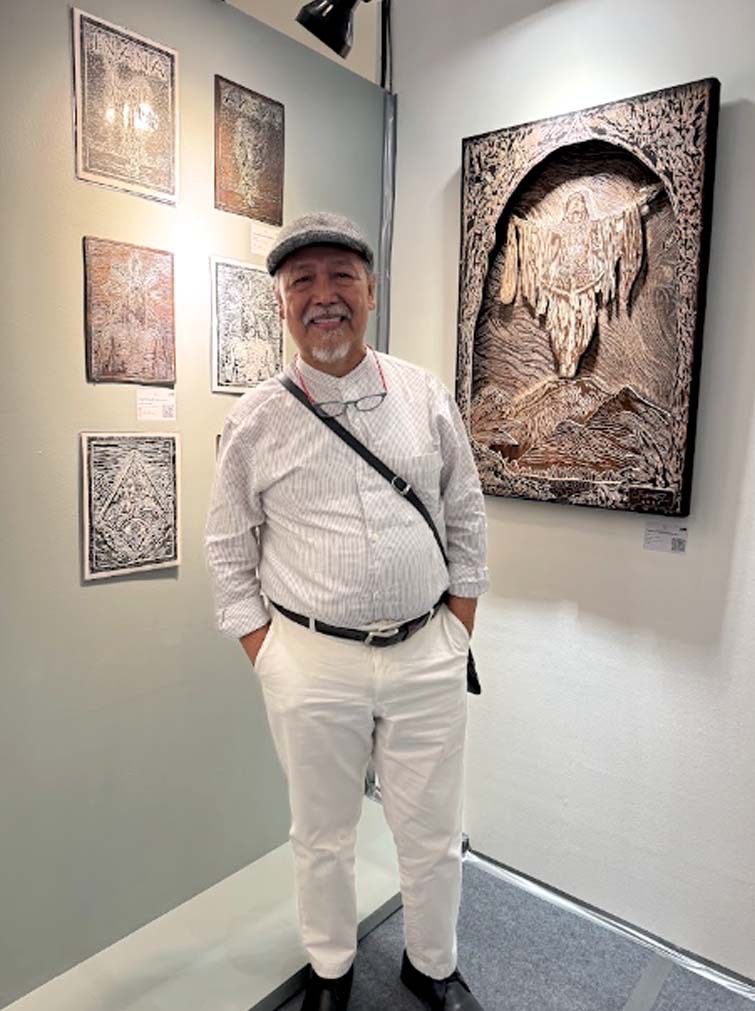
“A man should hear a little music, read a little poetry, and see a fine picture every day of his life, in order that worldly cares may not obliterate the sense of the beautiful which God has implanted in the human soul.”—Johann Wolfgang von Goethe, German author.
A report from The United Nations Educational, Scientific, and Cultural Organization (UNESCO) said that there are 104,000 museums in the world. In Asia, Japan has the highest number with 5,738 museums, followed by China with5,535, and Thailand with 1,526 museums.
In the Philippines, with a population of 119,208,503 (Worldometer report), data from OpenStreetMap shows that there are 307 museums across the country, including those run by the National Museum of the Philippines (NMP), local government units (LGUs), and private groups. This brings a ratio of one museum for every 388,301 Filipinos.
The limited access to museums and galleries hinders Filipinos' appreciation and love for the art. Some even think that artonly caters to the rich and those who can afford it. However, this shouldn't be the case, as museums "play a leading role in bolstering the creative economy locally and regionally."
What does art democratization mean?
In an effort to expand the horizons of the art scene in the Philippines, the Ortigas Art Festival, led by its curator, visual artist, and social realist Renato Habulan, opened its seventh edition with the theme “Art for All: A Celebration of Borderless Artistic Expression.”
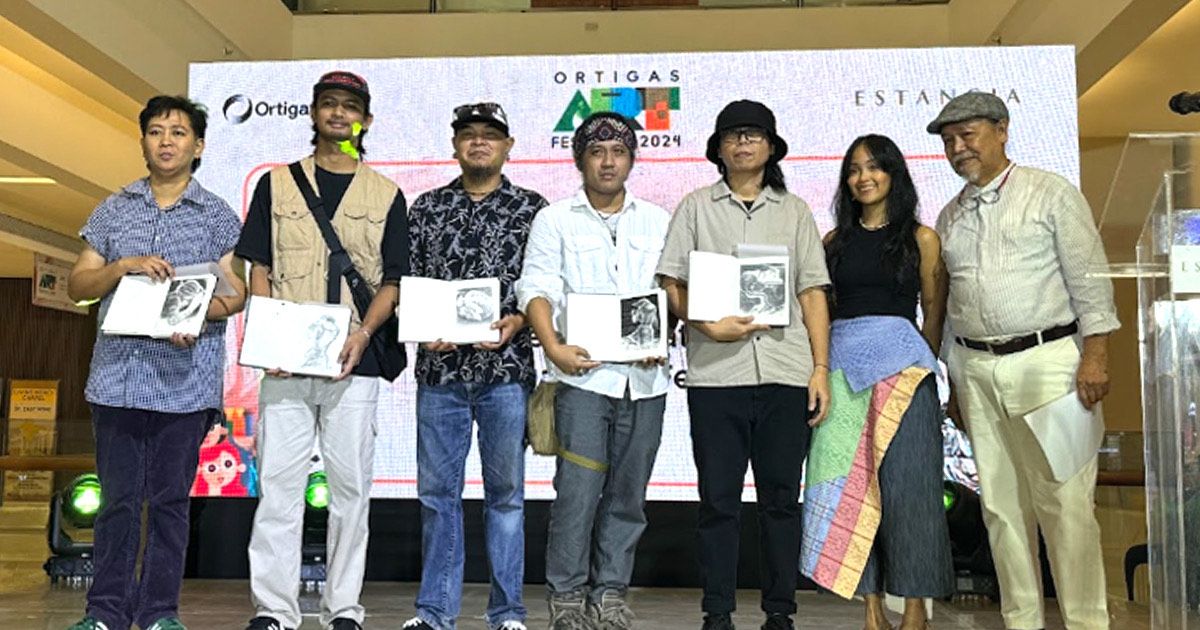
In a conversation with Manila Bulletin, Habulan said that he mounted this show hoping to democratize arts for the Filipinos—a show everyone, regardless of their educational and socio-economic background—could enjoy.
Habulan, a Cultural Center of the Philippines (CCP) Thirteen Artists Award recipient, also said that his team holds art caravans in different provinces in the Philippines to discover artistic talents, and these gifted individuals are showcasing their works in this year’s Ortigas Art Festival.
“The democratization of arts is not only pertaining to availability to a wider audience, engagement with the popular mass, but also changing the medium like paper and crates so it will be affordable for more art enthusiasts,” Habulan explained.“Most of the participating galleries in this show are artisan-initiative groups like the Linangan, Agos, and Angono artists group. These groups work beyond the festival so we can reach a wider audience. We went to the communities and regions and we gave them mentoring sessions.”
Artists groups assembled
In this year’s show, Agos Studio highlights the vibrant paintings and sculptures of up-and-coming Filipino artists. It also features “Buklod,” consisting of artists from Iloilo, which further solidifies its purpose to bring people together and champion regional artistry. Habulan also launched “Lunduyan,” a two-year mentorship program for emerging artists.
Meanwhile, Linangan Artist Residency, known as an alternative art school headed by Emmanuel Garibay and based in Alfonso, Cavite, creatively divides its Ortigas Art Festival exhibit into well-thought-out sections that encourage art education. The exhibit serves as a portal to creative discovery and learning through a series of solo exhibits, collaborative showcases, hands-on workshops, and lectures.
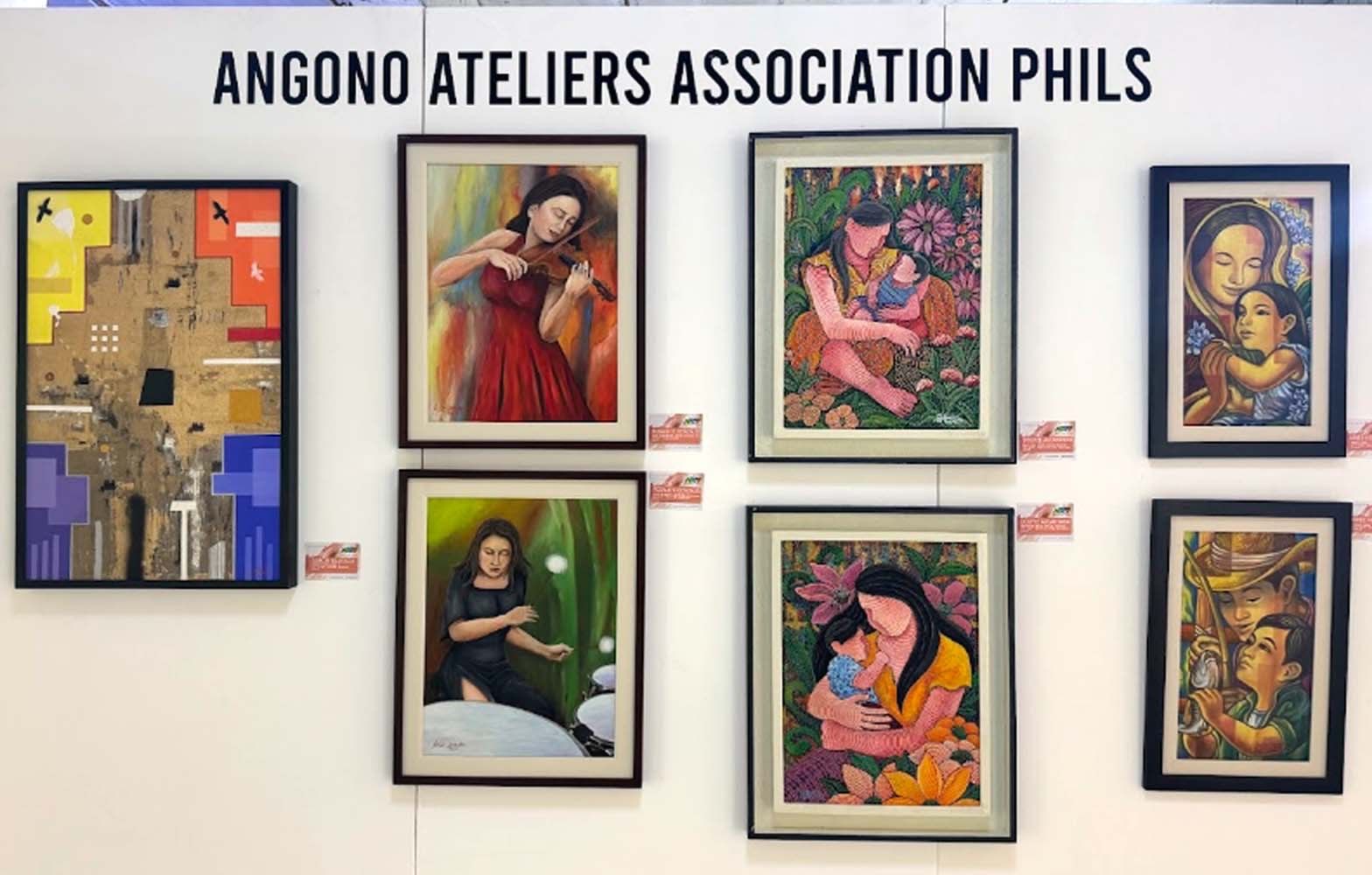
On top of these, several artists from Angono, Rizal, are showcasing their artworks. This includes the versatile and dynamic works of Totong Francisco, the grandson of National Artist Botong Francisco, under Grupo Sining Angono. The Angono Artists Association helps young artists develop their skills in art and teach the importance of preserving our culture and rich heritage.
“We go down to the artists in the periphery. No experience, no art degree, no exhibit, they are not yet winners because we really want to start from the bottom,” Habulan said. “Ang pipiliin namin yung mga pwede tulungan (We choose those we can help). Lift them out of poverty, it’s already a win for us. Kung naghihirap ka, paano ka magiging artist? Ang mahal mahal ng mga gamit (How can you be an artist if you're struggling? Art materials are too expensive). Some of the artists have family, how will they pursue their art? So what’s happening, even though the artists are really good, they become hobbyists because of day jobs. We help them to have financial success.”
Finding the identity of Filipino art
“Art has a bigger problem which is: Ano ba yung sining ng Filipino? Ano ang espiritu ng sining Filipino? Anong kwento ng sining Filipino? (What is Filipino art? What is the spirit of the Filipino art? What is the story of Filipino art?)” he said. “Kung nakatuon ka lang sa market, kakalimutan mo 'yun kasi hindi 'yun palatable sa market (If you will focus on the market, you will forget about these things because these are not palatable to the market). So as an art initiative group, the challenge for us is to create an enlightened ecosystem.
The real market is not just buying artworks but appreciating art, something that can be found at the popular mass which is at the bottom of the pyramid. This is the true audience, this should be our goal to reach.”
The 7th Ortigas Art Festival will run until Aug.18, 2024, at Estancia Mall East Wing, Ortigas City.