ADVERTISEMENT

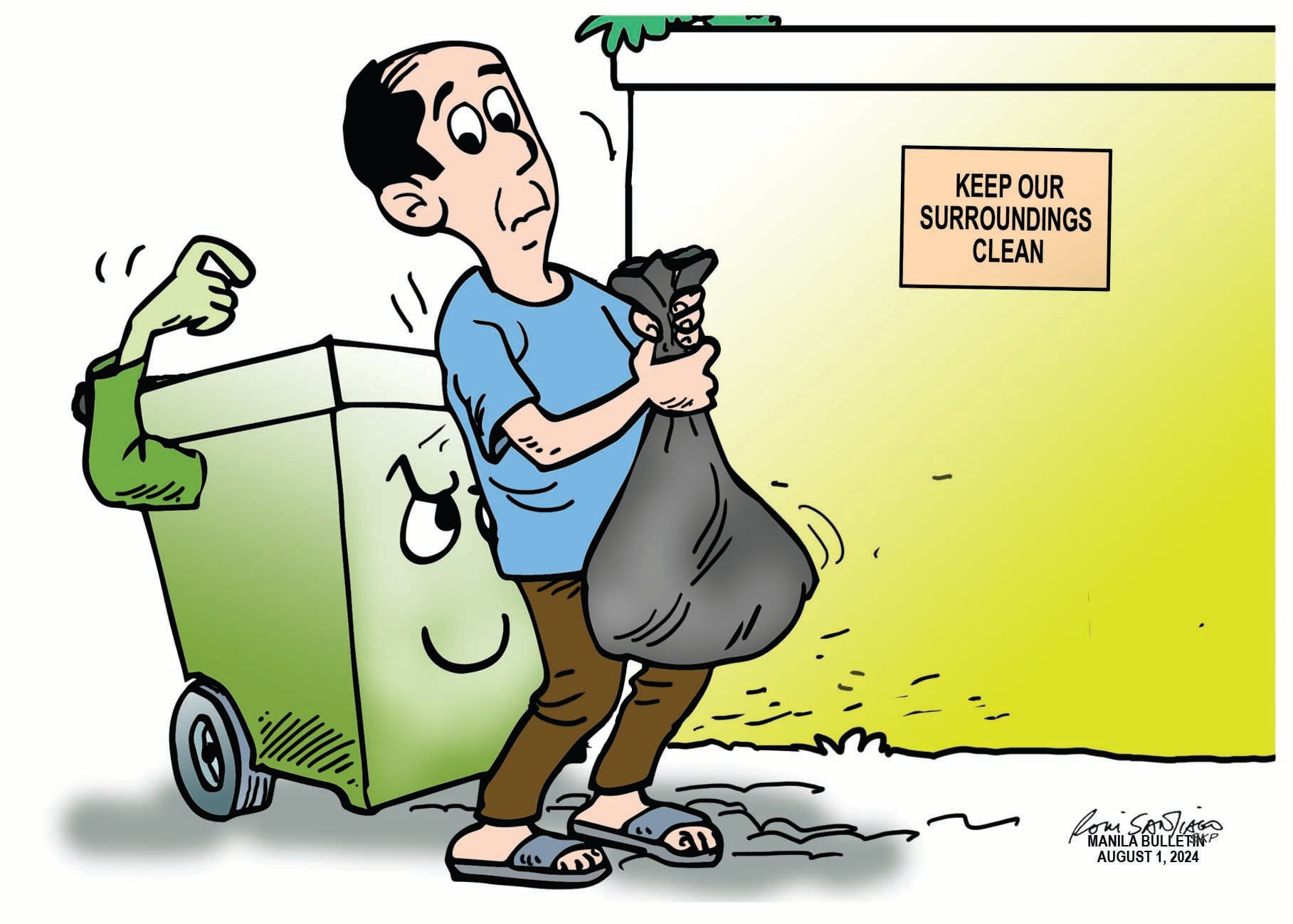
Citizens' duty: Keep your surroundings clean

Published Jul 31, 2024 04:06 pm

E CARTOON AUG 1, 2024.jpg

The reminder posted on many walls around us – Keep your surroundings clean – should not be taken only as a suggestion but a duty of every citizen.

There are many reasons for that.  One, the huge amount of solid waste clogs drainage systems and contributes to massive flooding during a typhoon, which was what happened during the recent Super Typhoon Carina and the enhanced monsoon.   

Two, waste eventually goes out into the sea, affecting marine life and our source of food, now a reality that has moved international organizations to launch campaigns to get governments to act. 

Three, it creates a breeding ground for disease such as the mosquitoes that cause dengue, a serious health problem especially during the rainy season.

There are many government programs to remind people to keep their surroundings clean. Last January, the Kalinga at Inisyatiba para sa Malinis na Bayan sa Bagong Pilipinas (Kalinisan) program was launched by Department of the Interior and Local Government (DILG) Secretary Benhur Abalos  “to uphold clean and green governance at barangay levels by promoting sustainable development and instill the habit of cleanliness among residents to create livable communities.”

The country is producing an estimated 22 million tons of garbage annually with Metro Manila topping the list of waste producers with 3.65 million tons, Abalos said, citing data from the National Solid Waste Management Commission.

The flooding around Metro Manila and neighboring provinces is still fresh in our minds, happening only after the July 24 rains. Indiscriminate garbage disposal was identified as a factor that worsened the flooding. 

During an inspection of the damage brought by the typhoon, President Marcos had appealed to the public to dispose of their trash properly. He noted that the government's flood control infrastructures did not work as intended due to the garbage that blocked them.

Department of Public Works and Highways (DPWH) Secretary Manuel M. Bonoan said addressing the problem of waste disposal would be a big help in mitigating floods so that it will not clog the available waterways, around 70 percent of the internal drainage system of Metro Manila already silted with waste.

More than a thousand cubic meters or 90 truckloads of garbage were collected from cleanup operations from July 24 to 28 conducted by the Metro Manila Development Authority’s (MMDA) Environmental Management Division-Metro Parkways Clearing Group.

Solid waste management has been the country’s major problem for many years and many laws and ordinances have been passed to solve it.  One of them is the segregation of waste which is still not implemented in all barangays where only one garbage truck collects all sorts of waste. It remains a question on how the garbage collectors segregate the bags of biodegradable and non-biodegradable waste.

In a recent forum, government officials had called for the review of the laws related to the management of solid waste, especially on the need for local government units (LGUs) to strictly enforce Republic Act 9003 or the Ecological Solid Waste Management Act of 2000.

While government agencies are moving to implement solutions that can solve the problem, stronger private sector efforts should be made to educate and involve each household to do its share to manage waste. 

Start with household rules on cutting waste, especially the use of plastics.  Make it a habit to segregate waste.  Stop unnecessary purchases of things simply because they look cute and fashionable – but will soon be thrown away.

Keeping our surroundings clean starts with each person.  Our lives depend on a clean environment.


Related Tags

Roni Santiago
ADVERTISEMENT
.most-popular .layout-ratio{ padding-bottom: 79.13%; } @media (min-width: 768px) and (max-width: 1024px) { .widget-title { font-size: 15px !important; } }

{{ articles_filter_1561_widget.title }}

.most-popular .layout-ratio{ padding-bottom: 79.13%; } @media (min-width: 768px) and (max-width: 1024px) { .widget-title { font-size: 15px !important; } }

{{ articles_filter_1562_widget.title }}

.most-popular .layout-ratio{ padding-bottom: 79.13%; } @media (min-width: 768px) and (max-width: 1024px) { .widget-title { font-size: 15px !important; } }

{{ articles_filter_1563_widget.title }}

{{ articles_filter_1564_widget.title }}

.mb-article-details { position: relative; } .mb-article-details .article-body-preview, .mb-article-details .article-body-summary{ font-size: 17px; line-height: 30px; font-family: "Libre Caslon Text", serif; color: #000; } .mb-article-details .article-body-preview iframe , .mb-article-details .article-body-summary iframe{ width: 100%; margin: auto; } .read-more-background { background: linear-gradient(180deg, color(display-p3 1.000 1.000 1.000 / 0) 13.75%, color(display-p3 1.000 1.000 1.000 / 0.8) 30.79%, color(display-p3 1.000 1.000 1.000) 72.5%); position: absolute; height: 200px; width: 100%; bottom: 0; display: flex; justify-content: center; align-items: center; padding: 0; } .read-more-background a{ color: #000; } .read-more-btn { padding: 17px 45px; font-family: Inter; font-weight: 700; font-size: 18px; line-height: 16px; text-align: center; vertical-align: middle; border: 1px solid black; background-color: white; } .hidden { display: none; }
function initializeAllSwipers() { // Get all hidden inputs with cms_article_id document.querySelectorAll('[id^="cms_article_id_"]').forEach(function (input) { const cmsArticleId = input.value; const articleSelector = '#article-' + cmsArticleId + ' .body_images'; const swiperElement = document.querySelector(articleSelector); if (swiperElement && !swiperElement.classList.contains('swiper-initialized')) { new Swiper(articleSelector, { loop: true, pagination: false, navigation: { nextEl: '#article-' + cmsArticleId + ' .swiper-button-next', prevEl: '#article-' + cmsArticleId + ' .swiper-button-prev', }, }); } }); } setTimeout(initializeAllSwipers, 3000); const intersectionObserver = new IntersectionObserver( (entries) => { entries.forEach((entry) => { if (entry.isIntersecting) { const newUrl = entry.target.getAttribute("data-url"); if (newUrl) { history.pushState(null, null, newUrl); let article = entry.target; // Extract metadata const author = article.querySelector('.author-section').textContent.replace('By', '').trim(); const section = article.querySelector('.section-info ').textContent.replace(' ', ' '); const title = article.querySelector('.article-title h1').textContent; // Parse URL for Chartbeat path format const parsedUrl = new URL(newUrl, window.location.origin); const cleanUrl = parsedUrl.host + parsedUrl.pathname; // Update Chartbeat configuration if (typeof window._sf_async_config !== 'undefined') { window._sf_async_config.path = cleanUrl; window._sf_async_config.sections = section; window._sf_async_config.authors = author; } // Track virtual page view with Chartbeat if (typeof pSUPERFLY !== 'undefined' && typeof pSUPERFLY.virtualPage === 'function') { try { pSUPERFLY.virtualPage({ path: cleanUrl, title: title, sections: section, authors: author }); } catch (error) { console.error('ping error', error); } } // Optional: Update document title if (title && title !== document.title) { document.title = title; } } } }); }, { threshold: 0.1 } ); function showArticleBody(button) { const article = button.closest("article"); const summary = article.querySelector(".article-body-summary"); const body = article.querySelector(".article-body-preview"); const readMoreSection = article.querySelector(".read-more-background"); // Hide summary and read-more section summary.style.display = "none"; readMoreSection.style.display = "none"; // Show the full article body body.classList.remove("hidden"); } document.addEventListener("DOMContentLoaded", () => { let loadCount = 0; // Track how many times articles are loaded const offset = [1, 2, 3, 4, 5, 6, 7, 8, 9, 10]; // Offset values const currentUrl = window.location.pathname.substring(1); let isLoading = false; // Prevent multiple calls if (!currentUrl) { console.log("Current URL is invalid."); return; } const sentinel = document.getElementById("load-more-sentinel"); if (!sentinel) { console.log("Sentinel element not found."); return; } function isSentinelVisible() { const rect = sentinel.getBoundingClientRect(); return ( rect.top < window.innerHeight && rect.bottom >= 0 ); } function onScroll() { if (isLoading) return; if (isSentinelVisible()) { if (loadCount >= offset.length) { console.log("Maximum load attempts reached."); window.removeEventListener("scroll", onScroll); return; } isLoading = true; const currentOffset = offset[loadCount]; window.loadMoreItems().then(() => { let article = document.querySelector('#widget_1690 > div:nth-last-of-type(2) article'); intersectionObserver.observe(article) loadCount++; }).catch(error => { console.error("Error loading more items:", error); }).finally(() => { isLoading = false; }); } } window.addEventListener("scroll", onScroll); });

Sign up by email to receive news.