






 Philippines
National
'Simply not feasible': Castro seeks scrapping, suspension of DepEd's Matatag curriculum
Philippines
National
'Simply not feasible': Castro seeks scrapping, suspension of DepEd's Matatag curriculum
'Simply not feasible': Castro seeks scrapping, suspension of DepEd's Matatag curriculum


At A Glance
- Citing concerns over excessive workload for teachers, ACT Teachers Party-list Rep. France Castro is calling for the termination or at least the suspension of the revised curriculum for Kindergarten to Grade 10, known as the Matatag curriculum.
- Introduced last year by then-Department of Education (DepEd) Secretary and Vice President Sara Duterte, the new curriculum aims to help improve learning outcomes by decongesting the number of learning competencies.
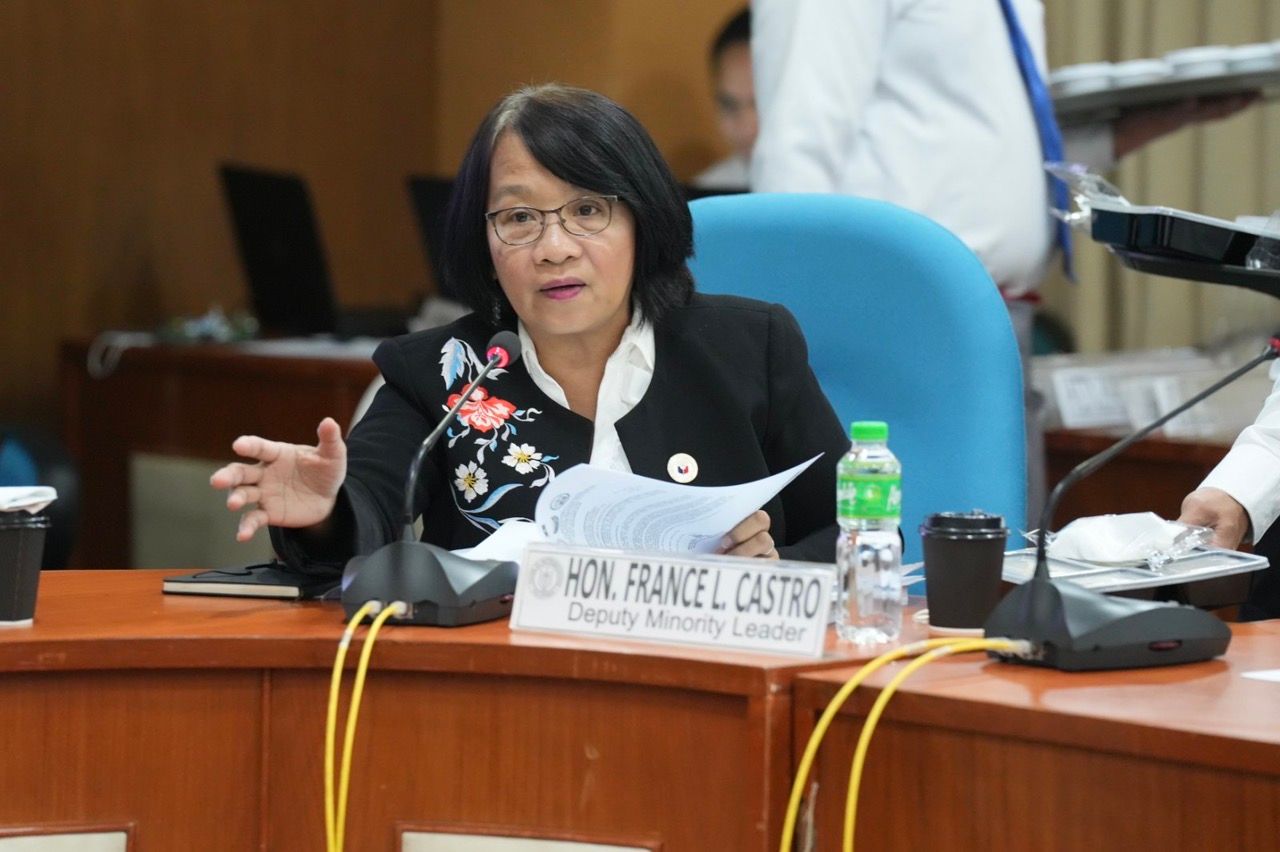 ACT Teachers Party-list Rep. France Castro (PPAB)
Citing concerns over excessive workload for teachers, ACT Teachers Party-list Rep. France Castro is calling for the termination or at least the suspension of the revised curriculum for Kindergarten to Grade 10, known as the Matatag curriculum.
"The Matatag curriculum, in its current form, is poised to overwhelm our already overburdened teachers with an unsustainable workload," Castro said in a statement.
"We cannot, in good conscience, implement a system that threatens to compromise the quality of education and the well-being of our educators,” she added.
Introduced last year by then-Department of Education (DepEd) Secretary and Vice President Sara Duterte, the new curriculum aims to help improve learning outcomes by decongesting the number of learning competencies.
Under the Matatag curriculum, students will focus on foundational skills aimed at honing “competent, job-ready, active, responsible and patriotic citizens”.
From originally seven main subjects, Kindergarten to Grade 10 will now be under five core subjects, namely: Language, Reading and Literacy, Mathematics, Makabansa (Patriotism), and Good Manners and Right Conduct (GMRC).
The gradual implementation of the Matatag curriculum is set to commence on School Year (SY) 2024 to 2025, and shall be piloted for Kindergarten, Grade 1, Grade 4, and Grade 7.
With the curriculum’s rollout underway, Castro has raised the alarm over the supposed lack of proper consultation and preparation.
She stressed that the rushed implementation would be a “recipe for chaos and confusion” in classrooms.
"Many schools have not received adequate training, yet they're being ordered to adhere to the Matatag time allotment in class schedules,” the lawmaker explained.
Castro, a Deputy Minority Leader, also argued that the curriculum's implementation comes at a time when the education sector is still grappling with long-standing shortages in classrooms, teachers, and learning materials——issues that were further intensified by recent calamities such as Typhoon Carina.
"Our teachers are being asked to do more with less. They're expected to adapt to this new curriculum while simultaneously addressing learning gaps from the pandemic and coping with inadequate resources,” she said.
“This is simply not feasible," she stressed.
With all these issues yet to be addressed, Castro says DepEd should at least consider reassessing the curriculum.
"We need to prioritize our teachers' capacity to deliver quality education over hasty curriculum changes," the Makabayan bloc member noted.
"Let's focus on addressing the fundamental issues plaguing our education system——insufficient funding, lack of resources, and the need for better support for our educators. Only then can we consider curriculum reforms that truly benefit both teachers and students,” she concluded.