







Bill regulating motorcycles-for-hire hurdles House


At A Glance
- A measure seeking to regulate the popular and ubiquitous motorcycle-for-hire service has inched its way closer to enactment.
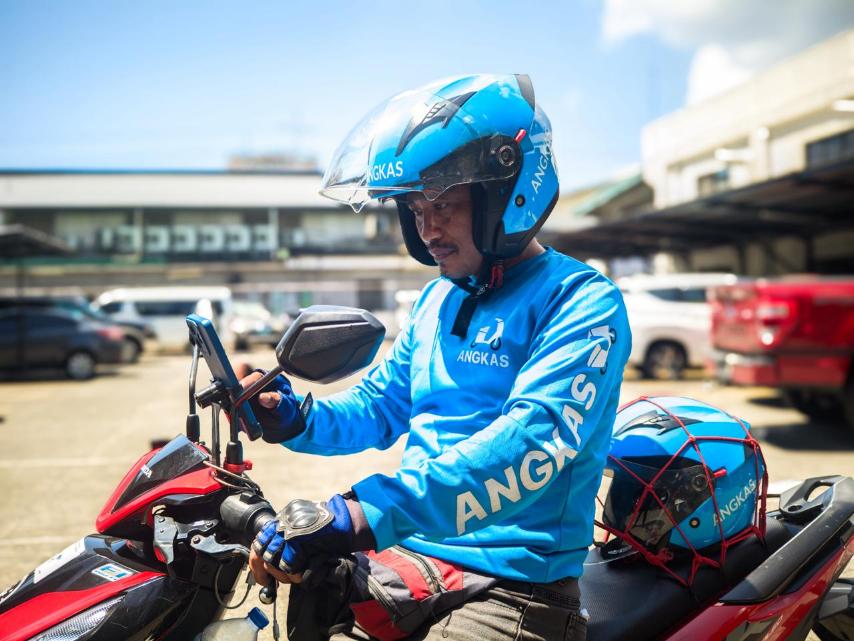 A motorcycles-for-hire rider (Angkas)
A measure seeking to regulate the popular and ubiquitous motorcycle-for-hire service has inched its way closer to enactment.
This, after the House of Representatives voted 200-1-0 (yes-no-abstain) to approve House Bill (HB) No.10424 on third and final reading Tuesday, July 30 during plenary session,
The proposed "Act regulating the operation of motorcycles-for-hire" allows the operation of motorcycles as common carriers for the transportation of passengers and goods, including parcels and mail.
“The House of Representatives acknowledge that motorcycles-for-hire not just serve as an efficient alternative to mass public transportation but also a viable source of livelihood for Filipinos,” Speaker Martin Romualdez said in a statement after the bill's third reading passage.
“This bill aims to provide safe, sufficient, and economical mode of public transport by allowing and regulating the use of motorcycles as public utility vehicles,” he added.
If and when signed into law, HB No.10424 will mandate the registration of motorcycles-for-hire with the Land Transportation Office (LTO) to ensure the roadworthiness of all motorcycle-for-hire before their registration, or renewal of registration.
The Land Transportation Franchising and Regulatory Board (LTFRB) would be given the power to regulate the operation of motorcycles-for-hire operating in areas where there are no operating digital platforms.
The number of routes or units that may be allowed to operate shall be in accordance with the local public transport route plan recommended by the local government unit (LGU) concerned.
The bill also sets the requirements for the grant of a franchise or issuance of Certificate of Public Convenience which include: a) Proof of Filipino citizenship, b) Financial capacity, c) LTO Certificate of Vehicle Registration, d) Insurance coverage and e) Tax Identification Number or Certificate of Registration as Common Carrier.
The proposed legislation also requires the registration of Motorcycle Taxi Platform Providers (MTPPs) and Online E-commerce Platform Providers (OEPPs) with the Securities and Exchange Commission and sets forth the minimum accreditation requirements that must be maintained by these digital platforms.
It also provides a 60 kilometers per hour (60 kph) speed limit for motorcycles-for-hire.
LTFRB is also tasked to prescribe the fares, surcharges and other transportation fees that may be charged by operators, OEPPs or MTPPs for motorcycle-for-hire services. The fare structure shall be set in consultation with the motorcycles-for-hire industry and subject to the approval of the Department of Transportation.
The measure also holds the operator and the MTPP or OEPP jointly and solidarily liable for death, injuries, or damage to property occurred in the course of operating a motorcycle-for-hire, with rights of subrogation against any party at fault.