ADVERTISEMENT

Typhoon-enhanced 'habagat' rains affect 3.6M people; displaced Filipinos down to 1.07M

Published Jul 28, 2024 04:17 am

a

IMG-baa48ab0c647fe7df15fb8967c86cd3a-V.jpg
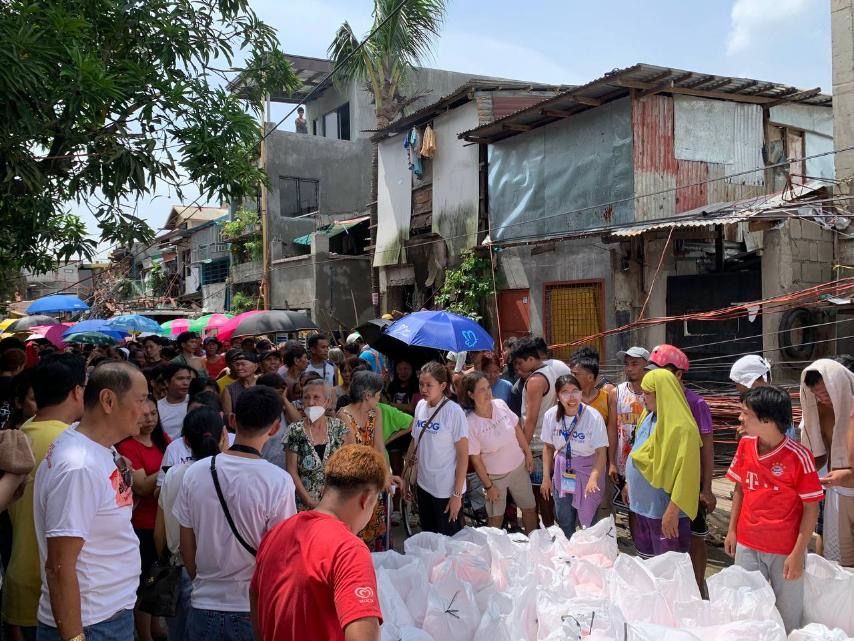
(File photo courtesy of House Speaker Martin Romualdez)

The number of people affected by heavy rains due to southwest monsoon (habagat) that were enhanced by Typhoon “Carina” and Tropical Depression “Butchoy” has further increased to 3,628,500 comprised of 971,667 families, the National Disaster Risk Reduction and Management Council said on Sunday, July 28.

As Carina and Butchoy already left the country’s area of responsibility, flood has subsided in many areas which prompted evacuees to return to their houses and check on their valuables. The number of displaced individuals decreased from 1.1 million to 1.07 million, with over 168,000 individuals still staying in 1,025 evacuation centers.

The death toll sharply increased from 16 to 28. 

Twelve fatalities were reported in the National Capital Region (NCR), five in Calabarzon (Region 4A), four in Zamboanga Peninsula (Region 9), two apiece in Cordillera Administrative Region (CAR) and Central Luzon (Region 3), and one each in Ilocos (Region 1), Northern Mindanao (Region 10), and Davao (Region 11).

Four persons remained missing: two in Ilocos Region, and one each in Calabarzon and Northern Mindanao. Four individuals were also injured in CAR and Northern Mindanao.

Rains continued to pour down in some parts of the nation due to the effects of habagat. There were 98 areas that remained flooded and these were located in NCR, CAR, Regions 1, 2, 3, 4A, 9, and Bangsamoro Autonomous Region in Muslim Mindanao (BARMM).

Twenty-six cities and municipalities (from 22) still have no power supply, making it hard for residents to return to their normal daily lives. These were located in NCR, Regions 1, 4A, 4B, and 9.

The lack of adequate water supply remains an issue as four areas in Regions 4A and 9 experience water interruption.

The number of damaged houses also increased to 720: 556 houses were partially damaged while 164 others were totally destroyed.

The damage to agriculture was estimated at more than P218 based on the initial tally of the Department of Agriculture (DA) and National Irrigation Authority (NIA) while initial infrastructure loss was pegged at P171 million. 

The number of areas placed under a state of calamity slightly increased to 105 (from 104). This includes 57 areas in Region 3; 24 in Region 4A; 17 in NCR; three in Region 4B; two in Region 12; and one each in Regions 1 and 11.

Related Tags

Habagat NDRRMC CarinaPH
ADVERTISEMENT
.most-popular .layout-ratio{ padding-bottom: 79.13%; } @media (min-width: 768px) and (max-width: 1024px) { .widget-title { font-size: 15px !important; } }

{{ articles_filter_1561_widget.title }}

.most-popular .layout-ratio{ padding-bottom: 79.13%; } @media (min-width: 768px) and (max-width: 1024px) { .widget-title { font-size: 15px !important; } }

{{ articles_filter_1562_widget.title }}

.most-popular .layout-ratio{ padding-bottom: 79.13%; } @media (min-width: 768px) and (max-width: 1024px) { .widget-title { font-size: 15px !important; } }

{{ articles_filter_1563_widget.title }}

{{ articles_filter_1564_widget.title }}

.mb-article-details { position: relative; } .mb-article-details .article-body-preview, .mb-article-details .article-body-summary{ font-size: 17px; line-height: 30px; font-family: "Libre Caslon Text", serif; color: #000; } .mb-article-details .article-body-preview iframe , .mb-article-details .article-body-summary iframe{ width: 100%; margin: auto; } .read-more-background { background: linear-gradient(180deg, color(display-p3 1.000 1.000 1.000 / 0) 13.75%, color(display-p3 1.000 1.000 1.000 / 0.8) 30.79%, color(display-p3 1.000 1.000 1.000) 72.5%); position: absolute; height: 200px; width: 100%; bottom: 0; display: flex; justify-content: center; align-items: center; padding: 0; } .read-more-background a{ color: #000; } .read-more-btn { padding: 17px 45px; font-family: Inter; font-weight: 700; font-size: 18px; line-height: 16px; text-align: center; vertical-align: middle; border: 1px solid black; background-color: white; } .hidden { display: none; }
function initializeAllSwipers() { // Get all hidden inputs with cms_article_id document.querySelectorAll('[id^="cms_article_id_"]').forEach(function (input) { const cmsArticleId = input.value; const articleSelector = '#article-' + cmsArticleId + ' .body_images'; const swiperElement = document.querySelector(articleSelector); if (swiperElement && !swiperElement.classList.contains('swiper-initialized')) { new Swiper(articleSelector, { loop: true, pagination: false, navigation: { nextEl: '#article-' + cmsArticleId + ' .swiper-button-next', prevEl: '#article-' + cmsArticleId + ' .swiper-button-prev', }, }); } }); } setTimeout(initializeAllSwipers, 3000); const intersectionObserver = new IntersectionObserver( (entries) => { entries.forEach((entry) => { if (entry.isIntersecting) { const newUrl = entry.target.getAttribute("data-url"); if (newUrl) { history.pushState(null, null, newUrl); let article = entry.target; // Extract metadata const author = article.querySelector('.author-section').textContent.replace('By', '').trim(); const section = article.querySelector('.section-info ').textContent.replace(' ', ' '); const title = article.querySelector('.article-title h1').textContent; // Parse URL for Chartbeat path format const parsedUrl = new URL(newUrl, window.location.origin); const cleanUrl = parsedUrl.host + parsedUrl.pathname; // Update Chartbeat configuration if (typeof window._sf_async_config !== 'undefined') { window._sf_async_config.path = cleanUrl; window._sf_async_config.sections = section; window._sf_async_config.authors = author; } // Track virtual page view with Chartbeat if (typeof pSUPERFLY !== 'undefined' && typeof pSUPERFLY.virtualPage === 'function') { try { pSUPERFLY.virtualPage({ path: cleanUrl, title: title, sections: section, authors: author }); } catch (error) { console.error('ping error', error); } } // Optional: Update document title if (title && title !== document.title) { document.title = title; } } } }); }, { threshold: 0.1 } ); function showArticleBody(button) { const article = button.closest("article"); const summary = article.querySelector(".article-body-summary"); const body = article.querySelector(".article-body-preview"); const readMoreSection = article.querySelector(".read-more-background"); // Hide summary and read-more section summary.style.display = "none"; readMoreSection.style.display = "none"; // Show the full article body body.classList.remove("hidden"); } document.addEventListener("DOMContentLoaded", () => { let loadCount = 0; // Track how many times articles are loaded const offset = [1, 2, 3, 4, 5, 6, 7, 8, 9, 10]; // Offset values const currentUrl = window.location.pathname.substring(1); let isLoading = false; // Prevent multiple calls if (!currentUrl) { console.log("Current URL is invalid."); return; } const sentinel = document.getElementById("load-more-sentinel"); if (!sentinel) { console.log("Sentinel element not found."); return; } function isSentinelVisible() { const rect = sentinel.getBoundingClientRect(); return ( rect.top < window.innerHeight && rect.bottom >= 0 ); } function onScroll() { if (isLoading) return; if (isSentinelVisible()) { if (loadCount >= offset.length) { console.log("Maximum load attempts reached."); window.removeEventListener("scroll", onScroll); return; } isLoading = true; const currentOffset = offset[loadCount]; window.loadMoreItems().then(() => { let article = document.querySelector('#widget_1690 > div:nth-last-of-type(2) article'); intersectionObserver.observe(article) loadCount++; }).catch(error => { console.error("Error loading more items:", error); }).finally(() => { isLoading = false; }); } } window.addEventListener("scroll", onScroll); });

Sign up by email to receive news.