

ADVERTISEMENT

Latest tests show Seine water quality was substandard when Paris mayor took a dip

Published Jul 27, 2024 02:39 am

At A Glance

  • Tests results released Friday, July 26, showed the water quality in the River Seine was slightly below the standards needed to authorize swimming — just as the Paris Olympics start.
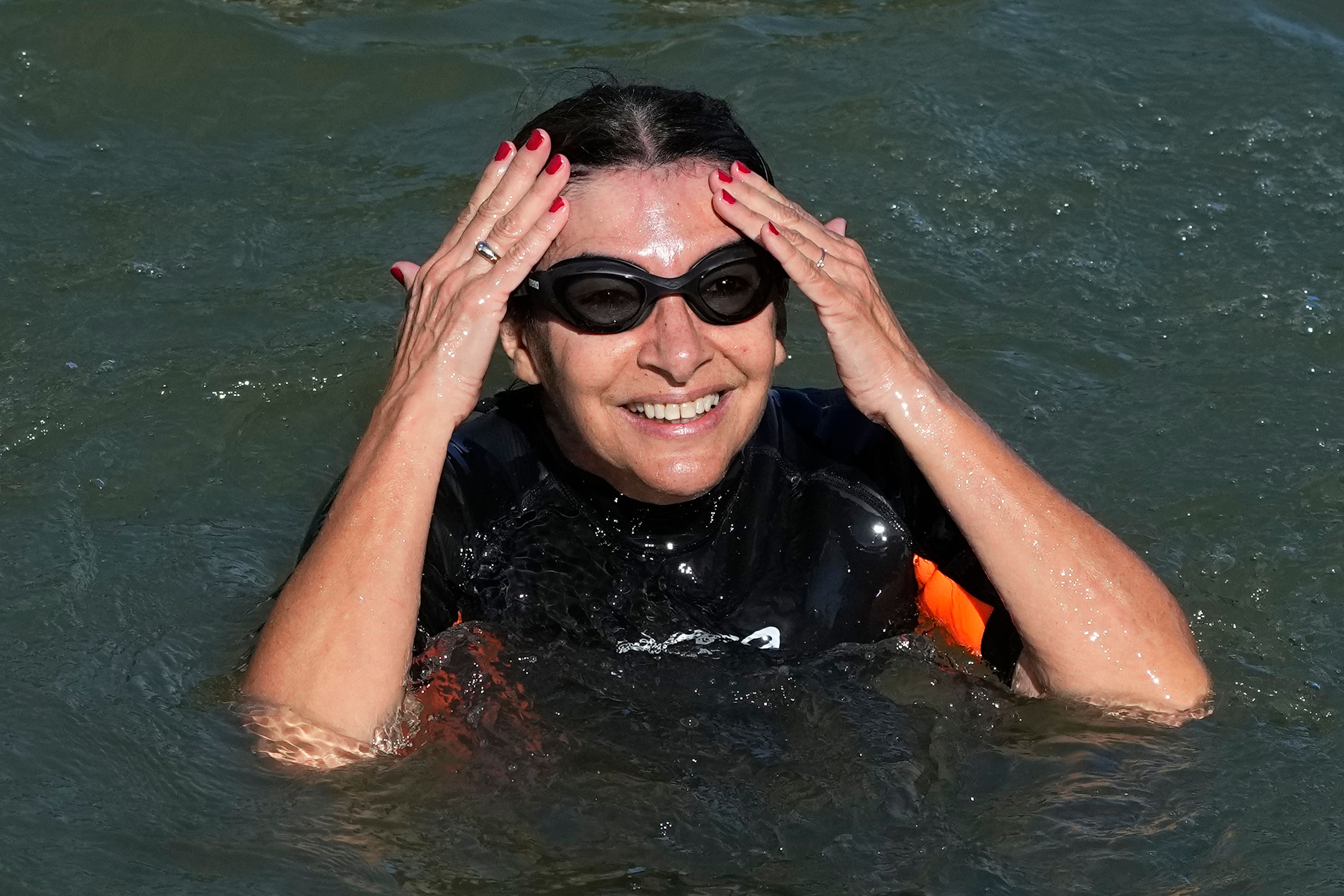
Tests results released Friday, July 26, showed the water quality in the River Seine was slightly below the standards needed to authorize swimming — just as the Paris Olympics start.

AP24199301424440.jpg
Paris Mayor Anne Hidalgo swims in the Seine river Wednesday, July 17, in Paris. After months of anticipation, Anne Hidalgo swam in the Seine Rive, fulfilling a promise she made in January nine days before the opening ceremony of the 2024 Olympics. (AP Photo/Michel Euler)

Heavy rain during the opening ceremony revived concerns over whether the long-polluted waterway will be clean enough to host swimming competitions, since water quality is deeply linked with the weather in the French capital.

Paris Mayor Anne Hidalgo took a highly publicized dip last week in a bid to ease fears. The Seine will be used for marathon swimming and triathlon.

Daily water quality tests measure levels of fecal bacteria known as E. coli.

Tests by monitoring group Eau de Paris show that at the Bras Marie, E. coli levels were then above the safe limit of 900 colony-forming units per 100 milliliters determined by European rules on June 17, when the mayor took a dip.

The site reached a value of 985 on the day the mayor swam with Paris 2024 chief Tony Estanguet and the top government official for the Paris region, Marc Guillaume, joined her, along with swimmers from local swimming clubs.

At two other measuring points further downstream, the results were below the threshold.

The statement by Paris City Hall and the prefecture of the Paris region noted that water quality last week was in line with European rules six days out of seven on the site which is to host the Olympic swimming competitions.

It noted that “the flow of the Seine is highly unstable due to regular rainfall episodes and remains more than twice the usual flow in summer,” explaining fluctuating test results.

Swimming in the Seine has been banned for over a century. Since 2015, organizers have invested $1.5 billion to prepare the Seine for the Olympics and to ensure Parisians have a cleaner river after the Games. The plan included constructing a giant underground water storage basin in central Paris, renovating sewer infrastructure, and upgrading wastewater treatment plants. (Associated Press)

Related Tags

Paris 2024
ADVERTISEMENT
.most-popular .layout-ratio{ padding-bottom: 79.13%; } @media (min-width: 768px) and (max-width: 1024px) { .widget-title { font-size: 15px !important; } }

{{ articles_filter_1561_widget.title }}

.most-popular .layout-ratio{ padding-bottom: 79.13%; } @media (min-width: 768px) and (max-width: 1024px) { .widget-title { font-size: 15px !important; } }

{{ articles_filter_1562_widget.title }}

.most-popular .layout-ratio{ padding-bottom: 79.13%; } @media (min-width: 768px) and (max-width: 1024px) { .widget-title { font-size: 15px !important; } }

{{ articles_filter_1563_widget.title }}

{{ articles_filter_1564_widget.title }}

.mb-article-details { position: relative; } .mb-article-details .article-body-preview, .mb-article-details .article-body-summary{ font-size: 17px; line-height: 30px; font-family: "Libre Caslon Text", serif; color: #000; } .mb-article-details .article-body-preview iframe , .mb-article-details .article-body-summary iframe{ width: 100%; margin: auto; } .read-more-background { background: linear-gradient(180deg, color(display-p3 1.000 1.000 1.000 / 0) 13.75%, color(display-p3 1.000 1.000 1.000 / 0.8) 30.79%, color(display-p3 1.000 1.000 1.000) 72.5%); position: absolute; height: 200px; width: 100%; bottom: 0; display: flex; justify-content: center; align-items: center; padding: 0; } .read-more-background a{ color: #000; } .read-more-btn { padding: 17px 45px; font-family: Inter; font-weight: 700; font-size: 18px; line-height: 16px; text-align: center; vertical-align: middle; border: 1px solid black; background-color: white; } .hidden { display: none; }
function initializeAllSwipers() { // Get all hidden inputs with cms_article_id document.querySelectorAll('[id^="cms_article_id_"]').forEach(function (input) { const cmsArticleId = input.value; const articleSelector = '#article-' + cmsArticleId + ' .body_images'; const swiperElement = document.querySelector(articleSelector); if (swiperElement && !swiperElement.classList.contains('swiper-initialized')) { new Swiper(articleSelector, { loop: true, pagination: false, navigation: { nextEl: '#article-' + cmsArticleId + ' .swiper-button-next', prevEl: '#article-' + cmsArticleId + ' .swiper-button-prev', }, }); } }); } setTimeout(initializeAllSwipers, 3000); const intersectionObserver = new IntersectionObserver( (entries) => { entries.forEach((entry) => { if (entry.isIntersecting) { const newUrl = entry.target.getAttribute("data-url"); if (newUrl) { history.pushState(null, null, newUrl); let article = entry.target; // Extract metadata const author = article.querySelector('.author-section').textContent.replace('By', '').trim(); const section = article.querySelector('.section-info ').textContent.replace(' ', ' '); const title = article.querySelector('.article-title h1').textContent; // Parse URL for Chartbeat path format const parsedUrl = new URL(newUrl, window.location.origin); const cleanUrl = parsedUrl.host + parsedUrl.pathname; // Update Chartbeat configuration if (typeof window._sf_async_config !== 'undefined') { window._sf_async_config.path = cleanUrl; window._sf_async_config.sections = section; window._sf_async_config.authors = author; } // Track virtual page view with Chartbeat if (typeof pSUPERFLY !== 'undefined' && typeof pSUPERFLY.virtualPage === 'function') { try { pSUPERFLY.virtualPage({ path: cleanUrl, title: title, sections: section, authors: author }); } catch (error) { console.error('ping error', error); } } // Optional: Update document title if (title && title !== document.title) { document.title = title; } } } }); }, { threshold: 0.1 } ); function showArticleBody(button) { const article = button.closest("article"); const summary = article.querySelector(".article-body-summary"); const body = article.querySelector(".article-body-preview"); const readMoreSection = article.querySelector(".read-more-background"); // Hide summary and read-more section summary.style.display = "none"; readMoreSection.style.display = "none"; // Show the full article body body.classList.remove("hidden"); } document.addEventListener("DOMContentLoaded", () => { let loadCount = 0; // Track how many times articles are loaded const offset = [1, 2, 3, 4, 5, 6, 7, 8, 9, 10]; // Offset values const currentUrl = window.location.pathname.substring(1); let isLoading = false; // Prevent multiple calls if (!currentUrl) { console.log("Current URL is invalid."); return; } const sentinel = document.getElementById("load-more-sentinel"); if (!sentinel) { console.log("Sentinel element not found."); return; } function isSentinelVisible() { const rect = sentinel.getBoundingClientRect(); return ( rect.top < window.innerHeight && rect.bottom >= 0 ); } function onScroll() { if (isLoading) return; if (isSentinelVisible()) { if (loadCount >= offset.length) { console.log("Maximum load attempts reached."); window.removeEventListener("scroll", onScroll); return; } isLoading = true; const currentOffset = offset[loadCount]; window.loadMoreItems().then(() => { let article = document.querySelector('#widget_1690 > div:nth-last-of-type(2) article'); intersectionObserver.observe(article) loadCount++; }).catch(error => { console.error("Error loading more items:", error); }).finally(() => { isLoading = false; }); } } window.addEventListener("scroll", onScroll); });

Sign up by email to receive news.