

ADVERTISEMENT

UN chief urges global action to tackle extreme heat

By Xinhua
Published Jul 26, 2024 02:59 am

GLOBAL PHOTO1.JPG

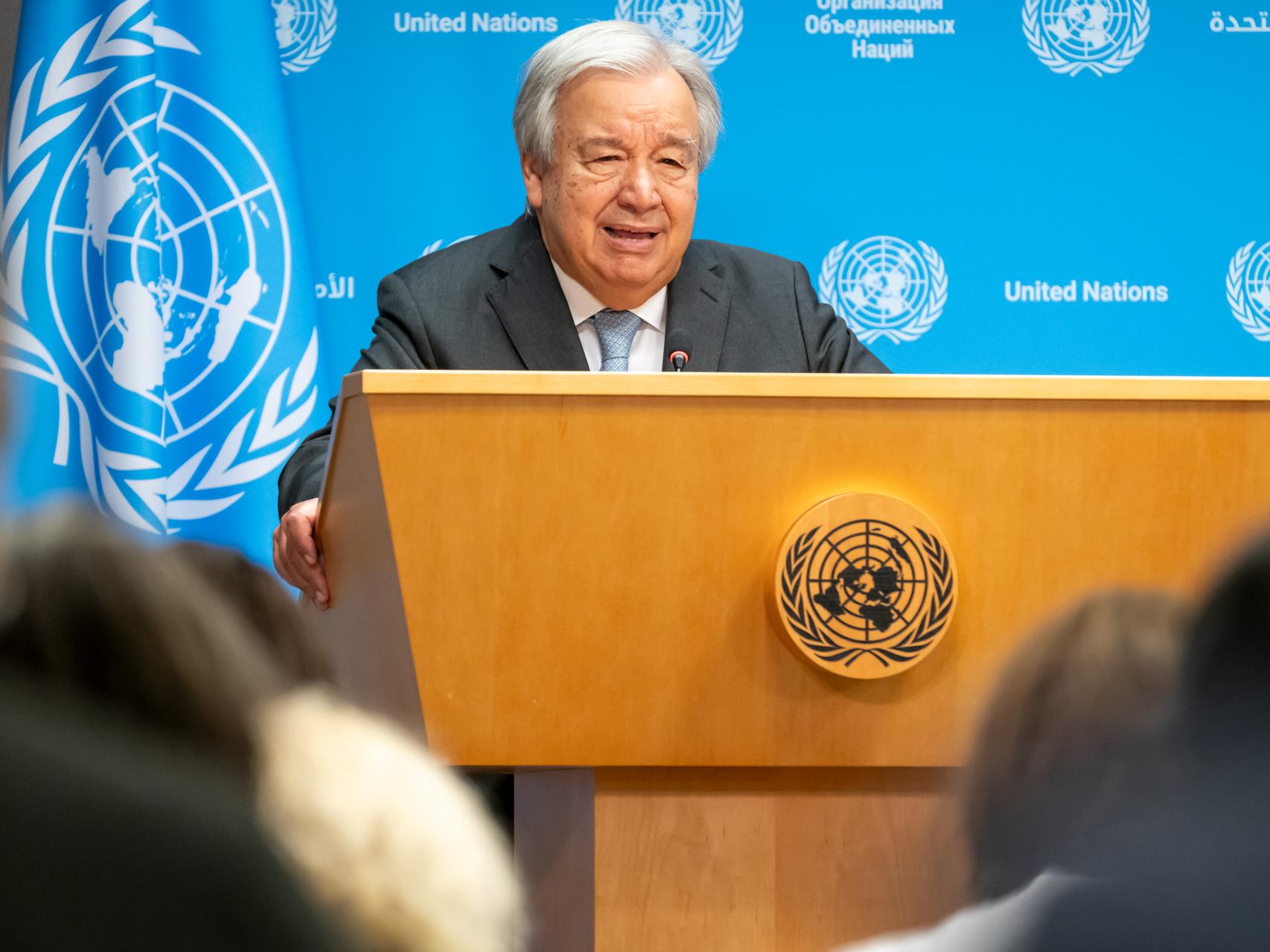
UN Secretary-General Antonio Guterres speaks to the press on extreme heat at the UN headquarters in New York, on July 25, 2024. (Mark Garten/UN Photo/Handout via Xinhua)


UNITED NATIONS -- UN Secretary-General Antonio Guterres on Thursday called for global action to tackle extreme heat, as "extreme temperatures are no longer a one day, one week or one month phenomenon."

"Earth is becoming hotter and more dangerous for everyone, everywhere," Guterres said in remarks to the press on extreme heat.

Billions of people are facing an extreme heat epidemic -- wilting under increasingly deadly heatwaves, with temperatures topping 50 degrees Celsius around the world, said the UN chief. "That's ... halfway to boiling."

Highlighting the impact of extreme temperatures, Guterres noted a deadly heatwave hitting the Sahel with spiking hospitalizations and deaths, broken temperature records across the United States, scorching conditions killing 1,300 pilgrims during Haj, tourist attractions shut down in Europe's sweatbox cities, and schools’ closures across Asia and Africa impacting more than 80 million children.

 

GLOBAL PHOTO2.JPG

A tourist cools himself down during a heat wave in Dubrovnik, Croatia, July 9, 2024. (Photo by Grgo Jelavic/PIXSELL via Xinhua)


"Extreme heat is increasingly tearing through economies, widening inequalities, undermining the Sustainable Development Goals and killing people," he said.

According to the UN chief, heat is estimated to kill almost half a million people a year, that's about 30 times more than tropical cyclones.

"Extreme heat is the new abnormal," he said, pointing to "fossil fuel-charged, human-induced climate change" as the cause behind extreme temperatures.

"But the good news is that there are solutions," he said.

The UN chief announced a global call to action with four areas of focus: caring for the most vulnerable; stepping up protections for workers; boosting the resilience of economies and societies using data and science; and fighting the "disease" -- "the madness of incinerating our only home," the addiction to fossil fuels, and climate inaction.

He urged leaders around the world to wake up and step up, including governments as well as the private sector, cities and regions, noting that "all countries must deliver by next year nationally determined contributions -- or national climate action plans -- aligned to limiting global temperature rise to 1.5 degrees Celsius."

Noting that the International Energy Agency has shown fossil fuel expansion and new coal plants are inconsistent with meeting that limit, Guterres urged countries to phase-out fossil fuels, "fast and fairly."

"They must end new coal projects," he stressed.
GLOBAL PHOTO3.JPG

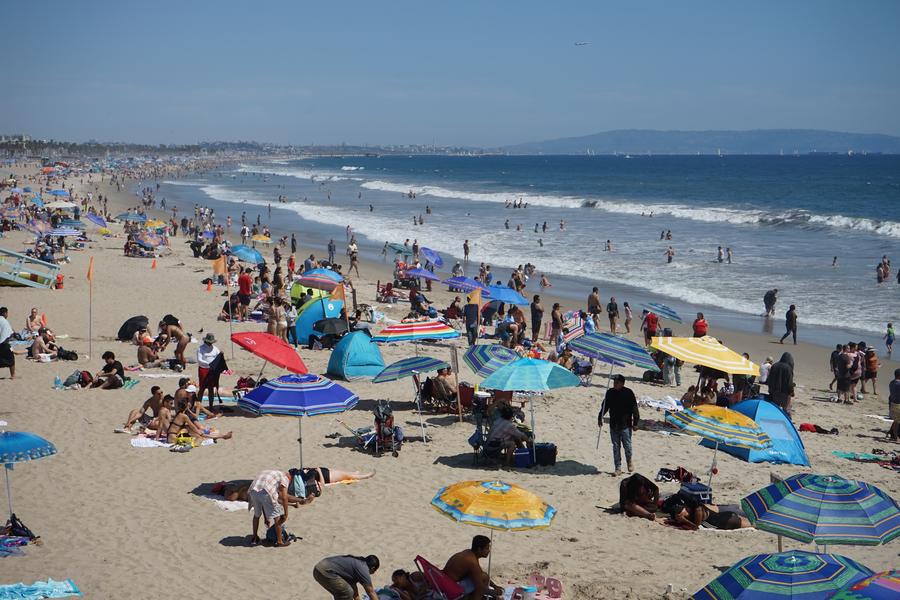
People cool off at Santa Monica beach in Los Angeles, California, the United States, June 23, 2024. (Photo by Zeng Hui/Xinhua)


The UN chief called on the G20 to shift fossil fuel subsidies to renewables and to the support of vulnerable countries and communities.

"And national climate action plans must show how each country will contribute to the global goals agreed at COP28 to triple the world's renewables capacity, and end deforestation by 2030. They must also cut global consumption and production of fossil fuels by 30 percent in the same timeframe," he said.

Guterres also called for similar 1.5-aligned transition plans from business, the financial sector, cities and regions.

Noting that climate action also requires finance action, he said that includes countries coming together for a strong finance outcome from COP29; progress on innovative sources of finance; drastically boosting the lending capacity of multilateral development banks to help developing countries tackle the climate crisis; and wealthier countries making good on all their climate finance commitments.

"The message is clear: the heat is on," said the UN chief, calling on the world to "rise to the challenge of rising temperatures."


Related Tags

WORLDNEWS
ADVERTISEMENT
.most-popular .layout-ratio{ padding-bottom: 79.13%; } @media (min-width: 768px) and (max-width: 1024px) { .widget-title { font-size: 15px !important; } }

{{ articles_filter_1561_widget.title }}

.most-popular .layout-ratio{ padding-bottom: 79.13%; } @media (min-width: 768px) and (max-width: 1024px) { .widget-title { font-size: 15px !important; } }

{{ articles_filter_1562_widget.title }}

.most-popular .layout-ratio{ padding-bottom: 79.13%; } @media (min-width: 768px) and (max-width: 1024px) { .widget-title { font-size: 15px !important; } }

{{ articles_filter_1563_widget.title }}

{{ articles_filter_1564_widget.title }}

.mb-article-details { position: relative; } .mb-article-details .article-body-preview, .mb-article-details .article-body-summary{ font-size: 17px; line-height: 30px; font-family: "Libre Caslon Text", serif; color: #000; } .mb-article-details .article-body-preview iframe , .mb-article-details .article-body-summary iframe{ width: 100%; margin: auto; } .read-more-background { background: linear-gradient(180deg, color(display-p3 1.000 1.000 1.000 / 0) 13.75%, color(display-p3 1.000 1.000 1.000 / 0.8) 30.79%, color(display-p3 1.000 1.000 1.000) 72.5%); position: absolute; height: 200px; width: 100%; bottom: 0; display: flex; justify-content: center; align-items: center; padding: 0; } .read-more-background a{ color: #000; } .read-more-btn { padding: 17px 45px; font-family: Inter; font-weight: 700; font-size: 18px; line-height: 16px; text-align: center; vertical-align: middle; border: 1px solid black; background-color: white; } .hidden { display: none; }
function initializeAllSwipers() { // Get all hidden inputs with cms_article_id document.querySelectorAll('[id^="cms_article_id_"]').forEach(function (input) { const cmsArticleId = input.value; const articleSelector = '#article-' + cmsArticleId + ' .body_images'; const swiperElement = document.querySelector(articleSelector); if (swiperElement && !swiperElement.classList.contains('swiper-initialized')) { new Swiper(articleSelector, { loop: true, pagination: false, navigation: { nextEl: '#article-' + cmsArticleId + ' .swiper-button-next', prevEl: '#article-' + cmsArticleId + ' .swiper-button-prev', }, }); } }); } setTimeout(initializeAllSwipers, 3000); const intersectionObserver = new IntersectionObserver( (entries) => { entries.forEach((entry) => { if (entry.isIntersecting) { const newUrl = entry.target.getAttribute("data-url"); if (newUrl) { history.pushState(null, null, newUrl); let article = entry.target; // Extract metadata const author = article.querySelector('.author-section').textContent.replace('By', '').trim(); const section = article.querySelector('.section-info ').textContent.replace(' ', ' '); const title = article.querySelector('.article-title h1').textContent; // Parse URL for Chartbeat path format const parsedUrl = new URL(newUrl, window.location.origin); const cleanUrl = parsedUrl.host + parsedUrl.pathname; // Update Chartbeat configuration if (typeof window._sf_async_config !== 'undefined') { window._sf_async_config.path = cleanUrl; window._sf_async_config.sections = section; window._sf_async_config.authors = author; } // Track virtual page view with Chartbeat if (typeof pSUPERFLY !== 'undefined' && typeof pSUPERFLY.virtualPage === 'function') { try { pSUPERFLY.virtualPage({ path: cleanUrl, title: title, sections: section, authors: author }); } catch (error) { console.error('ping error', error); } } // Optional: Update document title if (title && title !== document.title) { document.title = title; } } } }); }, { threshold: 0.1 } ); function showArticleBody(button) { const article = button.closest("article"); const summary = article.querySelector(".article-body-summary"); const body = article.querySelector(".article-body-preview"); const readMoreSection = article.querySelector(".read-more-background"); // Hide summary and read-more section summary.style.display = "none"; readMoreSection.style.display = "none"; // Show the full article body body.classList.remove("hidden"); } document.addEventListener("DOMContentLoaded", () => { let loadCount = 0; // Track how many times articles are loaded const offset = [1, 2, 3, 4, 5, 6, 7, 8, 9, 10]; // Offset values const currentUrl = window.location.pathname.substring(1); let isLoading = false; // Prevent multiple calls if (!currentUrl) { console.log("Current URL is invalid."); return; } const sentinel = document.getElementById("load-more-sentinel"); if (!sentinel) { console.log("Sentinel element not found."); return; } function isSentinelVisible() { const rect = sentinel.getBoundingClientRect(); return ( rect.top < window.innerHeight && rect.bottom >= 0 ); } function onScroll() { if (isLoading) return; if (isSentinelVisible()) { if (loadCount >= offset.length) { console.log("Maximum load attempts reached."); window.removeEventListener("scroll", onScroll); return; } isLoading = true; const currentOffset = offset[loadCount]; window.loadMoreItems().then(() => { let article = document.querySelector('#widget_1690 > div:nth-last-of-type(2) article'); intersectionObserver.observe(article) loadCount++; }).catch(error => { console.error("Error loading more items:", error); }).finally(() => { isLoading = false; }); } } window.addEventListener("scroll", onScroll); });

Sign up by email to receive news.