ADVERTISEMENT

HOPE FOR ONION FARMERS: Nanopesticide from CLSU 100 percent effective vs. Armyworms

Published Jul 26, 2024 11:17 am

2.jpg

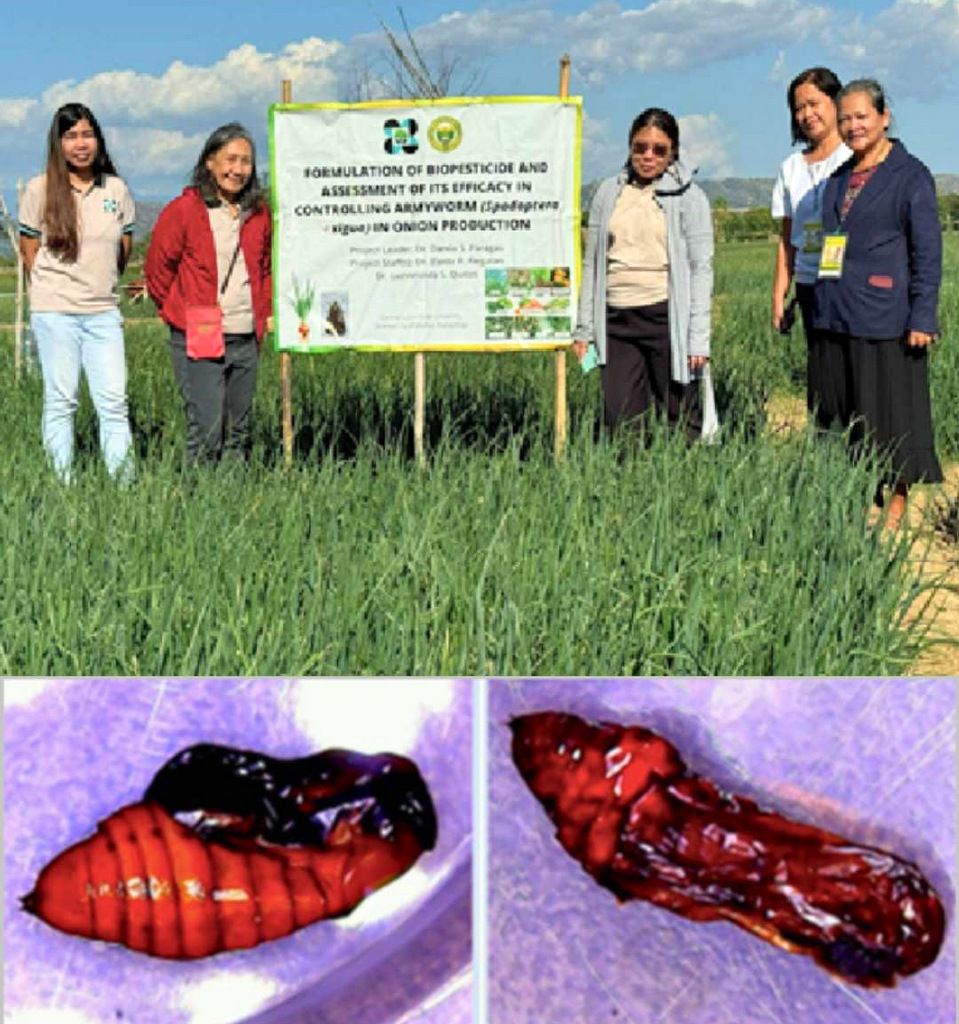
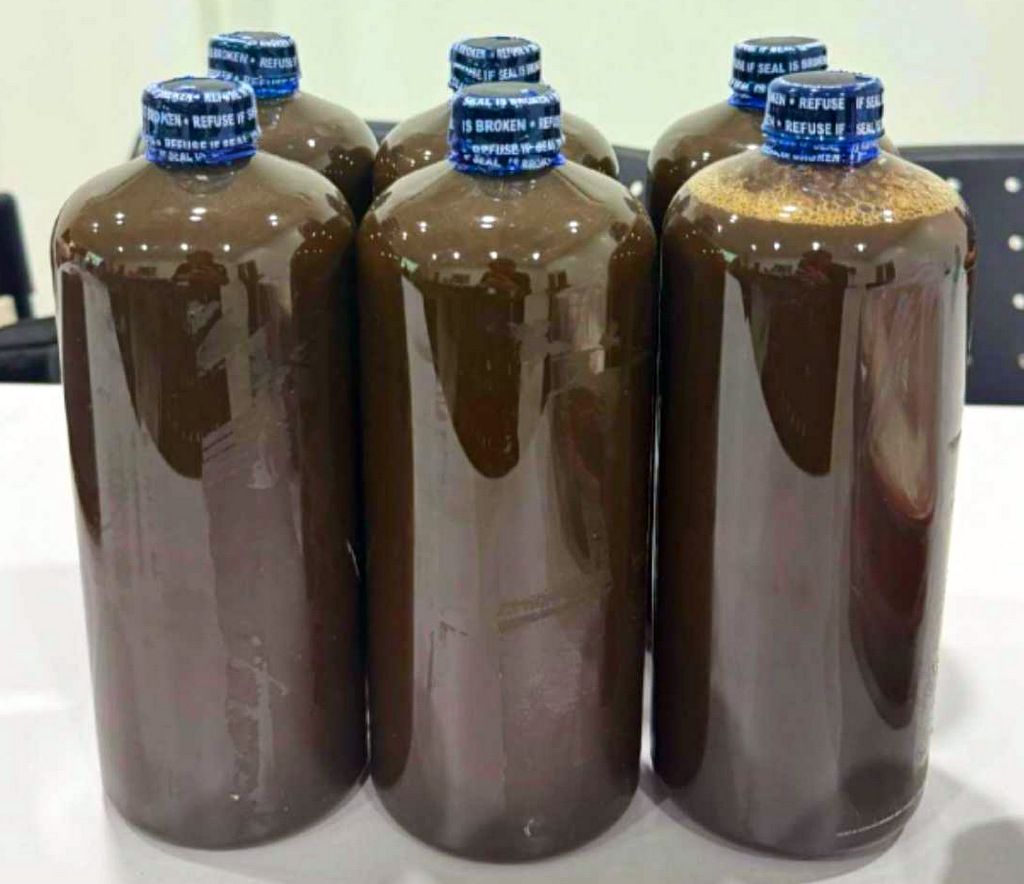
Onion farmers in the country may soon be breathing a sigh of relief as a groundbreaking nanobiopesticide formulation developed by the Central Luzon State University (CLSU) has shown a 100 percent efficacy in eradicating the deadly “Harabas” or Armyworms within just 48 hours of application. 

This breakthrough was announced by Dr. Danila Paragas, the project leader at CLSU, during a recent project review meeting and field monitoring visit in Nueva Ecija.

The development of the nanobiopesticide is the culmination of extensive research funded by the Philippine Council for Agriculture, Aquatic and Natural Resources Research and Development of the Department of Science and Technology (DOST-PCAARRD). 

Dr. Paragas shared that the final formulation emerged from experiments with over 11 different plant extracts and nanoparticles. 

Laboratory trials revealed that the nanobiopesticide treatment resulted in a 90% mortality rate for first-instar larvae and a 100% mortality rate for second to third-instar larvae within 48 hours of exposure.

Armyworms, notorious for their rapid destruction, attack onions from the leaves down to the bulb, causing significant damage particularly during the late cooler hours of the night and early morning. The infestation has plagued onion farms, leading to substantial losses for farmers.

A hectare of onion requires only 1.2 liters of the nanobiopesticide, or 200 milliliters per 16-liter knapsack sprayer. This application rate is notably lower compared to traditional chemical pesticides, which typically range from 1.62 to 3.65 liters per hectare. Field experiments have demonstrated the nanobiopesticide’s potential not only in eliminating armyworms but also in increasing onion yield by an impressive 28.9%.

“This technology marks a significant advancement in sustainable and environmentally friendly pest management for onions,” Dr. Paragas remarked. “It promises to reduce chemical pesticide application by 75 to 100 percent, offering a safer and more effective alternative for farmers.”

The urgency of this innovation is underscored by the recent report from the Bureau of Plant Industry, which highlighted that over 12,000 hectares of onion farms have been infested by armyworms as of April 30. The most affected regions include the Ilocos Region, Cagayan Valley, Central Luzon, and Mimaropa (Mindoro, Marinduque, Romblon, and Palawan). Central Luzon reported the highest affected land area at 6,980.49 hectares, though only 18 hectares sustained total damage due to the timely treatment of partially damaged plantations.

In stark contrast, Cagayan Valley suffered the highest total losses, with 612.40 hectares completely devastated, followed by the Ilocos Region with 43.80 hectares.

1.jpg

3.jpg

ADVERTISEMENT
.most-popular .layout-ratio{ padding-bottom: 79.13%; } @media (min-width: 768px) and (max-width: 1024px) { .widget-title { font-size: 15px !important; } }

{{ articles_filter_1561_widget.title }}

.most-popular .layout-ratio{ padding-bottom: 79.13%; } @media (min-width: 768px) and (max-width: 1024px) { .widget-title { font-size: 15px !important; } }

{{ articles_filter_1562_widget.title }}

.most-popular .layout-ratio{ padding-bottom: 79.13%; } @media (min-width: 768px) and (max-width: 1024px) { .widget-title { font-size: 15px !important; } }

{{ articles_filter_1563_widget.title }}

{{ articles_filter_1564_widget.title }}

.mb-article-details { position: relative; } .mb-article-details .article-body-preview, .mb-article-details .article-body-summary{ font-size: 17px; line-height: 30px; font-family: "Libre Caslon Text", serif; color: #000; } .mb-article-details .article-body-preview iframe , .mb-article-details .article-body-summary iframe{ width: 100%; margin: auto; } .read-more-background { background: linear-gradient(180deg, color(display-p3 1.000 1.000 1.000 / 0) 13.75%, color(display-p3 1.000 1.000 1.000 / 0.8) 30.79%, color(display-p3 1.000 1.000 1.000) 72.5%); position: absolute; height: 200px; width: 100%; bottom: 0; display: flex; justify-content: center; align-items: center; padding: 0; } .read-more-background a{ color: #000; } .read-more-btn { padding: 17px 45px; font-family: Inter; font-weight: 700; font-size: 18px; line-height: 16px; text-align: center; vertical-align: middle; border: 1px solid black; background-color: white; } .hidden { display: none; }
function initializeAllSwipers() { // Get all hidden inputs with cms_article_id document.querySelectorAll('[id^="cms_article_id_"]').forEach(function (input) { const cmsArticleId = input.value; const articleSelector = '#article-' + cmsArticleId + ' .body_images'; const swiperElement = document.querySelector(articleSelector); if (swiperElement && !swiperElement.classList.contains('swiper-initialized')) { new Swiper(articleSelector, { loop: true, pagination: false, navigation: { nextEl: '#article-' + cmsArticleId + ' .swiper-button-next', prevEl: '#article-' + cmsArticleId + ' .swiper-button-prev', }, }); } }); } setTimeout(initializeAllSwipers, 3000); const intersectionObserver = new IntersectionObserver( (entries) => { entries.forEach((entry) => { if (entry.isIntersecting) { const newUrl = entry.target.getAttribute("data-url"); if (newUrl) { history.pushState(null, null, newUrl); let article = entry.target; // Extract metadata const author = article.querySelector('.author-section').textContent.replace('By', '').trim(); const section = article.querySelector('.section-info ').textContent.replace(' ', ' '); const title = article.querySelector('.article-title h1').textContent; // Parse URL for Chartbeat path format const parsedUrl = new URL(newUrl, window.location.origin); const cleanUrl = parsedUrl.host + parsedUrl.pathname; // Update Chartbeat configuration if (typeof window._sf_async_config !== 'undefined') { window._sf_async_config.path = cleanUrl; window._sf_async_config.sections = section; window._sf_async_config.authors = author; } // Track virtual page view with Chartbeat if (typeof pSUPERFLY !== 'undefined' && typeof pSUPERFLY.virtualPage === 'function') { try { pSUPERFLY.virtualPage({ path: cleanUrl, title: title, sections: section, authors: author }); } catch (error) { console.error('ping error', error); } } // Optional: Update document title if (title && title !== document.title) { document.title = title; } } } }); }, { threshold: 0.1 } ); function showArticleBody(button) { const article = button.closest("article"); const summary = article.querySelector(".article-body-summary"); const body = article.querySelector(".article-body-preview"); const readMoreSection = article.querySelector(".read-more-background"); // Hide summary and read-more section summary.style.display = "none"; readMoreSection.style.display = "none"; // Show the full article body body.classList.remove("hidden"); } document.addEventListener("DOMContentLoaded", () => { let loadCount = 0; // Track how many times articles are loaded const offset = [1, 2, 3, 4, 5, 6, 7, 8, 9, 10]; // Offset values const currentUrl = window.location.pathname.substring(1); let isLoading = false; // Prevent multiple calls if (!currentUrl) { console.log("Current URL is invalid."); return; } const sentinel = document.getElementById("load-more-sentinel"); if (!sentinel) { console.log("Sentinel element not found."); return; } function isSentinelVisible() { const rect = sentinel.getBoundingClientRect(); return ( rect.top < window.innerHeight && rect.bottom >= 0 ); } function onScroll() { if (isLoading) return; if (isSentinelVisible()) { if (loadCount >= offset.length) { console.log("Maximum load attempts reached."); window.removeEventListener("scroll", onScroll); return; } isLoading = true; const currentOffset = offset[loadCount]; window.loadMoreItems().then(() => { let article = document.querySelector('#widget_1690 > div:nth-last-of-type(2) article'); intersectionObserver.observe(article) loadCount++; }).catch(error => { console.error("Error loading more items:", error); }).finally(() => { isLoading = false; }); } } window.addEventListener("scroll", onScroll); });

Sign up by email to receive news.