







Marcos: State of calamity in NCR 'prerogative' of local execs


Declaring a state of calamity in the National Capital Region (NCR) is a “local prerogative” and is best left to the local executives since they best know the situation on the ground, President Marcos said on Wednesday, July 24.
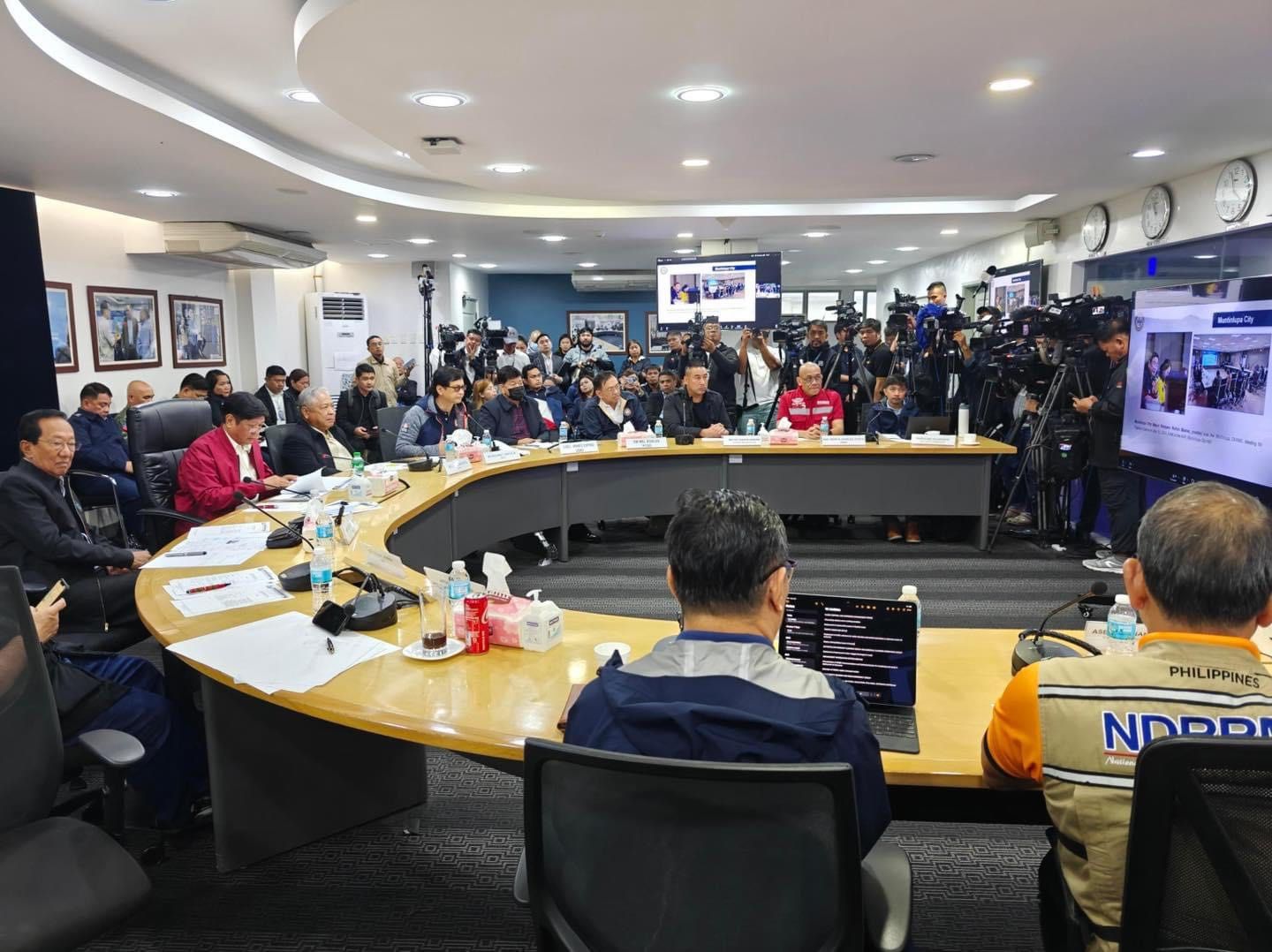 President Ferdinand 'Bongbong' Marcos Jr. presides over the situation briefing on the effects of Typhoon Carina and the enhanced southwest monsoon at the NDRRMC headquarters in Camp Aguinaldo, Quezon City on Wednesday, July 24, 2024. (Photo from the Presidential Communications Office)
During a media interview after a situation briefing at the National Disaster Risk Reduction and Management Council (NDRRMC), the Chief Executive stated that he’s leaving it to regional disaster councils on declaring a state of calamity in their respective jurisdictions.
Marcos stressed that “usually,” a state of calamity declaration is decided upon by LGU executives.
“It’s up to the local communities to decide because they know best, they know best what they need,” Marcos explained.
“It is also 'yung pag-deklara ng (The declaration of a) State of Calamity, it's also to access funds para makapag-access na sila ng funds kasi nauubos na 'yung kanilang emergency na reserved, kukuha sila sa national (because their emergency reserve has been depleted, they’ll need to get from national). So, that's what we're working on now,” he added.
The President furthered that the national government would be involved in the declaration only if three regions were affected.
“That’s the national calamity already. Wala na kaming choice dun, pasok na ang national (We don’t have a choice there, the national must step in),” he said.
The Chief Executive shared that Department of Interior and Local Government (DILG) Secretary Benhur Abalos and San Juan City Mayor Francis Zamora, the president of the Metro Manila Council (MMC), would convene later to decide if the whole NCR will be placed in a state of calamity.
Abalos recommended to the President the placing of the entire region in a state of calamity after relentless rain caused by the enhanced southwest monsoon and Typhoon Carina brought widespread flooding.
A state of calamity grants local governments access to additional funds and imposes a price freeze on basic goods.
The Philippine Atmospheric, Geophysical and Astronomical Services Administration (PAGASA) said that Carina continues to intensify on Wednesday and may reach super typhoon status before making landfall in Taiwan.
Moderate to intense rains in the western portion of Luzon are expected until Friday, July 26, while flooding is currently being experienced all throughout Metro Manila and the neighboring provinces of Calabarzon.