ADVERTISEMENT

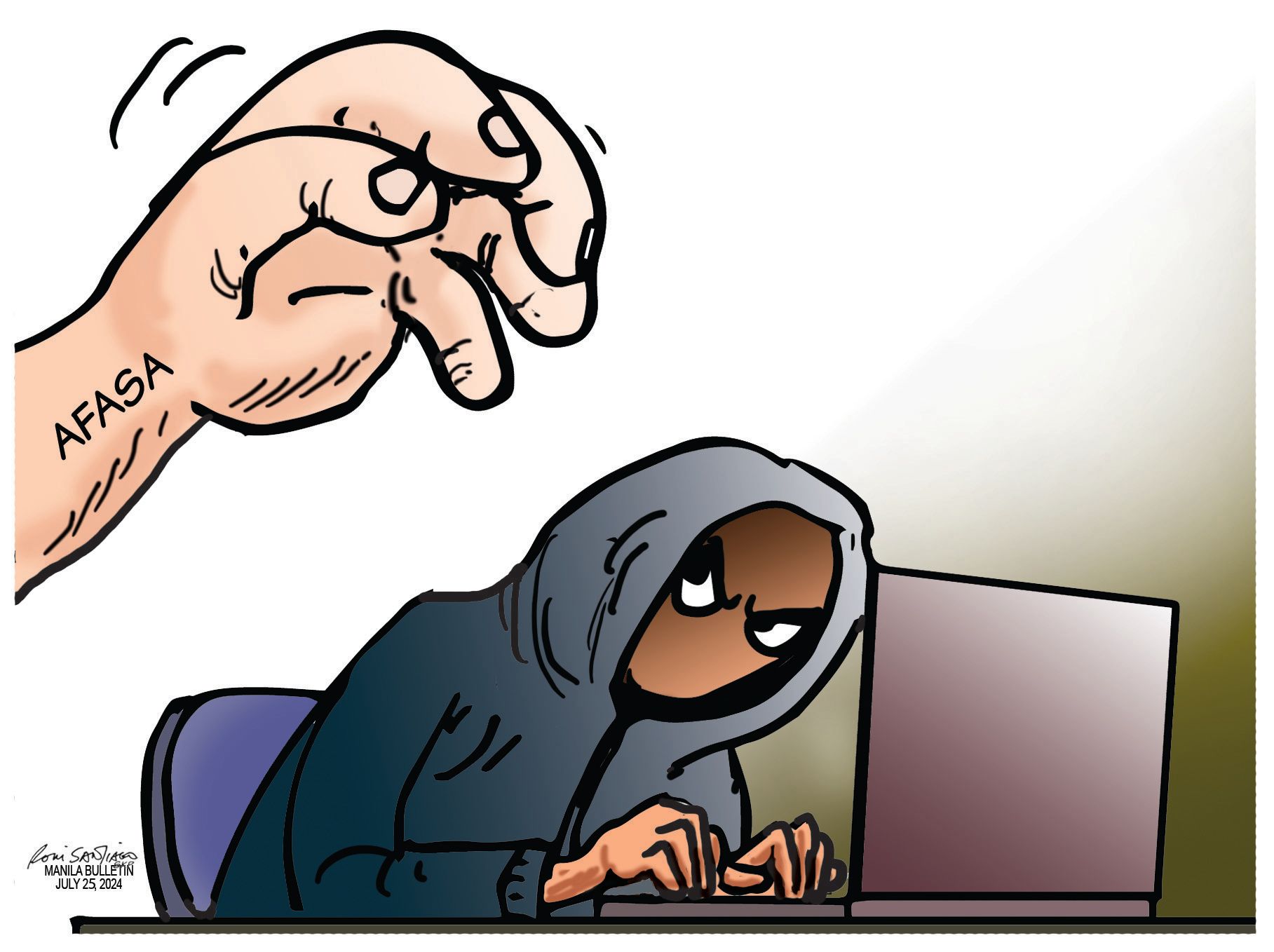
Has the government found a deterrent to cybercrimes?

Published Jul 24, 2024 04:01 pm

E CARTOON JUL 25, 2024 copy.jpg

Anti-Financial Account Scamming Act (AFASA).

This sounds scary, especially to cybercriminals, what with the penalties that go with it — as stiff as life imprisonment and as much as ₱5 million in fine.

AFASA or Republic Act No. 12010 was signed into law by President Marcos on July 20, 2024 in a bid to safeguard Filipinos’ bank and e-wallet accounts from the ever-evolving tactics of cybercriminals.

The Anti-Financial Account Scamming Act introduces stringent measures to regulate financial accounts and prevent their misuse. By imposing stiff penalties for financial crimes such as economic sabotage, money muling, and social engineering schemes, the law aims to create a safer environment for financial transactions. House Speaker Ferdinand Martin Romualdez emphasized that this law will help secure the country’s financial systems, fostering a culture of integrity and accountability.

But will this new law scare cybercriminals out of their wits?

Economic sabotage under the new law carries a penalty of life imprisonment and fines, ranging from ₱1 million to ₱5 million, while those who victimize senior citizens face 12 to 14 years of imprisonment plus fines of ₱1 million to ₱2 million.

On the other hand, money muling may result in six to eight years of imprisonment for violators, plus fines ranging from ₱100,000 to ₱500,000.

Social engineering schemes — widely considered as a psychological tactic to manipulate victims using computer systems to commit mistakes and eventually pave the way for cybercriminals to gain access to personal information and data — can lead to a 10 to 12-year jail term and fines ranging from ₱500,000 to ₱1 million.

Other offenses carry various jail terms and fines, including disqualification from holding public office for government officials.

To enforce the provisions of the law, including investigating financial accounts involved in fraudulent activities and applying for cybercrime warrants, the new law grants the Bangko Sentral ng Pilipinas (BSP) extensive powers.

While the extensive powers granted by AFASA to the central bank to deter cybercrimes is a welcome development, we express hope that these will not be a cause for the erosion of confidence in the banking system. Striking a balance between deterring cybercrimes and confidence in the banking system is crucial in keeping the economy stable.

No doubt, AFASA is a significant milestone in the country’s ongoing battle against cybercrime. However, everyone should look forward to the new law with guarded optimism. While watching out how AFASA will pan out, let’s temper our expectations.

Look back at the SIM Card Registration Act. While it was hailed as the answer to text scams, the law appears not to have done much so far to curb text scam. Ask around, beginning with your own family, and one would be surprised to find out that most would report receiving an increase in the number of text scams and spams.

In fact, senators — from Senate President Chiz Escudero — have urged National Telecommunications Commission officials to step up in performing their mandate in curbing text scams and spams, and explain the factors why this problem persists.

Have scammers been emboldened to commit their nefarious activities, or has the SIM Card Registration Act given them easier access to SIM card numbers and owners?

For AFASA to succeed, though, it will largely depend on its implementation and the cooperation of financial institutions, law enforcement agencies, and the public. While there may be challenges ahead, the law represents a proactive step toward enhancing financial security in the country. Only time will tell if AFASA will be the deterrent it aims to be or if it will require further tinkering to effectively combat cybercrimes.

Related Tags

Roni Santiago
ADVERTISEMENT
.most-popular .layout-ratio{ padding-bottom: 79.13%; } @media (min-width: 768px) and (max-width: 1024px) { .widget-title { font-size: 15px !important; } }

{{ articles_filter_1561_widget.title }}

.most-popular .layout-ratio{ padding-bottom: 79.13%; } @media (min-width: 768px) and (max-width: 1024px) { .widget-title { font-size: 15px !important; } }

{{ articles_filter_1562_widget.title }}

.most-popular .layout-ratio{ padding-bottom: 79.13%; } @media (min-width: 768px) and (max-width: 1024px) { .widget-title { font-size: 15px !important; } }

{{ articles_filter_1563_widget.title }}

{{ articles_filter_1564_widget.title }}

.mb-article-details { position: relative; } .mb-article-details .article-body-preview, .mb-article-details .article-body-summary{ font-size: 17px; line-height: 30px; font-family: "Libre Caslon Text", serif; color: #000; } .mb-article-details .article-body-preview iframe , .mb-article-details .article-body-summary iframe{ width: 100%; margin: auto; } .read-more-background { background: linear-gradient(180deg, color(display-p3 1.000 1.000 1.000 / 0) 13.75%, color(display-p3 1.000 1.000 1.000 / 0.8) 30.79%, color(display-p3 1.000 1.000 1.000) 72.5%); position: absolute; height: 200px; width: 100%; bottom: 0; display: flex; justify-content: center; align-items: center; padding: 0; } .read-more-background a{ color: #000; } .read-more-btn { padding: 17px 45px; font-family: Inter; font-weight: 700; font-size: 18px; line-height: 16px; text-align: center; vertical-align: middle; border: 1px solid black; background-color: white; } .hidden { display: none; }
function initializeAllSwipers() { // Get all hidden inputs with cms_article_id document.querySelectorAll('[id^="cms_article_id_"]').forEach(function (input) { const cmsArticleId = input.value; const articleSelector = '#article-' + cmsArticleId + ' .body_images'; const swiperElement = document.querySelector(articleSelector); if (swiperElement && !swiperElement.classList.contains('swiper-initialized')) { new Swiper(articleSelector, { loop: true, pagination: false, navigation: { nextEl: '#article-' + cmsArticleId + ' .swiper-button-next', prevEl: '#article-' + cmsArticleId + ' .swiper-button-prev', }, }); } }); } setTimeout(initializeAllSwipers, 3000); const intersectionObserver = new IntersectionObserver( (entries) => { entries.forEach((entry) => { if (entry.isIntersecting) { const newUrl = entry.target.getAttribute("data-url"); if (newUrl) { history.pushState(null, null, newUrl); let article = entry.target; // Extract metadata const author = article.querySelector('.author-section').textContent.replace('By', '').trim(); const section = article.querySelector('.section-info ').textContent.replace(' ', ' '); const title = article.querySelector('.article-title h1').textContent; // Parse URL for Chartbeat path format const parsedUrl = new URL(newUrl, window.location.origin); const cleanUrl = parsedUrl.host + parsedUrl.pathname; // Update Chartbeat configuration if (typeof window._sf_async_config !== 'undefined') { window._sf_async_config.path = cleanUrl; window._sf_async_config.sections = section; window._sf_async_config.authors = author; } // Track virtual page view with Chartbeat if (typeof pSUPERFLY !== 'undefined' && typeof pSUPERFLY.virtualPage === 'function') { try { pSUPERFLY.virtualPage({ path: cleanUrl, title: title, sections: section, authors: author }); } catch (error) { console.error('ping error', error); } } // Optional: Update document title if (title && title !== document.title) { document.title = title; } } } }); }, { threshold: 0.1 } ); function showArticleBody(button) { const article = button.closest("article"); const summary = article.querySelector(".article-body-summary"); const body = article.querySelector(".article-body-preview"); const readMoreSection = article.querySelector(".read-more-background"); // Hide summary and read-more section summary.style.display = "none"; readMoreSection.style.display = "none"; // Show the full article body body.classList.remove("hidden"); } document.addEventListener("DOMContentLoaded", () => { let loadCount = 0; // Track how many times articles are loaded const offset = [1, 2, 3, 4, 5, 6, 7, 8, 9, 10]; // Offset values const currentUrl = window.location.pathname.substring(1); let isLoading = false; // Prevent multiple calls if (!currentUrl) { console.log("Current URL is invalid."); return; } const sentinel = document.getElementById("load-more-sentinel"); if (!sentinel) { console.log("Sentinel element not found."); return; } function isSentinelVisible() { const rect = sentinel.getBoundingClientRect(); return ( rect.top < window.innerHeight && rect.bottom >= 0 ); } function onScroll() { if (isLoading) return; if (isSentinelVisible()) { if (loadCount >= offset.length) { console.log("Maximum load attempts reached."); window.removeEventListener("scroll", onScroll); return; } isLoading = true; const currentOffset = offset[loadCount]; window.loadMoreItems().then(() => { let article = document.querySelector('#widget_1690 > div:nth-last-of-type(2) article'); intersectionObserver.observe(article) loadCount++; }).catch(error => { console.error("Error loading more items:", error); }).finally(() => { isLoading = false; }); } } window.addEventListener("scroll", onScroll); });

Sign up by email to receive news.