







Kanlaon spews high volume of volcanic gas anew — Phivolcs


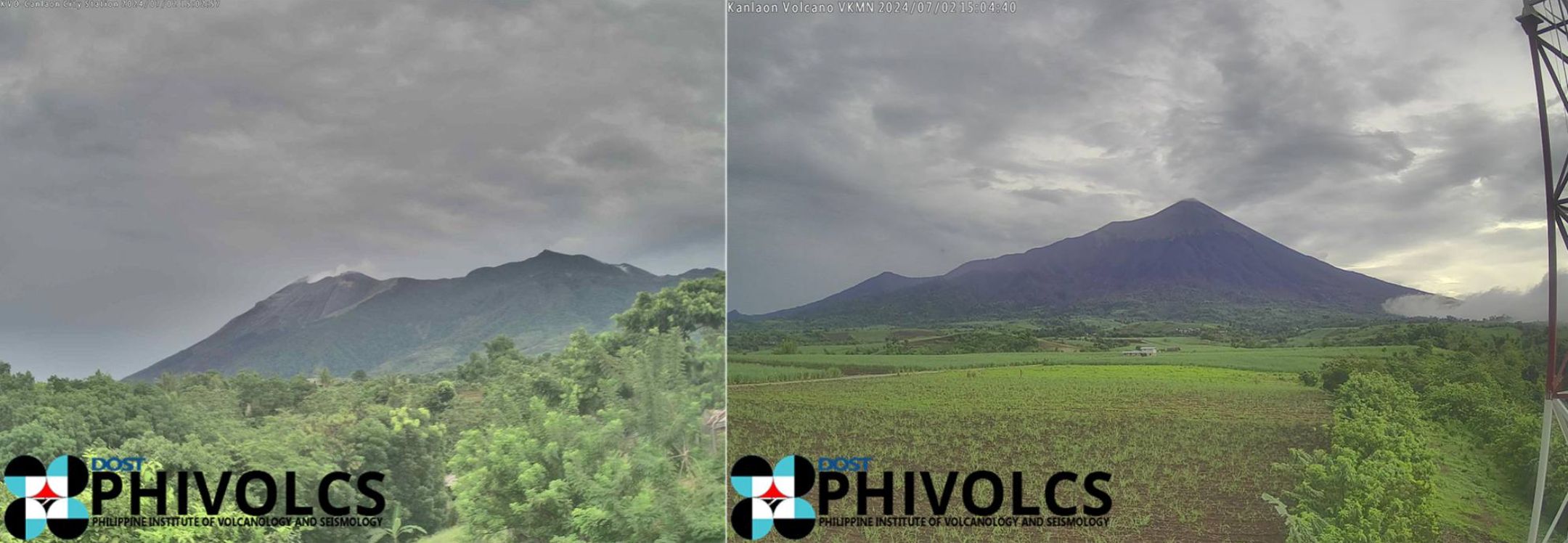
The Philippine Institute of Volcanology and Seismology (Phivolcs) has again observed a significant increase in sulfur dioxide (SO2) emissions from Kanlaon Volcano on Tuesday, July 2.
In a notice issued at 3:30 p.m., Phivolcs said that Kanlaon Volcano averaged 5,083 tons of SO2 emissions, marking the second-highest recorded this year and the third-highest since instrumental monitoring began.
It pointed out that SO2 emissions surged to an average of 3,254 tons per day following the eruption on June 3.
Phivolcs also noted persistent volcanic earthquake activity at Kanlaon, averaging 10 events per day post-eruption.
“Ground deformation data from continuous GPS and electronic tilt measurements have been recording medium-term inflation of the Kanlaon edifice since March 2022 and a shorter-term inflation of the eastern flank since 2023, indicating slow but sustained pressurization within the volcano,” it explained.
These findings suggest magmatic processes are driving current unrest, leading to elevated volcanic gas emissions, volcano swelling, and occasional seismic activity.
Phivolcs said Alert Level 2 remains in effect over Kanlaon Volcano due to the ongoing unrest.
Under Alert Level 2, Phivolcs warned of the potential for explosive eruptions driven by shallow magmatic processes.
The public is strongly advised to avoid the four-kilometer-radius permanent danger zone (PDZ) around the summit crater to minimize risks such as pyroclastic density currents, ballistic projectiles, and rockfalls.
Residents in areas downwind of Kanlaon are urged to prepare for ash fall events by covering their nose and mouth with a damp cloth or mask.
Communities residing along river systems on the southern and western slopes are advised to take precautionary measures in anticipation of heavy rainfall, which could trigger lahars and muddy streamflows.