ADVERTISEMENT

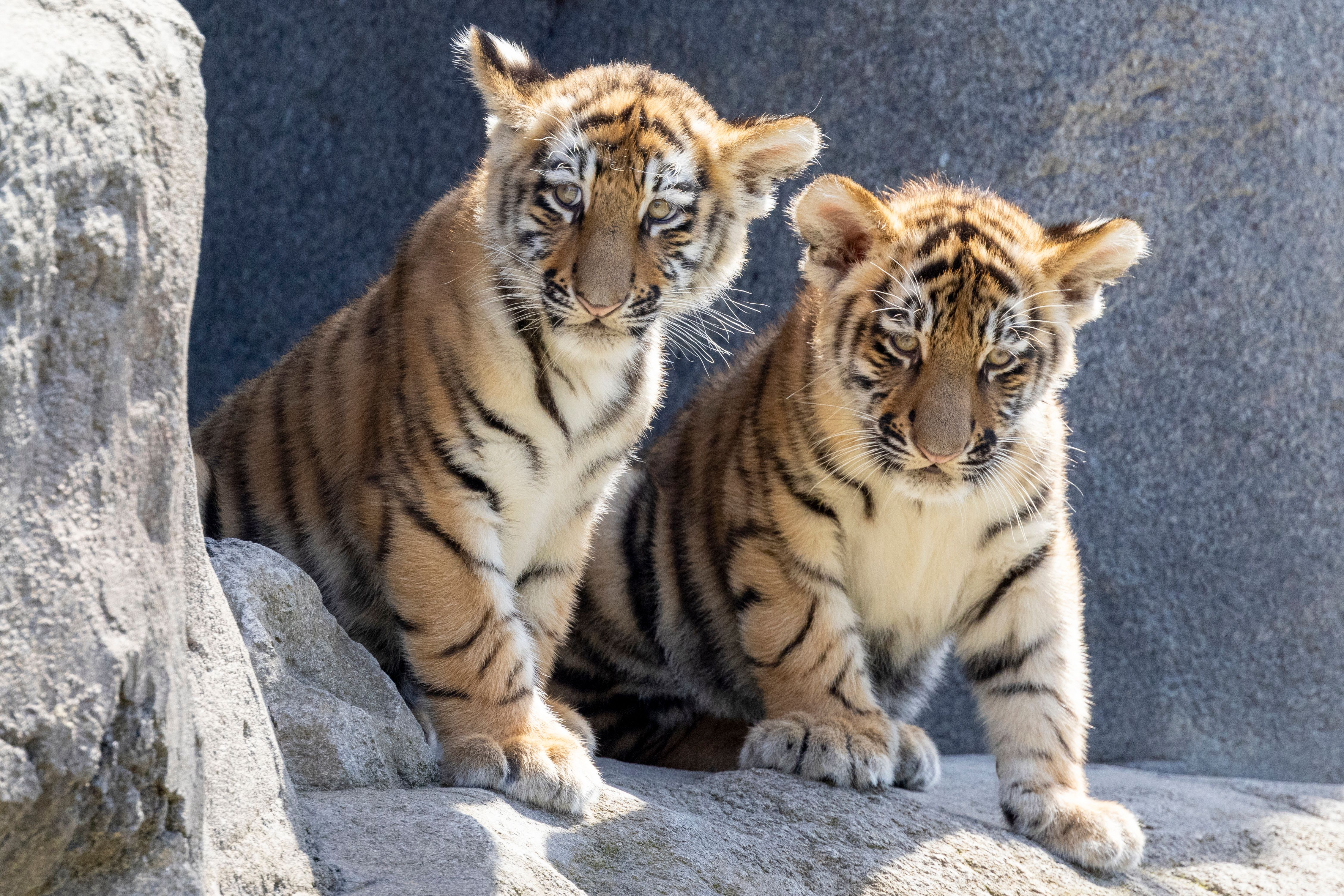
2 Amur tiger cubs have their first public outing at Germany's Cologne Zoo

Published Jul 19, 2024 05:17 am
20tiger.jpg
Two Amur tiger cubs, Tochka and Timur, have their first public outing at Cologne Zoo in Cologne, Thursday July 18, 2024. (Thomas Banneyer/dpa via AP)

COLOGNE, Germany (AP) — Two Amur tiger cubs had their first public outing Thursday at Cologne Zoo in Germany, one of several zoos that have sought to help keep up the numbers of the rare big cats.


The cubs — a female named Tochka and a male named Timur — were born in mid-April and now weigh about 13 kilos (28.7 pounds) each. The pair explored their enclosure together with their mother, 13-year-old Katinka.


Amur tigers, also known as Siberian tigers, are found in the far east of Russia and northeastern China and are considered endangered.


"We are very happy and proud of the offspring of this highly threatened species," zoo curator Alexander Sliwa said in a statement, which said that 240 Amur tigers in zoos are currently part of a European program to help conserve and breed the animals.


Katinka was brought from the zoo in Nuremberg last summer in exchange for Cologne tiger Akina after the existing pairs at both zoos had long failed to produce offspring. She quickly hit it off with 9-year-old Sergan, the cubs' father, the zoo said.


Two Amur tiger cubs, Tochka and Timur, have their first public outing at Cologne Zoo in Cologne, Thursday July 18, 2024. (Thomas Banneyer/dpa via AP)


2 Amur tiger cubs have their first public outing at Germany's Cologne Zoo


COLOGNE, Germany (AP) — Two Amur tiger cubs had their first public outing Thursday at Cologne Zoo in Germany, one of several zoos that have sought to help keep up the numbers of the rare big cats.


The cubs — a female named Tochka and a male named Timur — were born in mid-April and now weigh about 13 kilos (28.7 pounds) each. The pair explored their enclosure together with their mother, 13-year-old Katinka.


Amur tigers, also known as Siberian tigers, are found in the far east of Russia and northeastern China and are considered endangered.


"We are very happy and proud of the offspring of this highly threatened species," zoo curator Alexander Sliwa said in a statement, which said that 240 Amur tigers in zoos are currently part of a European program to help conserve and breed the animals.


Katinka was brought from the zoo in Nuremberg last summer in exchange for Cologne tiger Akina after the existing pairs at both zoos had long failed to produce offspring. She quickly hit it off with 9-year-old Sergan, the cubs' father, the zoo said.

ADVERTISEMENT
.most-popular .layout-ratio{ padding-bottom: 79.13%; } @media (min-width: 768px) and (max-width: 1024px) { .widget-title { font-size: 15px !important; } }

{{ articles_filter_1561_widget.title }}

.most-popular .layout-ratio{ padding-bottom: 79.13%; } @media (min-width: 768px) and (max-width: 1024px) { .widget-title { font-size: 15px !important; } }

{{ articles_filter_1562_widget.title }}

.most-popular .layout-ratio{ padding-bottom: 79.13%; } @media (min-width: 768px) and (max-width: 1024px) { .widget-title { font-size: 15px !important; } }

{{ articles_filter_1563_widget.title }}

{{ articles_filter_1564_widget.title }}

.mb-article-details { position: relative; } .mb-article-details .article-body-preview, .mb-article-details .article-body-summary{ font-size: 17px; line-height: 30px; font-family: "Libre Caslon Text", serif; color: #000; } .mb-article-details .article-body-preview iframe , .mb-article-details .article-body-summary iframe{ width: 100%; margin: auto; } .read-more-background { background: linear-gradient(180deg, color(display-p3 1.000 1.000 1.000 / 0) 13.75%, color(display-p3 1.000 1.000 1.000 / 0.8) 30.79%, color(display-p3 1.000 1.000 1.000) 72.5%); position: absolute; height: 200px; width: 100%; bottom: 0; display: flex; justify-content: center; align-items: center; padding: 0; } .read-more-background a{ color: #000; } .read-more-btn { padding: 17px 45px; font-family: Inter; font-weight: 700; font-size: 18px; line-height: 16px; text-align: center; vertical-align: middle; border: 1px solid black; background-color: white; } .hidden { display: none; }
function initializeAllSwipers() { // Get all hidden inputs with cms_article_id document.querySelectorAll('[id^="cms_article_id_"]').forEach(function (input) { const cmsArticleId = input.value; const articleSelector = '#article-' + cmsArticleId + ' .body_images'; const swiperElement = document.querySelector(articleSelector); if (swiperElement && !swiperElement.classList.contains('swiper-initialized')) { new Swiper(articleSelector, { loop: true, pagination: false, navigation: { nextEl: '#article-' + cmsArticleId + ' .swiper-button-next', prevEl: '#article-' + cmsArticleId + ' .swiper-button-prev', }, }); } }); } setTimeout(initializeAllSwipers, 3000); const intersectionObserver = new IntersectionObserver( (entries) => { entries.forEach((entry) => { if (entry.isIntersecting) { const newUrl = entry.target.getAttribute("data-url"); if (newUrl) { history.pushState(null, null, newUrl); let article = entry.target; // Extract metadata const author = article.querySelector('.author-section').textContent.replace('By', '').trim(); const section = article.querySelector('.section-info ').textContent.replace(' ', ' '); const title = article.querySelector('.article-title h1').textContent; // Parse URL for Chartbeat path format const parsedUrl = new URL(newUrl, window.location.origin); const cleanUrl = parsedUrl.host + parsedUrl.pathname; // Update Chartbeat configuration if (typeof window._sf_async_config !== 'undefined') { window._sf_async_config.path = cleanUrl; window._sf_async_config.sections = section; window._sf_async_config.authors = author; } // Track virtual page view with Chartbeat if (typeof pSUPERFLY !== 'undefined' && typeof pSUPERFLY.virtualPage === 'function') { try { pSUPERFLY.virtualPage({ path: cleanUrl, title: title, sections: section, authors: author }); } catch (error) { console.error('ping error', error); } } // Optional: Update document title if (title && title !== document.title) { document.title = title; } } } }); }, { threshold: 0.1 } ); function showArticleBody(button) { const article = button.closest("article"); const summary = article.querySelector(".article-body-summary"); const body = article.querySelector(".article-body-preview"); const readMoreSection = article.querySelector(".read-more-background"); // Hide summary and read-more section summary.style.display = "none"; readMoreSection.style.display = "none"; // Show the full article body body.classList.remove("hidden"); } document.addEventListener("DOMContentLoaded", () => { let loadCount = 0; // Track how many times articles are loaded const offset = [1, 2, 3, 4, 5, 6, 7, 8, 9, 10]; // Offset values const currentUrl = window.location.pathname.substring(1); let isLoading = false; // Prevent multiple calls if (!currentUrl) { console.log("Current URL is invalid."); return; } const sentinel = document.getElementById("load-more-sentinel"); if (!sentinel) { console.log("Sentinel element not found."); return; } function isSentinelVisible() { const rect = sentinel.getBoundingClientRect(); return ( rect.top < window.innerHeight && rect.bottom >= 0 ); } function onScroll() { if (isLoading) return; if (isSentinelVisible()) { if (loadCount >= offset.length) { console.log("Maximum load attempts reached."); window.removeEventListener("scroll", onScroll); return; } isLoading = true; const currentOffset = offset[loadCount]; window.loadMoreItems().then(() => { let article = document.querySelector('#widget_1690 > div:nth-last-of-type(2) article'); intersectionObserver.observe(article) loadCount++; }).catch(error => { console.error("Error loading more items:", error); }).finally(() => { isLoading = false; }); } } window.addEventListener("scroll", onScroll); });

Sign up by email to receive news.