







1st National Hopia Day pays tribute to Chinese delicacy


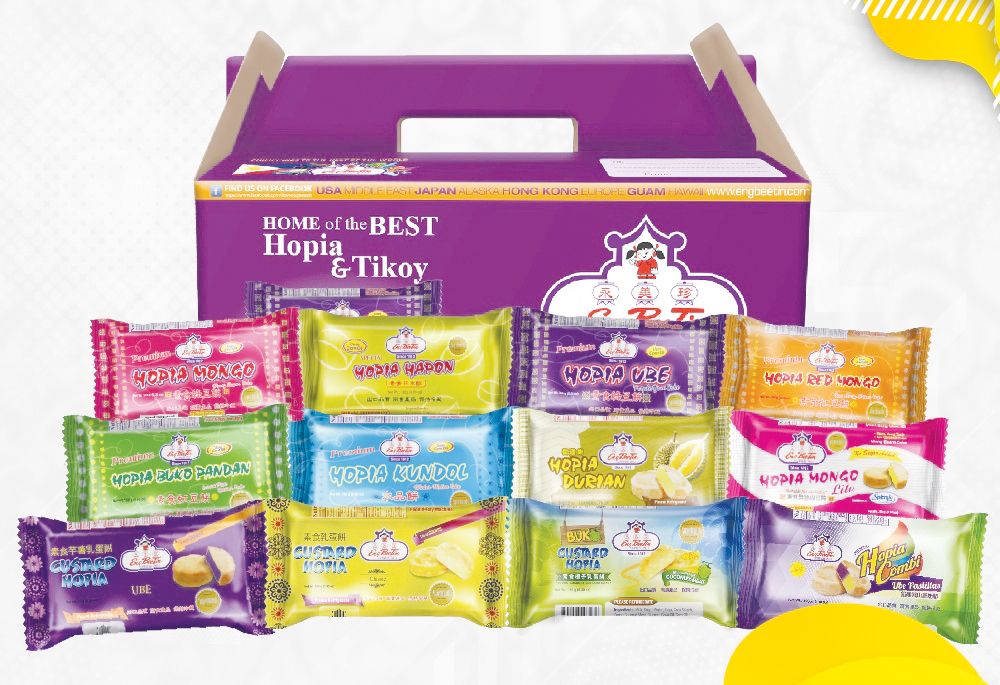
What’s a trip to Chinatown without tasting – or bringing home hopia – a Chinese delicacy whose filling captures the flavors of many youthful memories, with a taste of mongo, pork, ube and many other variations.
The hopia has been there since anyone can remember. In an interview with the Eng Bee Tin management, now on its fourth generation, it was mentioned that its hopia product started in 1921.
From a simple pastry, the two-inch circular flaky hopia has taken on a blend of various flavors that explodes in the mouth.
To pay tribute to the popularity of the product, the First National Hopia Day will be celebrated at the SM Mall of Asia Arena in a three-day event on July 19-21.
Eng Bee Tin organized the event as a feast for the senses, to bring together hopia lovers to indulge in various creative and delicious hopia flavors, and participate in fun activities.
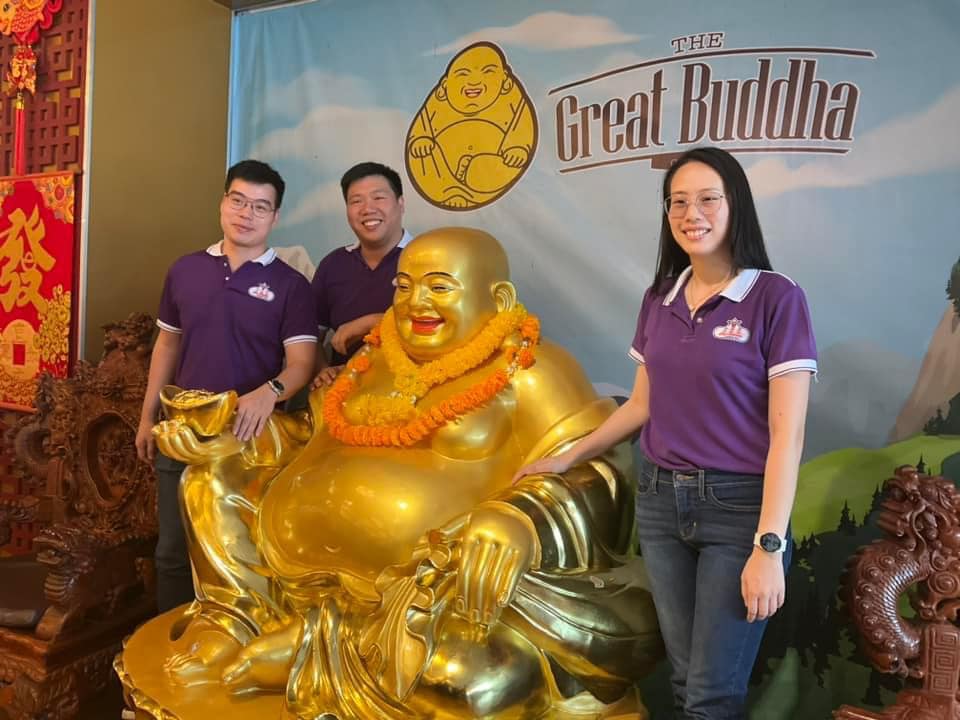
Gerik Chua and siblings Gerald and Geraldyn are the fourth generation to run Eng Bee Tin. During a brunch with the media at The Great Buddha Cafe in Binondo, Manila, the siblings traced the history of the famous brand.
In 1912, Chua Chiu Hong established Eng Bee Tin in a simple stall in the heart of Ongpin, Manila. The stall became well known for its traditional Chinese delicacies, such as hopia, tikoy, and glutinous balls.
"Dati yung hopia namin kapag binato mo sa sa pader, pag bagsak, hopia pa rin. Kaya sya ganun kasi matigas. Bakit niya ginawang matigas? Kasi dati kapag malambot yung hopia, maraming reject. Maraming sira. So matalino rin yung lolo ko. Dahil pinatigas yung hopia, naging mas dry siya. Hindi na siya mabilis masira at hindi na inaamag (Before, when you threw a hopia at the wall, it fell still whole as hopia. It was so tough. Why did he make it tough? Before, when the hopia was soft, there were many rejects, many were broken. So my grandfather was also smart. Because the hopia became hard, it was drier. It was no longer perishable and moldy),” said Gerik.
During the 1970s, Eng Bee Tin operated with much competition from enterprises offering similar products, which led to a declining popularity and reduced sales.
For over a decade, sales kept declining. Its hopia products were not popular because it had become ordinary. The company observed that creditors, suppliers, and even friends avoided doing business with them. Management knew that they needed a miracle for the business to survive the 1980s.
That “miracle” was brought by Gerry Chua, father of Gerik, Gerald, and Geraldyn. As the oldest of the siblings, Gerry, then only 21, took on the responsibility of leading the family business. He was driven by a sincere desire to support his father and turn the company around.
On what would otherwise be an uneventful day, Gerry felt the need to cool off after a slow day of business with some ice cream. He went to the supermarket and conversed with the saleslady, asking her which ice cream flavor sold the most. Her reply was "ube."
Gerry was inspired by the idea and he blended six jars of ube into a batch of hopia. After tasting it, he knew he was on to something. To master the art of ube making, he went to Pampanga and trained under the tutelage of the best halayang ube makers. When he returned, the famous hopia ube was born and was introduced to the market.
The hopia product had evolved since 1912, and the ube flavor was another phase for the interesting product. It was the miracle that brought life to the then unexciting product whose popularity in the market had waned. After the first batch of the hopia ube rolled out in the local market and it became quite popular, Gerry exported them. At first the foreign market’s response was lukewarm, but eventually the orders poured in. After a long lull, business improved.
"Yung father ko 16 years old pa lang tumutulong na sa negosyo. Sabi niya hindi puwedeng laging ganito. Gagawa ako ng hopia na sulit. (My father was only 16 years old and already helping in the business. He said it can't always be like this. I will make a hopia that is worth it.),” said Gerik.
"So ginawa niyang corn-oil yung balat. Pinanipis niya yung balat at maraming palaman. Hindi pa rin siya kaagad umokey. Hanggang naisip niyang mag imbento ng hopia ube. My father was a visionary, (He turned the skin into corn-oil. He make the skin thinner and added a lot of stuffing. Until he thought of inventing hopia ube. My father was a visionary),” Gerik said.
During that period, television host Cory Quirino wanted to do a feature on Ongpin for her new show, CityLine. Gerry played the gracious host and paved the way for her staff to interview and film around the Ongpin district. Ms. Quirino, grateful for his assistance, featured Gerry’s innovation, the hopia ube, on CityLine.
The television exposure boosted business and it soared to new heights. It led to the development of more new products.
Gerry renamed Eng Bee Tin Hopia Factory to Eng Bee Tin Chinese Deli.
Today, the store of Eng Bee Tin still is on the same spot it stood for over 90 years. It is a visible landmark in Ongpin, lit in cheerful colors to reflect the booming business.
The company is also known for its community spirit, starting with the purple-colored fire engines that it has donated to the local volunteer fire brigade.
Its many products are available in supermarkets, groceries, restaurants, offices, and school canteens. The company, as one of the biggest exporters of hopia, delivers products to many countries in Asia, the Middle East, Europe, and in the USA.
Its product line has extended beyond Chinese delicacies. Customers can now purchase a variety of frozen products, Filipino treats, processed seafood, bread, and cakes — all bearing the Eng Bee Tin label.