ADVERTISEMENT

13.6 million Pinoys may be displaced by 2100 due to climate change—DENR

Published Jul 12, 2024 10:05 am

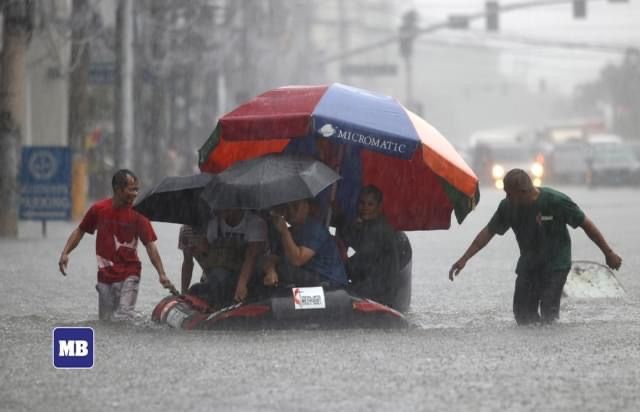
IMG_3352.jpegAt least 13.6 million Filipinos are at risk of permanent displacement as the sea level is expected to rise by 2100 due to the effects of climate change, an official of the Department of Environment and Natural Resources (DENR) said on Friday, July 12.

“It is projected that almost 17 percent of the Philippines’ islands will be submerged due to sea level rising by 2100 putting at risk 64 provinces, 822 coastal communities and estimated 13.6 million Filipinos that would need relocation,” DENR Undersecretary for Finance, Information Systems and Climate Change Analiza Rebuelta-Teh said.

The environment department has yet to release the list of the areas expected to be affected.

By 2040, she said around 150,000 Filipinos will be displaced by the rise of sea water level.

Teh noted that such is expected to cause P18 billion worth of economic losses.

Citing the 2023 World Risk Index, the DENR official noted that the Philippines holds the top spot for the highest disaster risks.

“The most recent El Niño in the Philippines led to more than 61 percent losses in agriculture worth about US$47million from 50,511 hectares,” Teh stated in her report.

Climate change, according to the undersecretary, is projected to impact 7.6 percent of the country’s Gross Domestic Product (GDP) amounting to US$24.2 billion.

Recently, the Philippines won the bid to host the Loss and Damage Fund Board.

Environment Secretary Maria Antonia “Toni” Yulo-Loyzaga stated that hosting the loss and damage fund board is a “welcome development for the Philippines as one of the countries most vulnerable to the adverse effects of climate change.”

“The Loss and Damage Fund is a long-fought struggle to directly assist those who bear the greatest impact of climate-induced losses and damage to recover and build,” she said. “We take on this responsibility in solidarity with all countries vulnerable to the impacts of climate change.”

Per the DENR, the Fund is designed to support developing nations particularly vulnerable to the adverse effects of climate change, aiding them in addressing both economic and non-economic losses and damages related to such effects. This includes damage from extreme weather events and slow-onset phenomena.

It noted that the Board overseeing the Fund consists of 26 members from Parties to the United Nations Framework Convention on Climate Change (UNFCCC) and its Paris Agreement, comprising 12 members from developed countries and 14 from developing countries.

“The Philippines is a member of the Board, occupying one of three seats for Asia-Pacific States. The Board member representing the Philippines is Atty. Mark Dennis Joven, with Board Adviser Ms. Leila Lora-Santos,” the agency added.

ADVERTISEMENT
.most-popular .layout-ratio{ padding-bottom: 79.13%; } @media (min-width: 768px) and (max-width: 1024px) { .widget-title { font-size: 15px !important; } }

{{ articles_filter_1561_widget.title }}

.most-popular .layout-ratio{ padding-bottom: 79.13%; } @media (min-width: 768px) and (max-width: 1024px) { .widget-title { font-size: 15px !important; } }

{{ articles_filter_1562_widget.title }}

.most-popular .layout-ratio{ padding-bottom: 79.13%; } @media (min-width: 768px) and (max-width: 1024px) { .widget-title { font-size: 15px !important; } }

{{ articles_filter_1563_widget.title }}

{{ articles_filter_1564_widget.title }}

.mb-article-details { position: relative; } .mb-article-details .article-body-preview, .mb-article-details .article-body-summary{ font-size: 17px; line-height: 30px; font-family: "Libre Caslon Text", serif; color: #000; } .mb-article-details .article-body-preview iframe , .mb-article-details .article-body-summary iframe{ width: 100%; margin: auto; } .read-more-background { background: linear-gradient(180deg, color(display-p3 1.000 1.000 1.000 / 0) 13.75%, color(display-p3 1.000 1.000 1.000 / 0.8) 30.79%, color(display-p3 1.000 1.000 1.000) 72.5%); position: absolute; height: 200px; width: 100%; bottom: 0; display: flex; justify-content: center; align-items: center; padding: 0; } .read-more-background a{ color: #000; } .read-more-btn { padding: 17px 45px; font-family: Inter; font-weight: 700; font-size: 18px; line-height: 16px; text-align: center; vertical-align: middle; border: 1px solid black; background-color: white; } .hidden { display: none; }
function initializeAllSwipers() { // Get all hidden inputs with cms_article_id document.querySelectorAll('[id^="cms_article_id_"]').forEach(function (input) { const cmsArticleId = input.value; const articleSelector = '#article-' + cmsArticleId + ' .body_images'; const swiperElement = document.querySelector(articleSelector); if (swiperElement && !swiperElement.classList.contains('swiper-initialized')) { new Swiper(articleSelector, { loop: true, pagination: false, navigation: { nextEl: '#article-' + cmsArticleId + ' .swiper-button-next', prevEl: '#article-' + cmsArticleId + ' .swiper-button-prev', }, }); } }); } setTimeout(initializeAllSwipers, 3000); const intersectionObserver = new IntersectionObserver( (entries) => { entries.forEach((entry) => { if (entry.isIntersecting) { const newUrl = entry.target.getAttribute("data-url"); if (newUrl) { history.pushState(null, null, newUrl); let article = entry.target; // Extract metadata const author = article.querySelector('.author-section').textContent.replace('By', '').trim(); const section = article.querySelector('.section-info ').textContent.replace(' ', ' '); const title = article.querySelector('.article-title h1').textContent; // Parse URL for Chartbeat path format const parsedUrl = new URL(newUrl, window.location.origin); const cleanUrl = parsedUrl.host + parsedUrl.pathname; // Update Chartbeat configuration if (typeof window._sf_async_config !== 'undefined') { window._sf_async_config.path = cleanUrl; window._sf_async_config.sections = section; window._sf_async_config.authors = author; } // Track virtual page view with Chartbeat if (typeof pSUPERFLY !== 'undefined' && typeof pSUPERFLY.virtualPage === 'function') { try { pSUPERFLY.virtualPage({ path: cleanUrl, title: title, sections: section, authors: author }); } catch (error) { console.error('ping error', error); } } // Optional: Update document title if (title && title !== document.title) { document.title = title; } } } }); }, { threshold: 0.1 } ); function showArticleBody(button) { const article = button.closest("article"); const summary = article.querySelector(".article-body-summary"); const body = article.querySelector(".article-body-preview"); const readMoreSection = article.querySelector(".read-more-background"); // Hide summary and read-more section summary.style.display = "none"; readMoreSection.style.display = "none"; // Show the full article body body.classList.remove("hidden"); } document.addEventListener("DOMContentLoaded", () => { let loadCount = 0; // Track how many times articles are loaded const offset = [1, 2, 3, 4, 5, 6, 7, 8, 9, 10]; // Offset values const currentUrl = window.location.pathname.substring(1); let isLoading = false; // Prevent multiple calls if (!currentUrl) { console.log("Current URL is invalid."); return; } const sentinel = document.getElementById("load-more-sentinel"); if (!sentinel) { console.log("Sentinel element not found."); return; } function isSentinelVisible() { const rect = sentinel.getBoundingClientRect(); return ( rect.top < window.innerHeight && rect.bottom >= 0 ); } function onScroll() { if (isLoading) return; if (isSentinelVisible()) { if (loadCount >= offset.length) { console.log("Maximum load attempts reached."); window.removeEventListener("scroll", onScroll); return; } isLoading = true; const currentOffset = offset[loadCount]; window.loadMoreItems().then(() => { let article = document.querySelector('#widget_1690 > div:nth-last-of-type(2) article'); intersectionObserver.observe(article) loadCount++; }).catch(error => { console.error("Error loading more items:", error); }).finally(() => { isLoading = false; }); } } window.addEventListener("scroll", onScroll); });

Sign up by email to receive news.