







Peace in the Bangsamoro
PEACE BY PEACE


GUEST COLUMNIST
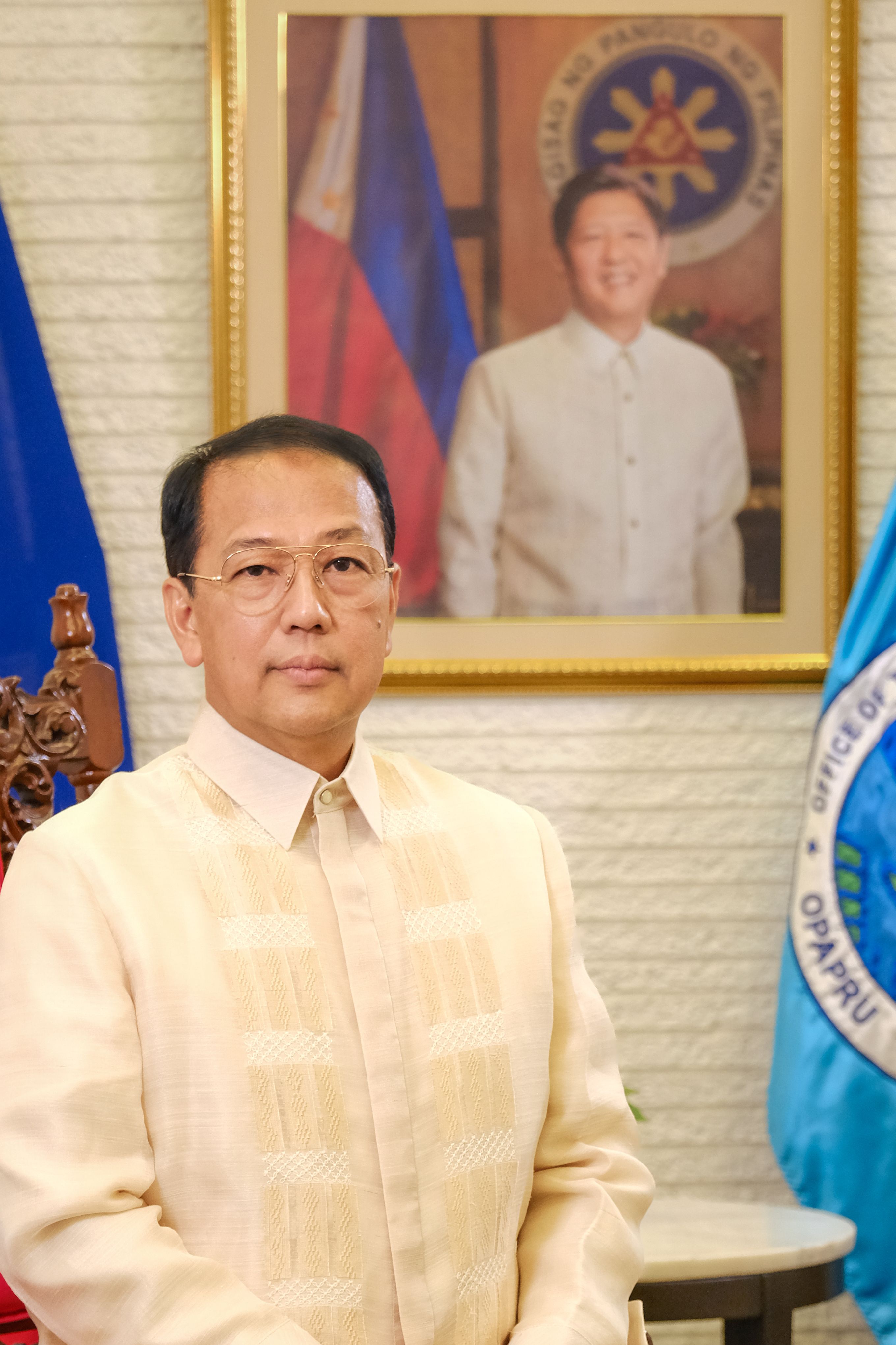
By Secretary Carlito G. Galvez, Jr.
The Bangsamoro peace process has indeed come full circle. What began as a determined effort of the Government of the Philippines (GPH) to decisively address the Moro people’s struggle for self-determination and self-governance has evolved to become a collective journey to achieve a just and lasting peace in the region.
This journey, which began during the term of President Ferdinand Marcos, Sr. after the signing of the historic Tripoli Agreement between the GPH and the Moro National Liberation Front (MNLF) in Tripoli, Libya in 1976, served as the impetus for the forging of landmark peace agreements under the succeeding administrations.
The inking of the Final Peace Agreement (FPA) between the GPH and MNLF in 1996, the Framework Agreement in the Bangsamoro (FAB) in 2012, and the Comprehensive Agreement on the Bangsamoro (CAB) in 2014 have laid a solid foundation which the administration of President Ferdinand "Bongbong" Marcos, Jr. is now building upon.
What was started by the father, President Marcos Sr., is now being pursued by his son, President Marcos Jr., with greater vigor, passion, and commitment.
Among the most notable achievements under the Marcos, Jr. administration to sustain the gains of peace in the region has been the reunification of the MNLF and MILF, the country’s two major Moro fronts.
And by appointing members of the MILF and MNLF to the Bangsamoro Transition Authority (BTA), the interim Bangsamoro government, the President has taken a momentous step towards uniting the Bangsamoro people.
The successes of the BARMM government under the current administration is evident in key areas such as the passage of crucial codes by the Bangsamoro Parliament, leading to a substantial decrease in poverty levels and a significant improvement in the region’s peace and security. This stability has attracted about ₱3.7 billion in new investments this year alone.
President Marcos, Jr.'s visit to Camp Abubakar last month symbolized his steadfast commitment to lasting peace. Reflecting on the 10-year anniversary of the CAB, he remarked, "Our journey towards peace is a shared commitment. It is not just the government's responsibility but a collective endeavor that involves every Filipino."
And during his visit to Basilan in March this year to witness the putting beyond use of 550 surrendered unlicensed weapons under the Government of the Philippines’ Small Arms and Light Weapons (SALW) Management Program, the President underscored that "Peace is totally achieved not when the sound of gunfire has ended. It is when the clamor for better lives has been met. This is the kind of peace that we see that dawned on here in Basilan. This is the kind of peace where the depressing tally of the casualties of war has been replaced by the statistics of human development.”
The SALW Program is a testament to the effectiveness of the national government’s Localizing Normalization Initiatives (LNI) wherein local government units are being empowered in the implementation of the Normalization Program for former combatants.
Furthermore, more than 26,000 former MILF combatants have undergone the decommissioning process and have been provided with substantial socioeconomic assistance. At least 396 former MILF and MNLF combatants are now serving in the Philippine National Police (PNP) as regular patrolmen and patrolwomen.
The ongoing convergence efforts between the group of MNLF Chairman Nur Misuari and Muslimin Sema and the rollout of the MNLF Transformation Program highlight the administration's resolve to ensure the unification of the Moro fronts.
He has underscored the key role of peacebuilders when he said, "Because brave may be those who wage wars, but braver are those who seek peace and who win that peace."
He understands that building on and sustaining the gains of peace is both a challenging and sustained process, as he said, "Ang kapayapaan ay hindi nakakamit sa trabahong pangmadalian o paminsan-minsan lamang...This is not an easy job. It is not the work of a day, it is not the work of a month, it is a work of a lifetime."
There is no doubt that the progress that has been achieved in pushing forward the peace process in the Bangsamoro is a testament to what can be accomplished through unity, synergy, and cooperation.
(Secretary Carlito G. Galvez, Jr., is the Presidential Adviser on Peace, Reconciliation and Unity. He advises the President on the implementation of the Philippine Comprehensive Peace Process.)