






 Philippines
National
#MeriendaNiLuc: These PH fruits leave mark on EU envoy's taste buds
Philippines
National
#MeriendaNiLuc: These PH fruits leave mark on EU envoy's taste buds
#MeriendaNiLuc: These PH fruits leave mark on EU envoy's taste buds
By Raymund Antonio and Raymund Antonio


European Union Ambassador to the Philippines Luc Veron reminisced about the taste of Philippines’ rambutan and lychee during his recent visit to Thailand.
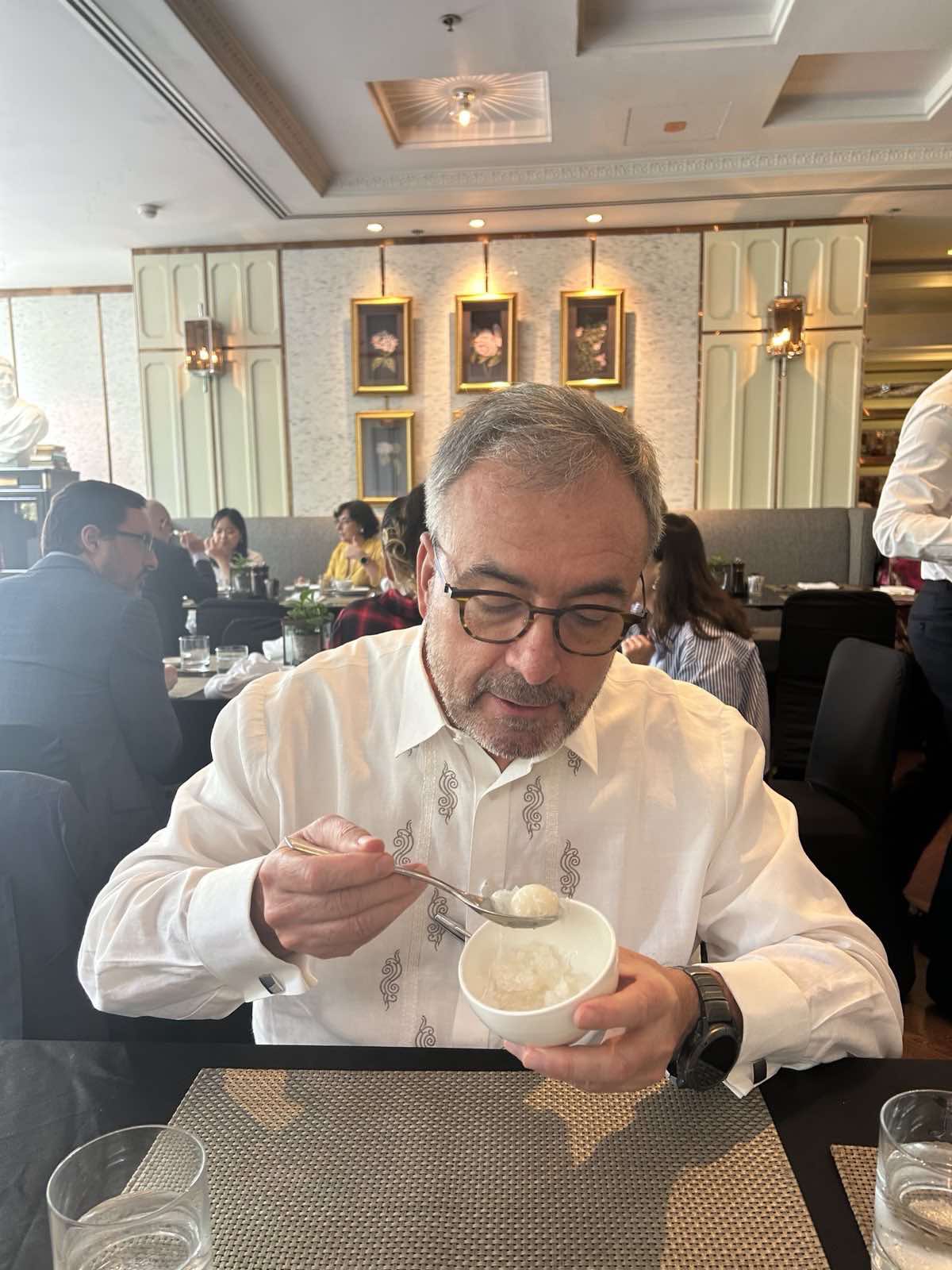
(EU Ambassador to the Philippines Luc Veron/X)
In a post on X (formerly Twitter) on Friday, June 7, the ambassador remembered the abundance of rambutan and lychee in the Philippines when he sampled Thailand’s sweet sticky rice with longan, which comes from the same family of fruits.
“#MeriendaNiLuc has reached Thailand!,” he wrote, referring to a hashtag he has used to feature Filipino delicacies.
“Enjoyed this tasty treat of sweet sticky rice with longan while wearing a barong during my visit. Reminds me of the abundant rambutan and lychee back in the (Philippines),” he added.
Rambutan, referred to as hairy lychee in some countries, is a bright red, oval-shaped fruit with a white meaty flesh inside that’s rich in vitamin C and potassium.
Lychees, on the other hand, have bumpy pink skin and the same white meaty fruit inside.
Rambutans, lychees, and longans are native to Asia and believed to be similar in taste—sweet and slightly acidic.
In the past, Veron had tried native Filipino food pili nuts, a popular fastfood chain’s mango pie, and the taho, a silky tofu topped with sugar syrup and small tapioca pearls for his #MeriendaNiLuc series.