ADVERTISEMENT

Kanlaon Volcano downstream communities hit by another lahar

Published Jun 7, 2024 02:03 pm
IMG_3873.jpeg
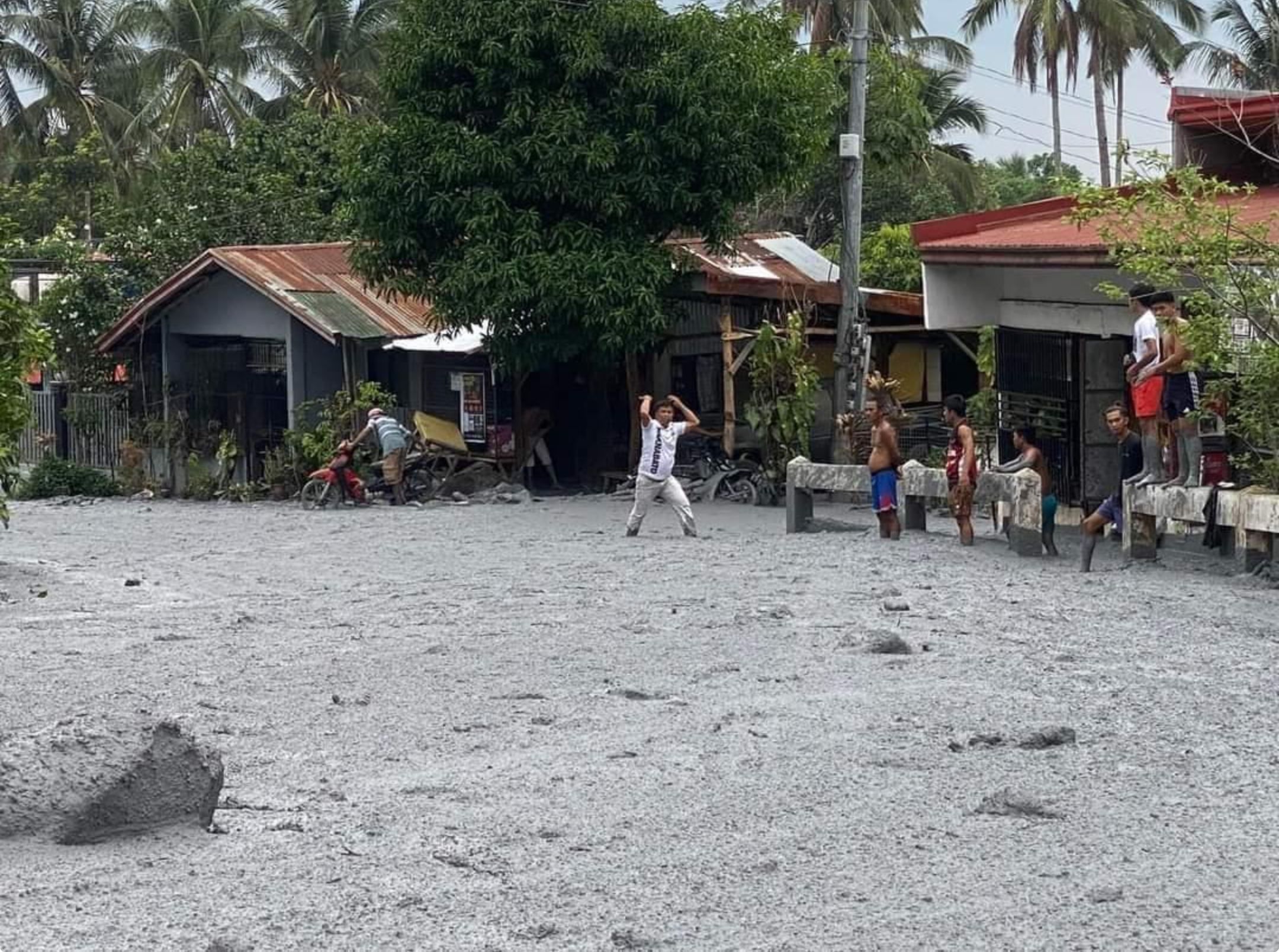
Roads in La Castellana, Negros Occidental are rendered impassable on Wednesday, June 5, 2024 as rains spawned widespread lahar flow in the aftermath of the eruption of Kanlaon Volcano. (Photos courtesy of Mt. Kanlaon Natural Park/via Tara Yap)

The Philippine Institute of Volcanology and Seismology (Phivolcs) on Friday, June 7, confirmed that another lahar struck the downstream communities surrounding Kanlaon Volcano in Negros Island following a heavy rainfall.

In an advisory issued at 9 p.m., Phivolcs said lahars commenced around 2:50 p.m., persisting for 80 minutes, based on seismic records.

It added that rainfall measured 28.22 millimeters over a 3.33-hour period, which was documented by the all-weather station of the Manghumay, Mailum, Bago City Observation Station (VKMH) of the Kanlaon Volcano Network.

Phivolcs emphasized the likelihood of higher rainfall volumes occurring around the summit area of the volcano.

Citing reports from netizens on social media, local officials, and Phivolcs’ quick response team in the field, Phivolcs said "cohesive and cement-like lahars bearing broken tree debris occurred along the Baji-Baji Falls and Ibid Creek in Cabacungan, La Castellana.“

La Carlota City officials also reported lahars in Sto. Guintubdan and Ara-al, which led to ensuing muddy streamflows passing through various areas, including the Buslugan, Busay Oro, Busay Abaga, Busay Mayor, Busay Kapid, Kabkaban, Ezzy, Busay Ambon, and Labi Labi falls.

Phivolcs advised communities to maintain heightened vigilance against further lahars, muddy streamflows, or muddy run-off in the rivers draining the southern Kanlaon edifice, especially those areas already affected by lahars in the past three days.

It pointed out that the threat of lahars may persist for "a few months" during the southwest monsoon season due to occasional heavy rains over Negros Island.

The affected communities and local government units are advised to continuously monitor weather conditions and take preemptive response measures when heavy rains, which serve as the sole early warning for lahars, are anticipated or have already begun over the upper slopes of Kanlaon Volcano.

“Lahars can threaten communities along the middle and lower slopes with inundation, burial, and wash out. Phivolcs thus strongly recommends increased vigilance and readiness of communities along rivers draining southern Kanlaon,” Phivolcs said.

Related Tags

Kanlaon Volcano lahar advisory Phivolcs
ADVERTISEMENT
.most-popular .layout-ratio{ padding-bottom: 79.13%; } @media (min-width: 768px) and (max-width: 1024px) { .widget-title { font-size: 15px !important; } }

{{ articles_filter_1561_widget.title }}

.most-popular .layout-ratio{ padding-bottom: 79.13%; } @media (min-width: 768px) and (max-width: 1024px) { .widget-title { font-size: 15px !important; } }

{{ articles_filter_1562_widget.title }}

.most-popular .layout-ratio{ padding-bottom: 79.13%; } @media (min-width: 768px) and (max-width: 1024px) { .widget-title { font-size: 15px !important; } }

{{ articles_filter_1563_widget.title }}

{{ articles_filter_1564_widget.title }}

.mb-article-details { position: relative; } .mb-article-details .article-body-preview, .mb-article-details .article-body-summary{ font-size: 17px; line-height: 30px; font-family: "Libre Caslon Text", serif; color: #000; } .mb-article-details .article-body-preview iframe , .mb-article-details .article-body-summary iframe{ width: 100%; margin: auto; } .read-more-background { background: linear-gradient(180deg, color(display-p3 1.000 1.000 1.000 / 0) 13.75%, color(display-p3 1.000 1.000 1.000 / 0.8) 30.79%, color(display-p3 1.000 1.000 1.000) 72.5%); position: absolute; height: 200px; width: 100%; bottom: 0; display: flex; justify-content: center; align-items: center; padding: 0; } .read-more-background a{ color: #000; } .read-more-btn { padding: 17px 45px; font-family: Inter; font-weight: 700; font-size: 18px; line-height: 16px; text-align: center; vertical-align: middle; border: 1px solid black; background-color: white; } .hidden { display: none; }
function initializeAllSwipers() { // Get all hidden inputs with cms_article_id document.querySelectorAll('[id^="cms_article_id_"]').forEach(function (input) { const cmsArticleId = input.value; const articleSelector = '#article-' + cmsArticleId + ' .body_images'; const swiperElement = document.querySelector(articleSelector); if (swiperElement && !swiperElement.classList.contains('swiper-initialized')) { new Swiper(articleSelector, { loop: true, pagination: false, navigation: { nextEl: '#article-' + cmsArticleId + ' .swiper-button-next', prevEl: '#article-' + cmsArticleId + ' .swiper-button-prev', }, }); } }); } setTimeout(initializeAllSwipers, 3000); const intersectionObserver = new IntersectionObserver( (entries) => { entries.forEach((entry) => { if (entry.isIntersecting) { const newUrl = entry.target.getAttribute("data-url"); if (newUrl) { history.pushState(null, null, newUrl); let article = entry.target; // Extract metadata const author = article.querySelector('.author-section').textContent.replace('By', '').trim(); const section = article.querySelector('.section-info ').textContent.replace(' ', ' '); const title = article.querySelector('.article-title h1').textContent; // Parse URL for Chartbeat path format const parsedUrl = new URL(newUrl, window.location.origin); const cleanUrl = parsedUrl.host + parsedUrl.pathname; // Update Chartbeat configuration if (typeof window._sf_async_config !== 'undefined') { window._sf_async_config.path = cleanUrl; window._sf_async_config.sections = section; window._sf_async_config.authors = author; } // Track virtual page view with Chartbeat if (typeof pSUPERFLY !== 'undefined' && typeof pSUPERFLY.virtualPage === 'function') { try { pSUPERFLY.virtualPage({ path: cleanUrl, title: title, sections: section, authors: author }); } catch (error) { console.error('ping error', error); } } // Optional: Update document title if (title && title !== document.title) { document.title = title; } } } }); }, { threshold: 0.1 } ); function showArticleBody(button) { const article = button.closest("article"); const summary = article.querySelector(".article-body-summary"); const body = article.querySelector(".article-body-preview"); const readMoreSection = article.querySelector(".read-more-background"); // Hide summary and read-more section summary.style.display = "none"; readMoreSection.style.display = "none"; // Show the full article body body.classList.remove("hidden"); } document.addEventListener("DOMContentLoaded", () => { let loadCount = 0; // Track how many times articles are loaded const offset = [1, 2, 3, 4, 5, 6, 7, 8, 9, 10]; // Offset values const currentUrl = window.location.pathname.substring(1); let isLoading = false; // Prevent multiple calls if (!currentUrl) { console.log("Current URL is invalid."); return; } const sentinel = document.getElementById("load-more-sentinel"); if (!sentinel) { console.log("Sentinel element not found."); return; } function isSentinelVisible() { const rect = sentinel.getBoundingClientRect(); return ( rect.top < window.innerHeight && rect.bottom >= 0 ); } function onScroll() { if (isLoading) return; if (isSentinelVisible()) { if (loadCount >= offset.length) { console.log("Maximum load attempts reached."); window.removeEventListener("scroll", onScroll); return; } isLoading = true; const currentOffset = offset[loadCount]; window.loadMoreItems().then(() => { let article = document.querySelector('#widget_1690 > div:nth-last-of-type(2) article'); intersectionObserver.observe(article) loadCount++; }).catch(error => { console.error("Error loading more items:", error); }).finally(() => { isLoading = false; }); } } window.addEventListener("scroll", onScroll); });

Sign up by email to receive news.