






 Philippines
National
Crafting of salt industry roadmap to uplift livelihoods of countless Pinoys--solon
Philippines
National
Crafting of salt industry roadmap to uplift livelihoods of countless Pinoys--solon
Crafting of salt industry roadmap to uplift livelihoods of countless Pinoys--solon


At A Glance
- Kabayan Party-list Rep. Ron Salo says the establishment of a Philippine salt industry roadmap will help unlock the industry's "vast potential" to uplift the livelihoods of Filipino salt farmers.
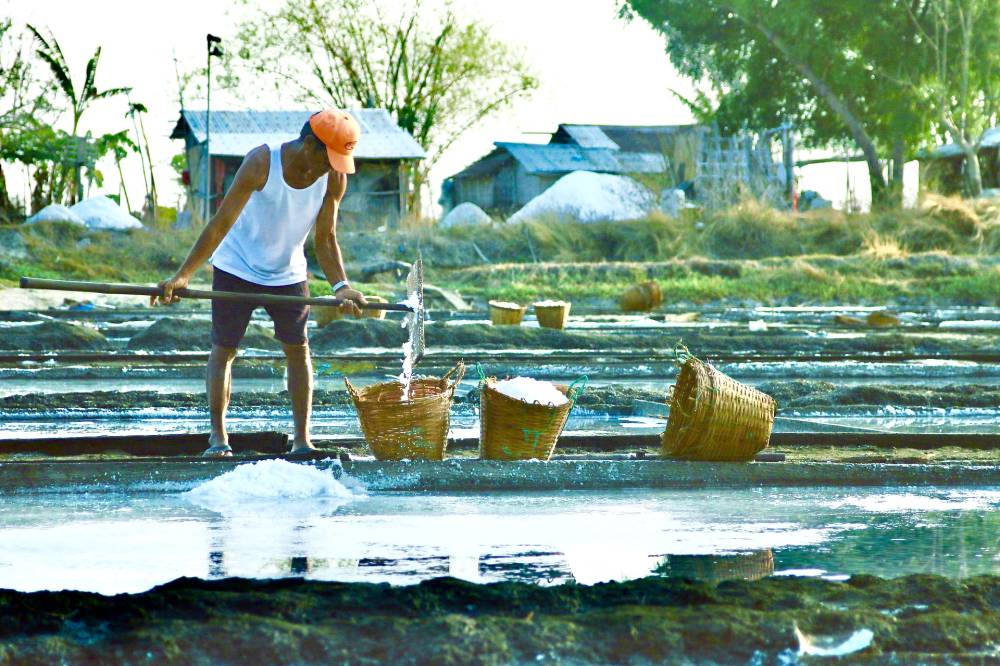 (Pixabay)
Kabayan Party-list Rep. Ron Salo says the establishment of a Philippine salt industry roadmap will help unlock the industry’s “vast potential” to uplift the livelihoods of Filipino salt farmers.
“This initiative is more than just policy-making; it is about revitalizing an industry with immense potential and ensuring the livelihoods of countless Filipinos who depend on it. I am confident that through our collaborative efforts, we can create a thriving, self-sufficient, and globally competitive salt industry,” he said in a statement.
Salo gave this remark following the conduct of the second workshop for the roadmap, which he said was
consistent with the provisions of Republic Act (RA) No. 11985, otherwise known as the Philippine Salt Industry Development Act.
He particularly cited Section 4, which mandates the formulation and establishment of a Philippine salt industry roadmap.
Organized by the Bureau of Fisheries and Aquatic Resources (BFAR), the workshop was attended by representatives from different government agencies, local government units, state universities and colleges, and stakeholders from the private sector, which form part of the participants in crafting the roadmap.
As one of the principal authors of the measure, Salo says the full enactment of the law is necessary in ensuring the development and enrichment of the salt industry.
“This measure represents a significant paradigm shift in policy for the salt industry as it adopts a developmental approach, a 180-degree turn from a purely regulatory approach,” the lawmaker said.
“With this law, salt has ceased to be an orphaned commodity. It has now found its new home – the [BFAR] of the Department of Agriculture (DA),” he added.
Salo, who grew up in the salt-rich province of Pangasinan, emphasized that the salt industry plays a crucial role in the livelihood of many Filipinos.
“This personal connection reinforces my commitment in seeing this initiative through to success,” he shared.
The veteran congressman further noted that the Philippines once had a thriving salt industry in the 1990s when nearly 85 percent of the country's annual salt requirement was sourced locally from provinces.
However, the country failed to maintain the productivity of the industry, which led to heavy reliance on imports, he said.
He explained that this triggered the loss of several livelihoods, decreased income due to importation, and heightened vulnerability to food supply chain disruptions.
With the law’s implementation, Salo expressed optimism that the challenges faced by the industry will finally be addressed.
“Such effective implementation is the key that will unlock the vast potential of the industry,” he underscored.