ADVERTISEMENT

Can too much noise cause an ecological crisis

Published Jun 5, 2024 09:02 am

20240605-focus-noise.jpg

By JUNEP OCAMPO

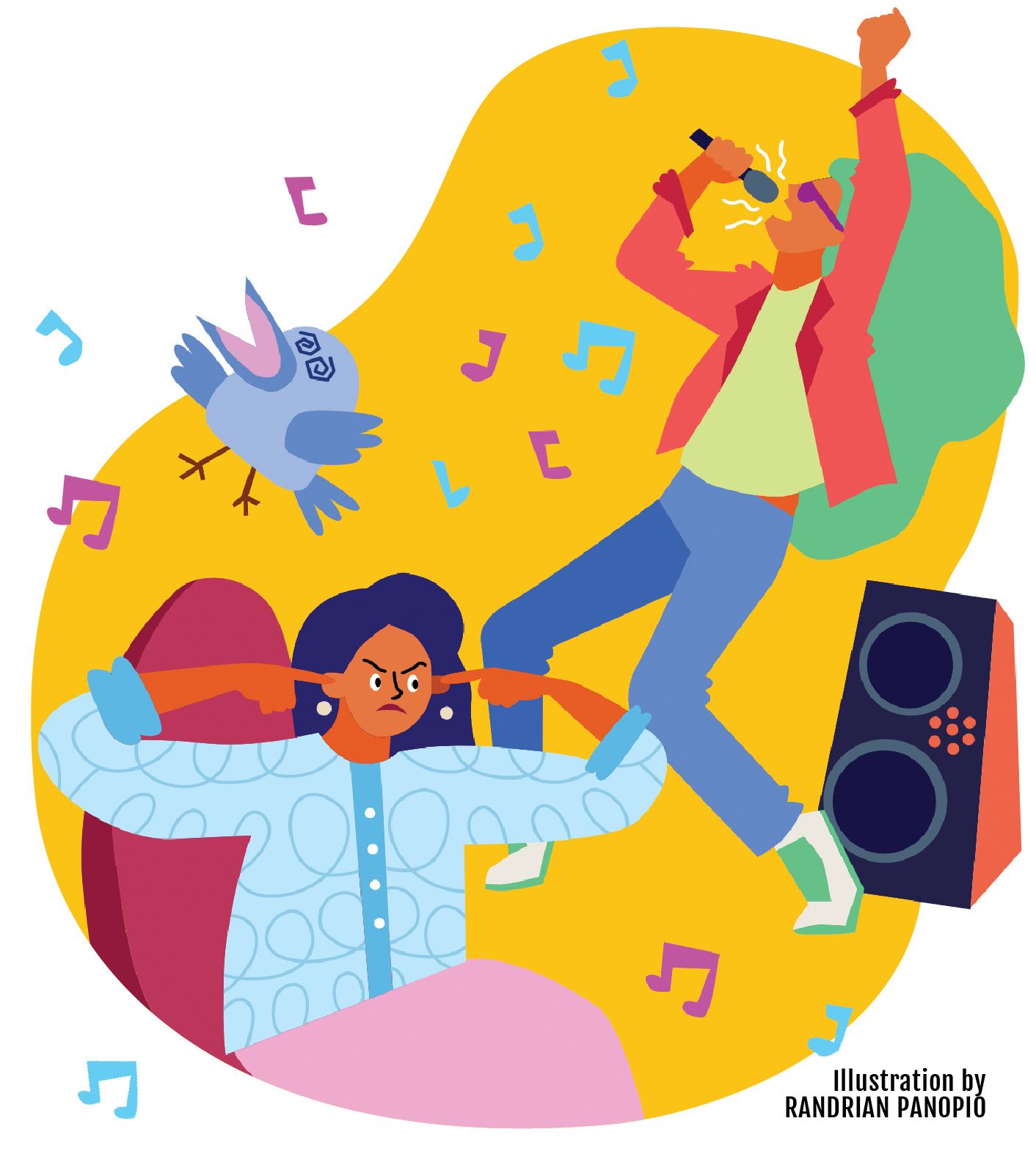
A retired English expatriate is sounding the alarm over an unexpected threat to the local ecosystem in Davao City: incessant karaoke noise.

Frank Woolf, who settled in Davao to enjoy a peaceful retirement 12 years ago, has been battling noise pollution which he says has been wreaking havoc not just on his peace of mind but also on the natural environment he cherishes.

According to Woolf, his idyllic neighborhood, once a sanctuary for diverse flora and fauna, has changed dramatically. The relentless booming from karaoke machines, which begins early in the morning and continues late into the night, has driven away birds and impacted his five-hectare retirement food forest.

“The noise is not just an occasional annoyance. It's deafening even a mile away, and we have to shout to have conversations. The ground vibrates with the dangerous low-frequency bam-bam-bam, and I believe this killed the soil food web,” Woolf explained.

Serious consequences

The consequences have been severe. Woolf recounted how his once-thriving food forest, home to about 5,000 trees producing truckloads of crops, has been decimated.

“Of the 69 big productive durian trees, we have maybe five remaining. About 1,200 banana plants produce fruits that are too small to sell, and they have not recovered. Hundreds of other trees like cashew, mangosteen, avocado, rambutan, lanzones, and others have died or become very sick,” he lamented.

Woolf noted that restoring the soil food web has proven challenging and costly, with full recovery possibly taking another decade.

Woolf's struggle is not just ecological but also economic and emotional. He has had to lay off 12 workers and cancel plans for free organic permaculture training sessions, a swimming pool, and a restaurant serving organic produce.

“This is a massive problem. It cost us years of work and destroyed most of our big fruit-producing trees. We can no longer cover our costs with fruit sales,” he noted. He estimated that his financial loss so far amounts to around 2 million.

After ecological disruption

Woolf said the noise pollution has disrupted the local wildlife and agricultural productivity. Birds, crucial for bug control, have fled, leading to a surge in the bug population that devastated fruit trees. Fish, chickens, ducks, and rabbits have also been adversely affected.

“The fish were dying and not growing, chickens and ducks stopped laying eggs, and many were dying. The rabbits could no longer produce young, with some dying,” Woolf said.

Woolf emphasized the broader implications of this problem, pointing out that poor farmers might be suffering similar losses without understanding the cause. He criticized the prevailing attitude towards noise pollution in the Philippines, which he believes hampers investment and tourism.

Disregard for the law

Woolf's plea is clear: he wants existing laws against noise pollution enforced and the illegal noise stopped before it causes further destruction. “It does not take much imagination to see what would happen if all birds were gone like with us,” he warned.

Uphill battle but hope in sight

Efforts to address the issue through local authorities have not been successful for the last five years.

"I went to the barangay hall one day to offer low-cost organic farming training for up to 40 farmers but it was impossible to talk to the chief due to the noise,” Woolf recalled. He has reached out to various government bodies, including the Presidential Complaint Center, the City Council, and the police, but the journey to resolution has been arduous.

However, Woolf said, the new barangay captain is now looking into the issue. “I just hope this issue is finally resolved and that it will not return if ever a new barangay captain gets elected,” he said.


Related Tags

JUNEP OCAMPO
ADVERTISEMENT
.most-popular .layout-ratio{ padding-bottom: 79.13%; } @media (min-width: 768px) and (max-width: 1024px) { .widget-title { font-size: 15px !important; } }

{{ articles_filter_1561_widget.title }}

.most-popular .layout-ratio{ padding-bottom: 79.13%; } @media (min-width: 768px) and (max-width: 1024px) { .widget-title { font-size: 15px !important; } }

{{ articles_filter_1562_widget.title }}

.most-popular .layout-ratio{ padding-bottom: 79.13%; } @media (min-width: 768px) and (max-width: 1024px) { .widget-title { font-size: 15px !important; } }

{{ articles_filter_1563_widget.title }}

{{ articles_filter_1564_widget.title }}

.mb-article-details { position: relative; } .mb-article-details .article-body-preview, .mb-article-details .article-body-summary{ font-size: 17px; line-height: 30px; font-family: "Libre Caslon Text", serif; color: #000; } .mb-article-details .article-body-preview iframe , .mb-article-details .article-body-summary iframe{ width: 100%; margin: auto; } .read-more-background { background: linear-gradient(180deg, color(display-p3 1.000 1.000 1.000 / 0) 13.75%, color(display-p3 1.000 1.000 1.000 / 0.8) 30.79%, color(display-p3 1.000 1.000 1.000) 72.5%); position: absolute; height: 200px; width: 100%; bottom: 0; display: flex; justify-content: center; align-items: center; padding: 0; } .read-more-background a{ color: #000; } .read-more-btn { padding: 17px 45px; font-family: Inter; font-weight: 700; font-size: 18px; line-height: 16px; text-align: center; vertical-align: middle; border: 1px solid black; background-color: white; } .hidden { display: none; }
function initializeAllSwipers() { // Get all hidden inputs with cms_article_id document.querySelectorAll('[id^="cms_article_id_"]').forEach(function (input) { const cmsArticleId = input.value; const articleSelector = '#article-' + cmsArticleId + ' .body_images'; const swiperElement = document.querySelector(articleSelector); if (swiperElement && !swiperElement.classList.contains('swiper-initialized')) { new Swiper(articleSelector, { loop: true, pagination: false, navigation: { nextEl: '#article-' + cmsArticleId + ' .swiper-button-next', prevEl: '#article-' + cmsArticleId + ' .swiper-button-prev', }, }); } }); } setTimeout(initializeAllSwipers, 3000); const intersectionObserver = new IntersectionObserver( (entries) => { entries.forEach((entry) => { if (entry.isIntersecting) { const newUrl = entry.target.getAttribute("data-url"); if (newUrl) { history.pushState(null, null, newUrl); let article = entry.target; // Extract metadata const author = article.querySelector('.author-section').textContent.replace('By', '').trim(); const section = article.querySelector('.section-info ').textContent.replace(' ', ' '); const title = article.querySelector('.article-title h1').textContent; // Parse URL for Chartbeat path format const parsedUrl = new URL(newUrl, window.location.origin); const cleanUrl = parsedUrl.host + parsedUrl.pathname; // Update Chartbeat configuration if (typeof window._sf_async_config !== 'undefined') { window._sf_async_config.path = cleanUrl; window._sf_async_config.sections = section; window._sf_async_config.authors = author; } // Track virtual page view with Chartbeat if (typeof pSUPERFLY !== 'undefined' && typeof pSUPERFLY.virtualPage === 'function') { try { pSUPERFLY.virtualPage({ path: cleanUrl, title: title, sections: section, authors: author }); } catch (error) { console.error('ping error', error); } } // Optional: Update document title if (title && title !== document.title) { document.title = title; } } } }); }, { threshold: 0.1 } ); function showArticleBody(button) { const article = button.closest("article"); const summary = article.querySelector(".article-body-summary"); const body = article.querySelector(".article-body-preview"); const readMoreSection = article.querySelector(".read-more-background"); // Hide summary and read-more section summary.style.display = "none"; readMoreSection.style.display = "none"; // Show the full article body body.classList.remove("hidden"); } document.addEventListener("DOMContentLoaded", () => { let loadCount = 0; // Track how many times articles are loaded const offset = [1, 2, 3, 4, 5, 6, 7, 8, 9, 10]; // Offset values const currentUrl = window.location.pathname.substring(1); let isLoading = false; // Prevent multiple calls if (!currentUrl) { console.log("Current URL is invalid."); return; } const sentinel = document.getElementById("load-more-sentinel"); if (!sentinel) { console.log("Sentinel element not found."); return; } function isSentinelVisible() { const rect = sentinel.getBoundingClientRect(); return ( rect.top < window.innerHeight && rect.bottom >= 0 ); } function onScroll() { if (isLoading) return; if (isSentinelVisible()) { if (loadCount >= offset.length) { console.log("Maximum load attempts reached."); window.removeEventListener("scroll", onScroll); return; } isLoading = true; const currentOffset = offset[loadCount]; window.loadMoreItems().then(() => { let article = document.querySelector('#widget_1690 > div:nth-last-of-type(2) article'); intersectionObserver.observe(article) loadCount++; }).catch(error => { console.error("Error loading more items:", error); }).finally(() => { isLoading = false; }); } } window.addEventListener("scroll", onScroll); });

Sign up by email to receive news.