

ADVERTISEMENT

China raps PH for 'forming blocs, flexing muscles' in South China Sea

Published Jun 3, 2024 08:18 am

China has accused the Philippines of bringing in outside forces in the region "to form blocs and flex muscles" in the South China Sea amid the current maritime situation between the two countries.
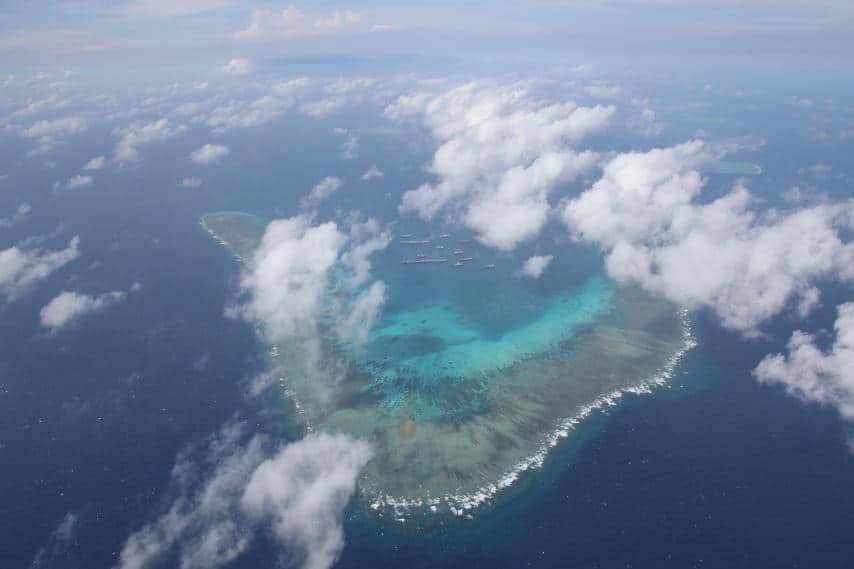
West Philippine Sea.jpg

China's Foreign Ministry spokesperson Mao Ning said the Philippines "repeatedly acted in bad faith" by breaching its commitments and the common understandings with China and violated the Declaration on the Conduct of parties in the South China Sea.

"The Philippines frequently infringed on China’s rights and made provocations at sea, brought in forces outside the region to form blocs and flex muscles in the South China Sea, and spread disinformation to vilify China and mislead the international perception on this matter," the Foreign Ministry official said.

Mao made the statement when sought for China's response following President Marcos' keynote speech at the 21st Shangri-La Dialogue in Singapore on Friday, May 31.

"In particular, driven by selfish geopolitical calculations, the US has played an extremely ignoble role by supporting and assisting the Philippines in infringing on China’s sovereignty, and by exploiting the South China Sea issue to drive a wedge between China and other regional countries," Mao said.

"Who exactly does the Philippine foreign policy serve now? Whose bidding is the Philippines doing with all these maritime actions? The answer is pretty clear to anyone with sound judgement. Trying desperately to justify the unjustifiable will not help the Philippines build trust with the international community," Mao added.  

The Chinese official also reminded countries in the region "to stay vigilant and always make sure that they themselves are the ones sitting in the driver’s seat" when it comes to the peace and stability in the South China Sea.

Moreover, Mao said the situation in the South China Sea is "generally stable," adding that there has been no issue regarding the freedom of navigation and overflight in the South China Sea that countries enjoy in accordance with law.

Mao further said that China stands ready to continue working with Association of Southeast Asian Nations (ASEAN) countries, including the Philippines, to manage maritime differences, deepen maritime cooperation, and keep the South China Sea peaceful and stable, among others.

The Foreign Ministry spokesperson also said that "China will continue to firmly defend its territorial sovereignty and maritime interests and rights."

In his speech during the International Institute for Strategic Studies’ (IISS), Marcos insisted that the Philippines is not tearing apart the long-earned peace in the region by responding to issues in the West Philippine Sea and by including other parties in the discussion.

He stressed that the issue on the South China Sea is no longer just a regional issue, but a global issue. Thus, the inclusion of other parties in the discussion must also be tapped.

READ MORE: Marcos defends move to involve international community in WPS talks: It is a world issue

Related Tags

South China Sea West Philippine Sea Mao Ning President Marcos International Institute for Strategic Studies (IISS)
ADVERTISEMENT
.most-popular .layout-ratio{ padding-bottom: 79.13%; } @media (min-width: 768px) and (max-width: 1024px) { .widget-title { font-size: 15px !important; } }

{{ articles_filter_1561_widget.title }}

.most-popular .layout-ratio{ padding-bottom: 79.13%; } @media (min-width: 768px) and (max-width: 1024px) { .widget-title { font-size: 15px !important; } }

{{ articles_filter_1562_widget.title }}

.most-popular .layout-ratio{ padding-bottom: 79.13%; } @media (min-width: 768px) and (max-width: 1024px) { .widget-title { font-size: 15px !important; } }

{{ articles_filter_1563_widget.title }}

{{ articles_filter_1564_widget.title }}

.mb-article-details { position: relative; } .mb-article-details .article-body-preview, .mb-article-details .article-body-summary{ font-size: 17px; line-height: 30px; font-family: "Libre Caslon Text", serif; color: #000; } .mb-article-details .article-body-preview iframe , .mb-article-details .article-body-summary iframe{ width: 100%; margin: auto; } .read-more-background { background: linear-gradient(180deg, color(display-p3 1.000 1.000 1.000 / 0) 13.75%, color(display-p3 1.000 1.000 1.000 / 0.8) 30.79%, color(display-p3 1.000 1.000 1.000) 72.5%); position: absolute; height: 200px; width: 100%; bottom: 0; display: flex; justify-content: center; align-items: center; padding: 0; } .read-more-background a{ color: #000; } .read-more-btn { padding: 17px 45px; font-family: Inter; font-weight: 700; font-size: 18px; line-height: 16px; text-align: center; vertical-align: middle; border: 1px solid black; background-color: white; } .hidden { display: none; }
function initializeAllSwipers() { // Get all hidden inputs with cms_article_id document.querySelectorAll('[id^="cms_article_id_"]').forEach(function (input) { const cmsArticleId = input.value; const articleSelector = '#article-' + cmsArticleId + ' .body_images'; const swiperElement = document.querySelector(articleSelector); if (swiperElement && !swiperElement.classList.contains('swiper-initialized')) { new Swiper(articleSelector, { loop: true, pagination: false, navigation: { nextEl: '#article-' + cmsArticleId + ' .swiper-button-next', prevEl: '#article-' + cmsArticleId + ' .swiper-button-prev', }, }); } }); } setTimeout(initializeAllSwipers, 3000); const intersectionObserver = new IntersectionObserver( (entries) => { entries.forEach((entry) => { if (entry.isIntersecting) { const newUrl = entry.target.getAttribute("data-url"); if (newUrl) { history.pushState(null, null, newUrl); let article = entry.target; // Extract metadata const author = article.querySelector('.author-section').textContent.replace('By', '').trim(); const section = article.querySelector('.section-info ').textContent.replace(' ', ' '); const title = article.querySelector('.article-title h1').textContent; // Parse URL for Chartbeat path format const parsedUrl = new URL(newUrl, window.location.origin); const cleanUrl = parsedUrl.host + parsedUrl.pathname; // Update Chartbeat configuration if (typeof window._sf_async_config !== 'undefined') { window._sf_async_config.path = cleanUrl; window._sf_async_config.sections = section; window._sf_async_config.authors = author; } // Track virtual page view with Chartbeat if (typeof pSUPERFLY !== 'undefined' && typeof pSUPERFLY.virtualPage === 'function') { try { pSUPERFLY.virtualPage({ path: cleanUrl, title: title, sections: section, authors: author }); } catch (error) { console.error('ping error', error); } } // Optional: Update document title if (title && title !== document.title) { document.title = title; } } } }); }, { threshold: 0.1 } ); function showArticleBody(button) { const article = button.closest("article"); const summary = article.querySelector(".article-body-summary"); const body = article.querySelector(".article-body-preview"); const readMoreSection = article.querySelector(".read-more-background"); // Hide summary and read-more section summary.style.display = "none"; readMoreSection.style.display = "none"; // Show the full article body body.classList.remove("hidden"); } document.addEventListener("DOMContentLoaded", () => { let loadCount = 0; // Track how many times articles are loaded const offset = [1, 2, 3, 4, 5, 6, 7, 8, 9, 10]; // Offset values const currentUrl = window.location.pathname.substring(1); let isLoading = false; // Prevent multiple calls if (!currentUrl) { console.log("Current URL is invalid."); return; } const sentinel = document.getElementById("load-more-sentinel"); if (!sentinel) { console.log("Sentinel element not found."); return; } function isSentinelVisible() { const rect = sentinel.getBoundingClientRect(); return ( rect.top < window.innerHeight && rect.bottom >= 0 ); } function onScroll() { if (isLoading) return; if (isSentinelVisible()) { if (loadCount >= offset.length) { console.log("Maximum load attempts reached."); window.removeEventListener("scroll", onScroll); return; } isLoading = true; const currentOffset = offset[loadCount]; window.loadMoreItems().then(() => { let article = document.querySelector('#widget_1690 > div:nth-last-of-type(2) article'); intersectionObserver.observe(article) loadCount++; }).catch(error => { console.error("Error loading more items:", error); }).finally(() => { isLoading = false; }); } } window.addEventListener("scroll", onScroll); });

Sign up by email to receive news.