ADVERTISEMENT

When will the 'Big One' strike? Testing our disaster preparedness

Published Jun 29, 2024 05:16 pm

E CARTOON JUN 30, 2024 (1).jpg

When will the “Big One” move the earth and cause massive destruction in the areas along the West Valley Fault?  The last time that happened was 366 years ago, in 1658. The fault traverses Metro Manila areas including Quezon City, Marikina, Pasig, Taguig, and Muntinlupa as well as nearby provinces of Bulacan, Cavite, Rizal, and Laguna.


The West Valley Fault moved four times in the past 1,400 years with an interval of 400 to 600 years, according to the Office of Civil Defense (OCD).


The Philippine Institute of Volcanology and Seismology (Phivolcs) has said that the movement of the West Valley Fault may generate the “Big One” at magnitude 7.2 with a “very destructive” impact at Intensity VIII. Also, the “movement of offshore trenches particularly the Manila Trench and Philippine Trench may generate a magnitude 8.0 earthquake with ground shaking intensities of VII and VIII in Luzon.”


The result of this would be damage of trillions of pesos and “37,000 fatalities and 605,000 ‘slight to life-threatening’ injuries may be recorded in Metro Manila alone, based on the Risk Analysis Project of Phivolcs and the University of the Philippines, Diliman Institute of Civil Engineering (UPD ICE) in 2013.


That is why being prepared for the “Big One” has been a major program of the OCD, with the Nationwide Simultaneous Earthquake Drill (NSED) as the centerpiece program which started in 2006.


Days ago, the agency held the second quarter NSED which not only tested but also demonstrated how it has developed coordinated efforts with other units outside of Metro Manila to deal with possible scenarios.  The exercise tested the efficiency of the Harmonized National Contingency Plan (HNCP) which details the coordination efforts of the national and local governments.
A full-scale exercise lasting for hours was held in different training areas featuring various possible scenarios. Among these were the activation of a central incident management after the simulated earthquake, the establishment of emergency operations center, a search and rescue  mission on a collapsed structure, a mass casualty incident management and activation of the response cluster – all of these state that government continues to work on disaster preparedness.


The exercise simulated the arrival of the first wave of assisting Regional Disaster Risk Reduction and Management Councils (RDRRMCs) in Metro Manila which are the units from Ilocos for the north sector; from Cagayan Valley for the east sector; from the Cordillera Administrative Region (CAR) for west sector; and from the Bicol Region for the south sector.


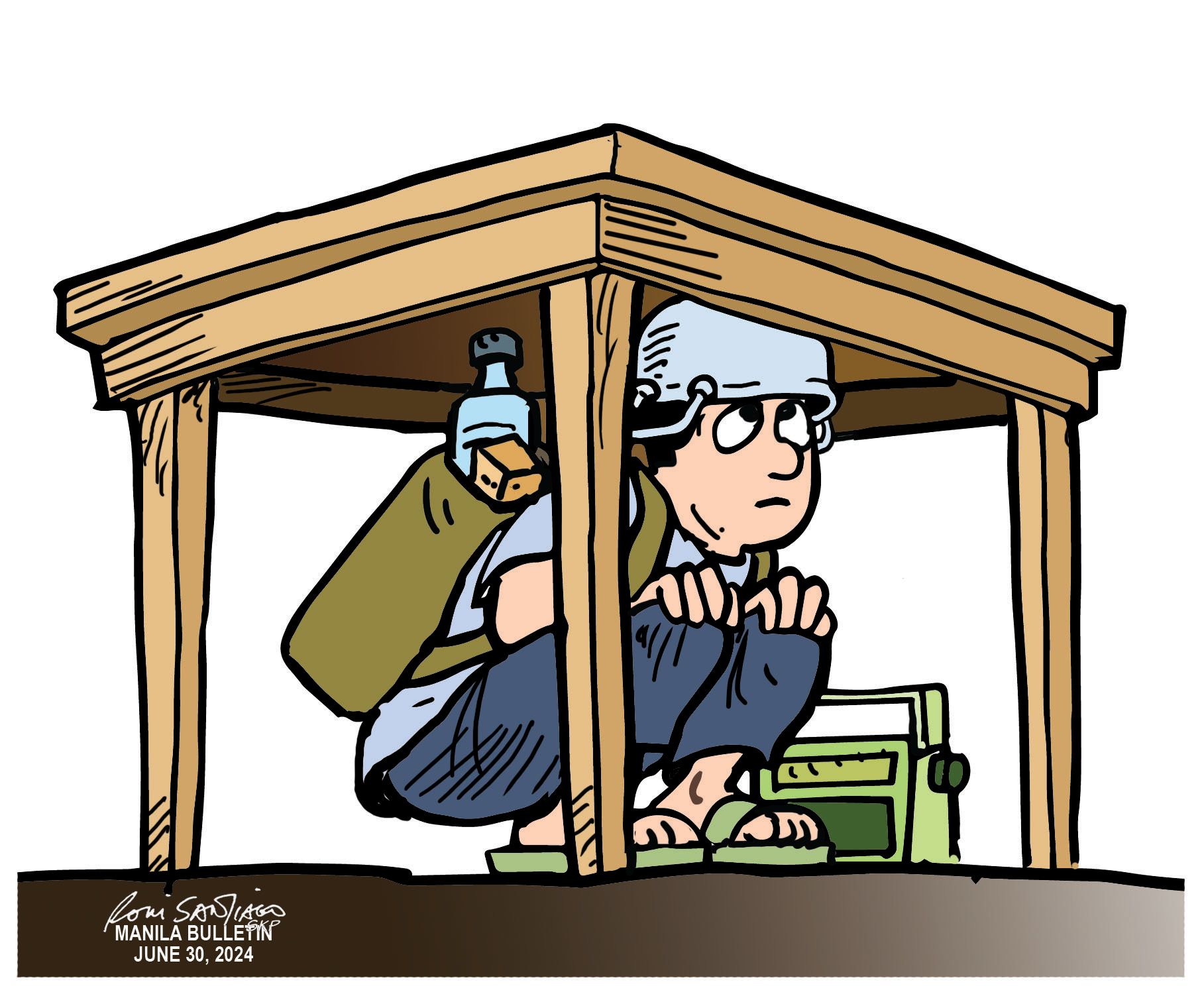
Clearly, the preparedness program has gone beyond the “duck, cover and hold” which is what has been shown each time the earthquake exercises are held. 


The exercises should not only elicit admiration from the public but should push communities and households to review their own preparedness for such a disaster scenario.  Resilience to disaster starts in the home where the first response to emergency will save lives. 


Use the day to review your preparedness.  Do you have a go-bag, or have you checked your go-bag’s contents for expired goods and needed medicines of family members?  Do you have a plan on where all members of the family should meet after the disaster because mobile signals may be unavailable for communication.  Has your house been checked recently for the integrity of its structure? 


While the government agencies continue to conduct the quarterly earthquake drills, individuals should take a cue and test their own household preparedness plans.

ADVERTISEMENT
.most-popular .layout-ratio{ padding-bottom: 79.13%; } @media (min-width: 768px) and (max-width: 1024px) { .widget-title { font-size: 15px !important; } }

{{ articles_filter_1561_widget.title }}

.most-popular .layout-ratio{ padding-bottom: 79.13%; } @media (min-width: 768px) and (max-width: 1024px) { .widget-title { font-size: 15px !important; } }

{{ articles_filter_1562_widget.title }}

.most-popular .layout-ratio{ padding-bottom: 79.13%; } @media (min-width: 768px) and (max-width: 1024px) { .widget-title { font-size: 15px !important; } }

{{ articles_filter_1563_widget.title }}

{{ articles_filter_1564_widget.title }}

.mb-article-details { position: relative; } .mb-article-details .article-body-preview, .mb-article-details .article-body-summary{ font-size: 17px; line-height: 30px; font-family: "Libre Caslon Text", serif; color: #000; } .mb-article-details .article-body-preview iframe , .mb-article-details .article-body-summary iframe{ width: 100%; margin: auto; } .read-more-background { background: linear-gradient(180deg, color(display-p3 1.000 1.000 1.000 / 0) 13.75%, color(display-p3 1.000 1.000 1.000 / 0.8) 30.79%, color(display-p3 1.000 1.000 1.000) 72.5%); position: absolute; height: 200px; width: 100%; bottom: 0; display: flex; justify-content: center; align-items: center; padding: 0; } .read-more-background a{ color: #000; } .read-more-btn { padding: 17px 45px; font-family: Inter; font-weight: 700; font-size: 18px; line-height: 16px; text-align: center; vertical-align: middle; border: 1px solid black; background-color: white; } .hidden { display: none; }
function initializeAllSwipers() { // Get all hidden inputs with cms_article_id document.querySelectorAll('[id^="cms_article_id_"]').forEach(function (input) { const cmsArticleId = input.value; const articleSelector = '#article-' + cmsArticleId + ' .body_images'; const swiperElement = document.querySelector(articleSelector); if (swiperElement && !swiperElement.classList.contains('swiper-initialized')) { new Swiper(articleSelector, { loop: true, pagination: false, navigation: { nextEl: '#article-' + cmsArticleId + ' .swiper-button-next', prevEl: '#article-' + cmsArticleId + ' .swiper-button-prev', }, }); } }); } setTimeout(initializeAllSwipers, 3000); const intersectionObserver = new IntersectionObserver( (entries) => { entries.forEach((entry) => { if (entry.isIntersecting) { const newUrl = entry.target.getAttribute("data-url"); if (newUrl) { history.pushState(null, null, newUrl); let article = entry.target; // Extract metadata const author = article.querySelector('.author-section').textContent.replace('By', '').trim(); const section = article.querySelector('.section-info ').textContent.replace(' ', ' '); const title = article.querySelector('.article-title h1').textContent; // Parse URL for Chartbeat path format const parsedUrl = new URL(newUrl, window.location.origin); const cleanUrl = parsedUrl.host + parsedUrl.pathname; // Update Chartbeat configuration if (typeof window._sf_async_config !== 'undefined') { window._sf_async_config.path = cleanUrl; window._sf_async_config.sections = section; window._sf_async_config.authors = author; } // Track virtual page view with Chartbeat if (typeof pSUPERFLY !== 'undefined' && typeof pSUPERFLY.virtualPage === 'function') { try { pSUPERFLY.virtualPage({ path: cleanUrl, title: title, sections: section, authors: author }); } catch (error) { console.error('ping error', error); } } // Optional: Update document title if (title && title !== document.title) { document.title = title; } } } }); }, { threshold: 0.1 } ); function showArticleBody(button) { const article = button.closest("article"); const summary = article.querySelector(".article-body-summary"); const body = article.querySelector(".article-body-preview"); const readMoreSection = article.querySelector(".read-more-background"); // Hide summary and read-more section summary.style.display = "none"; readMoreSection.style.display = "none"; // Show the full article body body.classList.remove("hidden"); } document.addEventListener("DOMContentLoaded", () => { let loadCount = 0; // Track how many times articles are loaded const offset = [1, 2, 3, 4, 5, 6, 7, 8, 9, 10]; // Offset values const currentUrl = window.location.pathname.substring(1); let isLoading = false; // Prevent multiple calls if (!currentUrl) { console.log("Current URL is invalid."); return; } const sentinel = document.getElementById("load-more-sentinel"); if (!sentinel) { console.log("Sentinel element not found."); return; } function isSentinelVisible() { const rect = sentinel.getBoundingClientRect(); return ( rect.top < window.innerHeight && rect.bottom >= 0 ); } function onScroll() { if (isLoading) return; if (isSentinelVisible()) { if (loadCount >= offset.length) { console.log("Maximum load attempts reached."); window.removeEventListener("scroll", onScroll); return; } isLoading = true; const currentOffset = offset[loadCount]; window.loadMoreItems().then(() => { let article = document.querySelector('#widget_1690 > div:nth-last-of-type(2) article'); intersectionObserver.observe(article) loadCount++; }).catch(error => { console.error("Error loading more items:", error); }).finally(() => { isLoading = false; }); } } window.addEventListener("scroll", onScroll); });

Sign up by email to receive news.