

ADVERTISEMENT

Phivolcs detects 'weak' phreatic activity at Taal Volcano

Published Jun 29, 2024 10:46 am

The Philippine Institute of Volcanology and Seismology (Phivolcs) observed two weak phreatic events at Taal Volcano on Saturday, June 29.
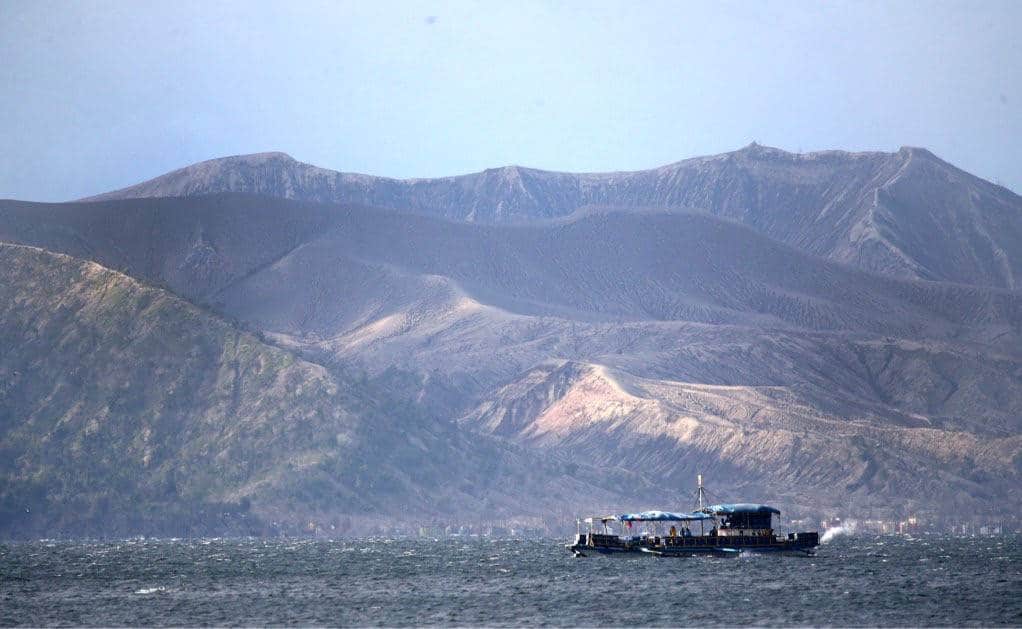
Taal Volcano in Batangas Ali Vicoy Manila Bulletin file photo.jpeg
Taal Volcano / ALI VICOY / MANILA BULLETIN / FILE

Phivolcs noted that the steam-driven activity at the Taal Main Crater occurred at 2:31 p.m. and 2:39 p.m., each lasting a minute, based on visual, seismic, and infrasound records of the Taal Volcano Network (TVN).

The events produced steam-laden plumes that rose 800 meters above the Main Crater before drifting southwest, according to IP camera monitors, Phivolcs said.

Phivolcs noted that sulfur dioxide (SO2) emissions averaged 6,571 tonnes per day on June 28.

“Nonetheless, average SO2 emissions since January this year remain high at 7,895 tonnes per day,” Phivolcs explained.

State seismologists noted that the weak phreatic activity is “likely driven by the continued emission of hot volcanic gases at the Taal Main Crater and could be succeeded by similar events.”

However, the background levels of volcanic earthquake activity and ground deformation detected at Taal “indicate that unrest is unlikely to progress into a magmatic eruption,” Phivolcs said.

Alert Level 1

Meanwhile, Phivolcs reminded the public that Alert Level 1 prevails over Taal Volcano, meaning that it is still in an “abnormal condition and should not be interpreted as having ceased unrest or the threat of eruptive activity.”

Phivolcs explained that at Alert Level 1, “sudden steam-driven or phreatic explosions, volcanic earthquakes, minor ashfall, and lethal accumulations or expulsions of volcanic gas can occur and threaten areas” within Taal Volcano Island (TVI).

Moreover, Phivolcs noted that the degassing of high concentrations of volcanic SO2 continues to “pose the threat of potential long-term health impacts” to communities around Taal Caldera that are frequently exposed to volcanic gas.

Phivolcs strongly recommended that entry into TVI, Taal’s Permanent Danger Zone (PDZ), especially the vicinities of the Main Crater and the Daang Kastila fissure, “must remain strictly prohibited.”

Local government units (LGUs) were also advised to “continuously monitor and assess the preparedness of their communities and undertake appropriate response measures to mitigate hazards that could be posed by long-term degassing and related phreatic activity.”

Meanwhile, Phivolcs reminded civil aviation authorities to advise pilots to “avoid flying close to the volcano, as airborne ash and ballistic fragments from explosions and wind-remobilized ash may pose hazards to aircraft.”

Related Tags

Taal Volcano PHIVOLCS Alert Level 1 Taal Phivolcs
ADVERTISEMENT
.most-popular .layout-ratio{ padding-bottom: 79.13%; } @media (min-width: 768px) and (max-width: 1024px) { .widget-title { font-size: 15px !important; } }

{{ articles_filter_1561_widget.title }}

.most-popular .layout-ratio{ padding-bottom: 79.13%; } @media (min-width: 768px) and (max-width: 1024px) { .widget-title { font-size: 15px !important; } }

{{ articles_filter_1562_widget.title }}

.most-popular .layout-ratio{ padding-bottom: 79.13%; } @media (min-width: 768px) and (max-width: 1024px) { .widget-title { font-size: 15px !important; } }

{{ articles_filter_1563_widget.title }}

{{ articles_filter_1564_widget.title }}

.mb-article-details { position: relative; } .mb-article-details .article-body-preview, .mb-article-details .article-body-summary{ font-size: 17px; line-height: 30px; font-family: "Libre Caslon Text", serif; color: #000; } .mb-article-details .article-body-preview iframe , .mb-article-details .article-body-summary iframe{ width: 100%; margin: auto; } .read-more-background { background: linear-gradient(180deg, color(display-p3 1.000 1.000 1.000 / 0) 13.75%, color(display-p3 1.000 1.000 1.000 / 0.8) 30.79%, color(display-p3 1.000 1.000 1.000) 72.5%); position: absolute; height: 200px; width: 100%; bottom: 0; display: flex; justify-content: center; align-items: center; padding: 0; } .read-more-background a{ color: #000; } .read-more-btn { padding: 17px 45px; font-family: Inter; font-weight: 700; font-size: 18px; line-height: 16px; text-align: center; vertical-align: middle; border: 1px solid black; background-color: white; } .hidden { display: none; }
function initializeAllSwipers() { // Get all hidden inputs with cms_article_id document.querySelectorAll('[id^="cms_article_id_"]').forEach(function (input) { const cmsArticleId = input.value; const articleSelector = '#article-' + cmsArticleId + ' .body_images'; const swiperElement = document.querySelector(articleSelector); if (swiperElement && !swiperElement.classList.contains('swiper-initialized')) { new Swiper(articleSelector, { loop: true, pagination: false, navigation: { nextEl: '#article-' + cmsArticleId + ' .swiper-button-next', prevEl: '#article-' + cmsArticleId + ' .swiper-button-prev', }, }); } }); } setTimeout(initializeAllSwipers, 3000); const intersectionObserver = new IntersectionObserver( (entries) => { entries.forEach((entry) => { if (entry.isIntersecting) { const newUrl = entry.target.getAttribute("data-url"); if (newUrl) { history.pushState(null, null, newUrl); let article = entry.target; // Extract metadata const author = article.querySelector('.author-section').textContent.replace('By', '').trim(); const section = article.querySelector('.section-info ').textContent.replace(' ', ' '); const title = article.querySelector('.article-title h1').textContent; // Parse URL for Chartbeat path format const parsedUrl = new URL(newUrl, window.location.origin); const cleanUrl = parsedUrl.host + parsedUrl.pathname; // Update Chartbeat configuration if (typeof window._sf_async_config !== 'undefined') { window._sf_async_config.path = cleanUrl; window._sf_async_config.sections = section; window._sf_async_config.authors = author; } // Track virtual page view with Chartbeat if (typeof pSUPERFLY !== 'undefined' && typeof pSUPERFLY.virtualPage === 'function') { try { pSUPERFLY.virtualPage({ path: cleanUrl, title: title, sections: section, authors: author }); } catch (error) { console.error('ping error', error); } } // Optional: Update document title if (title && title !== document.title) { document.title = title; } } } }); }, { threshold: 0.1 } ); function showArticleBody(button) { const article = button.closest("article"); const summary = article.querySelector(".article-body-summary"); const body = article.querySelector(".article-body-preview"); const readMoreSection = article.querySelector(".read-more-background"); // Hide summary and read-more section summary.style.display = "none"; readMoreSection.style.display = "none"; // Show the full article body body.classList.remove("hidden"); } document.addEventListener("DOMContentLoaded", () => { let loadCount = 0; // Track how many times articles are loaded const offset = [1, 2, 3, 4, 5, 6, 7, 8, 9, 10]; // Offset values const currentUrl = window.location.pathname.substring(1); let isLoading = false; // Prevent multiple calls if (!currentUrl) { console.log("Current URL is invalid."); return; } const sentinel = document.getElementById("load-more-sentinel"); if (!sentinel) { console.log("Sentinel element not found."); return; } function isSentinelVisible() { const rect = sentinel.getBoundingClientRect(); return ( rect.top < window.innerHeight && rect.bottom >= 0 ); } function onScroll() { if (isLoading) return; if (isSentinelVisible()) { if (loadCount >= offset.length) { console.log("Maximum load attempts reached."); window.removeEventListener("scroll", onScroll); return; } isLoading = true; const currentOffset = offset[loadCount]; window.loadMoreItems().then(() => { let article = document.querySelector('#widget_1690 > div:nth-last-of-type(2) article'); intersectionObserver.observe(article) loadCount++; }).catch(error => { console.error("Error loading more items:", error); }).finally(() => { isLoading = false; }); } } window.addEventListener("scroll", onScroll); });

Sign up by email to receive news.