






 Philippines
National
'Chance to get urban planning right': Salceda thanks Marcos for Bulacan EcoZone Law passage
Philippines
National
'Chance to get urban planning right': Salceda thanks Marcos for Bulacan EcoZone Law passage
'Chance to get urban planning right': Salceda thanks Marcos for Bulacan EcoZone Law passage


At A Glance
- House Committee on Ways and Means chairperson and Albay 2nd district Rep. Joey Salceda expressed his appreciation to President Marcos for allowing the measure that aims to establish a special economic zone and freeport near the proposed Bulacan Airport City to lapse into law.
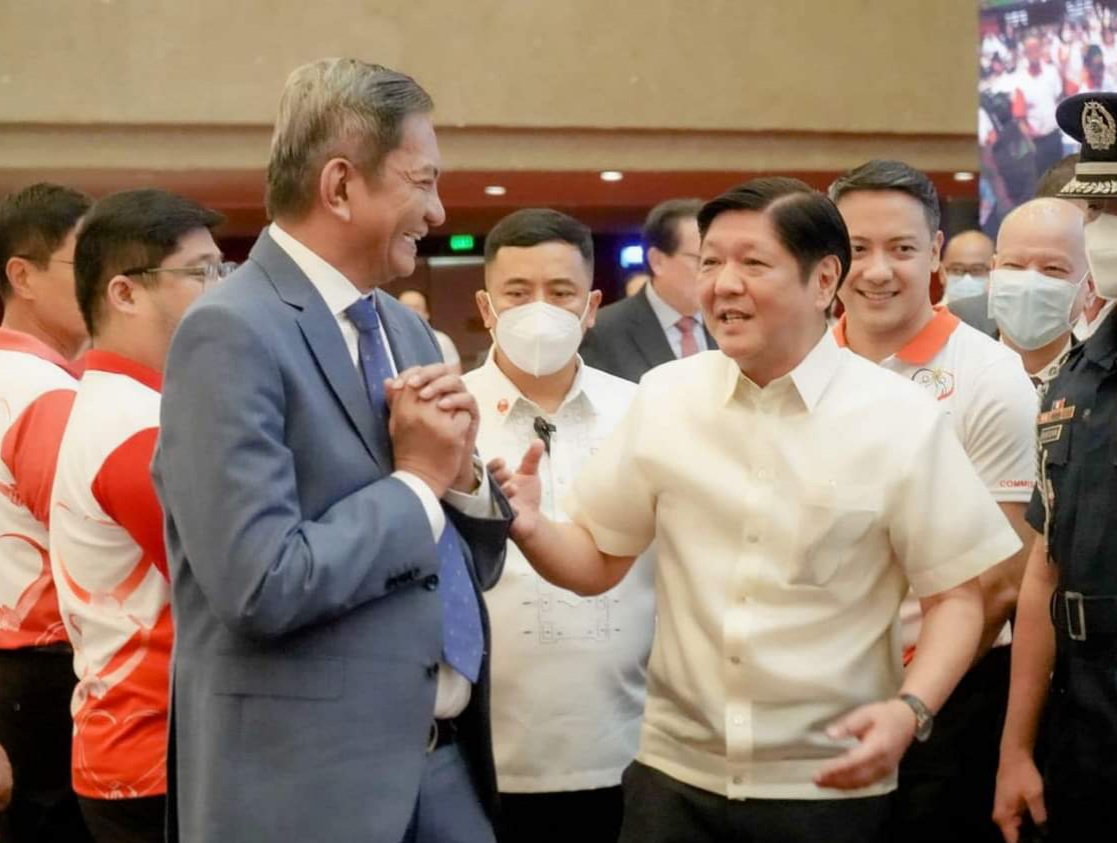 Albay 2nd district Rep. Joey Salceda (left) and President Ferdinand "Bongbong" Marcos Jr. (Facebook)
House Committee on Ways and Means chairperson and Albay 2nd district Rep. Joey Salceda expressed his appreciation to President Marcos for allowing the measure that aims to establish a special economic zone and freeport near the proposed Bulacan Airport City to lapse into law.
In a statement, Salceda said Marcos originally vetoed the first version of the Bulacan EcoZone law at the start of his term.
“I thank the administration for allowing the enactment of the Bulacan Ecozone Law. Because he vetoed the first version, carried over from the 18th Congress, I filed a new version that cures the defects the President cited in his veto message,” he said.
Based on his veto message in 2022, President Marcos found the bill to have provisions that pose substantial fiscal risks to the country and additional burden to taxpayers, among others.
Salceda said he went through back-and-forth communications with Executive Secretary Lucas Bersamin, economic agencies, as well as delegation from Bulacan to straighten out the amendments.
“It was extensive work. I’m elated that the President saw the merit in the work done, and registered no opposition to this version,” he noted.
The proposed Bulacan Special Economic Zone (EcoZone) Freeport and Bulacan EcoZone and the Bulacan Special Economic Zone and Freeport Authority (BEZA) are embodied under Republic Act (RA) No. 11999.
Under the Constitution, President Marcos has 30 days to sign or veto a bill transmitted to his office. Since he did not act on the measure within 30 days, the bill has now lapsed into law.
With this legislation, Salceda said it will finally give the Philippines a chance “to get urban planning right".
“NAIA (Ninoy Aquino International Airport) was a mess. It should not be where it is. We did not build an industrial base around it, or even plan transport and logistics. As a result, it does not realize its industrial potential, and is a bane on the traffic and congestion situation in Manila,” the lawmaker said.
He said the soon-to-rise Bulacan International Airport, otherwise known as the New Manila International Airport (NMIA), is expected to be the biggest investment in the country.
Because of this, Salceda stressed the need to surround the area with a well-planned ecozone to encourage investors interested in export industries and logistics chains.
“I think a lot of them will start investing in Bulacan before the airport gets completed. Years from now, when Bulacan EcoZone has become our latest success story, people will look back and say this started under PBBM,” he pointed out.
The economist-solon anticipates the Bulacan EcoZone to have a gross export potential of $200 billion. He said the gross domestic product (GDP) will be boosted by at least P130 billion every year and land value gains will be at least P226 billion
“That will create massive revenue gains in income taxes and property taxes, so the foregone revenue from tax incentives will get offset,” said Salceda.
He also noted that among the provinces adjacent to Manila, Bulacan has historically been underinvested. In order to act as the link between Manila and Clark, Bulacan would require urbanizing and building of necessary infrastructure.
“Bulacan deserves its time in the sun,” he stressed.