






 World
As LGBTQ+ Pride's crescendo approaches, tensions over war in Gaza expose rifts
World
As LGBTQ+ Pride's crescendo approaches, tensions over war in Gaza expose rifts
As LGBTQ+ Pride's crescendo approaches, tensions over war in Gaza expose rifts


NEW YORK (AP) — Ahead of New York City's annual LGBTQ+ Pride march, organizers typically spend weeks mapping out the order of the floats, assigning placements based on factors like seniority and music volume.
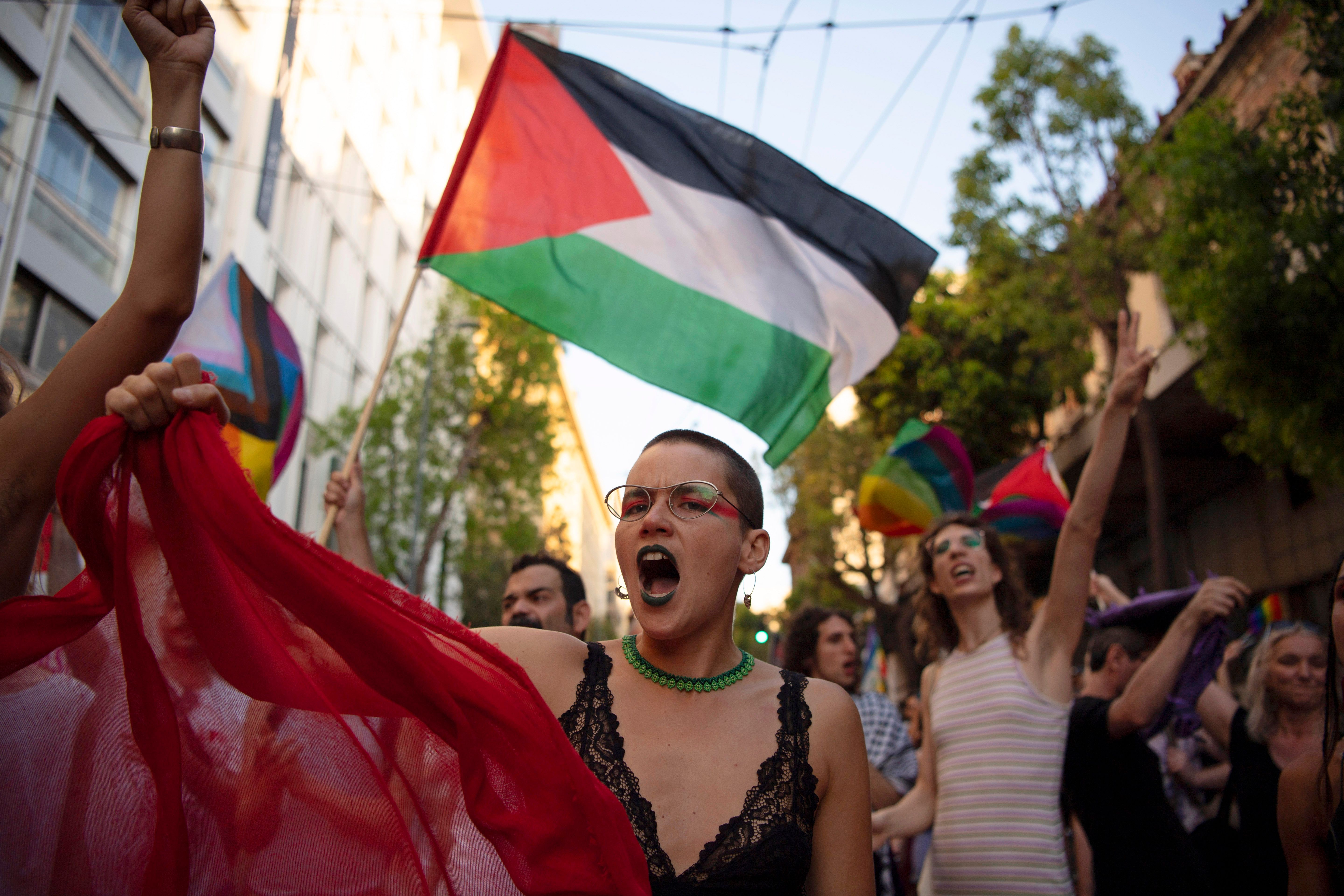
This year, they're wrestling with a question more fraught: how to plan a parade whose own participants have accused one another of war crimes and support for terrorism.
At Pride events across the U.S, internal tensions over the ongoing war between Israel and Hamas in Gaza have seeped into the festivities, spurring boycotts and demonstrations at marches and exposing divisions within a movement firmly rooted in protest.
In New York, members of the Israeli consulate say they will march this year despite several other participating groups, and at least two of the parade's four grand marshals, accusing the country of committing genocide against Palestinians.
Their usual float, festooned in rainbow-colored flowers and a Star of David, will be flanked by an added layer of private security when the march begins this Sunday.
"Unfortunately there's a lot of people in the LGBT community that would rather stand with the enemies, with the side that is homophobic, and not with Israel," said Itay Milner, a spokesperson for the consulate. "We're aware of that sentiment but we will not be scared away."
Elsewhere in the line of hundreds of parading groups, members of Tarab NYC, an advocacy group representing queer Middle Easterners and North Africans, say they will seek to "center Palestine" during the march, hoisting Palestinian flags as they chant, "No pride in genocide."
Those marching with the group recently attended a de-escalation training after they were heckled and chased by counterprotesters at a Pride event in Brooklyn this month, according to the group's founder, Bashar Makhay.
Similar confrontations have erupted in many arenas of public life as the war in Gaza has dragged on, prompting demonstrations and clashes on college campuses and more typically neutral settings, including some recent Memorial Day parades.
But the conflict has led to an unusual dynamic for some Pride participants, who now find themselves bracing for protests not only from far-right agitators and other outside groups, but also from activists within their own community. In recent weeks, pro-Palestinian LGBTQ+ groups have disrupted marches in Boston, Denver, Philadelphia and elsewhere to protest sponsors' connections to Israel.
Several groups boycotted the Queens Pride Parade this month after the president of the LGBT Network, which organizes the event, expressed strong support for Israel and chided Palestinian activists in an online piece.
In San Francisco, Jewish groups expressed outrage after Pride organizers announced that there would be no Israeli float at this Sunday's parade, one of the world's largest. The organizers released a follow-up statement clarifying that no one who registered for the event had been denied.
The large annual Pride parade in Tel Aviv, Israel, was canceled last month out of respect for the hostages taken by Hamas that remain in Gaza.
Sandra Perez, the executive director of NYC Pride, says the organization approaches its march with a "free speech mindset" and does not restrict the messaging of registered participants (though police officers are barred from marching in uniform). But, she said, she hoped the issue of the war would not "silence other members of the community."
"Our concern with people choosing to express themselves or protest the issues they want to protest is that it doesn't overshadow the issues facing the LGBTQ community," Perez said.
Supporters of the Palestinian cause see Pride events as a natural venue to showcase solidarity with those facing oppression, noting the first march was held to commemorate the 1969 Stonewall uprising, a riot that began with a police raid on a Manhattan gay bar.
In years past, Black Lives Matter activists briefly disrupted Pride events to call attention to promote more inclusion of people of color.
The recent war protests, some say, have further exposed a widening rift between legacy queer institutions, including those running the parades, and the younger and more diverse segments of the community that have become increasingly vocal about the plight of Palestinians.
"It is safe to say that everyone is thinking about the genocide that is happening in Gaza and Palestine across the board," said Raquel Willis, a transgender writer who will serve as one of the grand marshals of the NYC Pride Parade. "The difference is whether people are being outspoken about it or not."
As the responses to the war in Gaza have inflamed existing tensions within the community, they have also opened new fissures among once-aligned allies.
Since 2019, left-leaning activists fed up with the growing corporate presence at NYC Pride have hosted their own event, known as the Queer Liberation March. Long skeptical of outside funders, the group previously counted Housing Works, a nonprofit focused on fighting AIDS and homelessness, as its sole fiscal sponsor.
But this year, after organizers announced the march's theme would include those facing "war and genocide," as well as youths of color, Housing Works declined to get on board.
In an email to employees, the Housing Works CEO, Charles King, said the organization has not taken a position on the war in Gaza and would not do so at the march on Sunday.
"After much deliberation, we have decided that Housing Works should join the march under the banner of only the first theme, fighting for our Black and Brown youth," he wrote.
In response, the organizers of the Queer Liberation March took to Instagram with a defiant message: Those that "remain silent in the face of wars and genocides," they wrote, "aren't representing the values of the Queer Liberation March."