






 Philippines
National
Explainer: What is the PH digital infrastructure project that was approved by PBBM
Philippines
National
Explainer: What is the PH digital infrastructure project that was approved by PBBM
Explainer: What is the PH digital infrastructure project that was approved by PBBM
By Raymund Antonio and Raymund Antonio


With the approval by President Marcos of the flagship Philippine Digital Infrastructure Project (PDIP), the country can expect cheaper internet fees and faster speed while also reaching far-flung areas of Mindanao that will contribute to improving the Philippines’ gross domestic product (GDP).
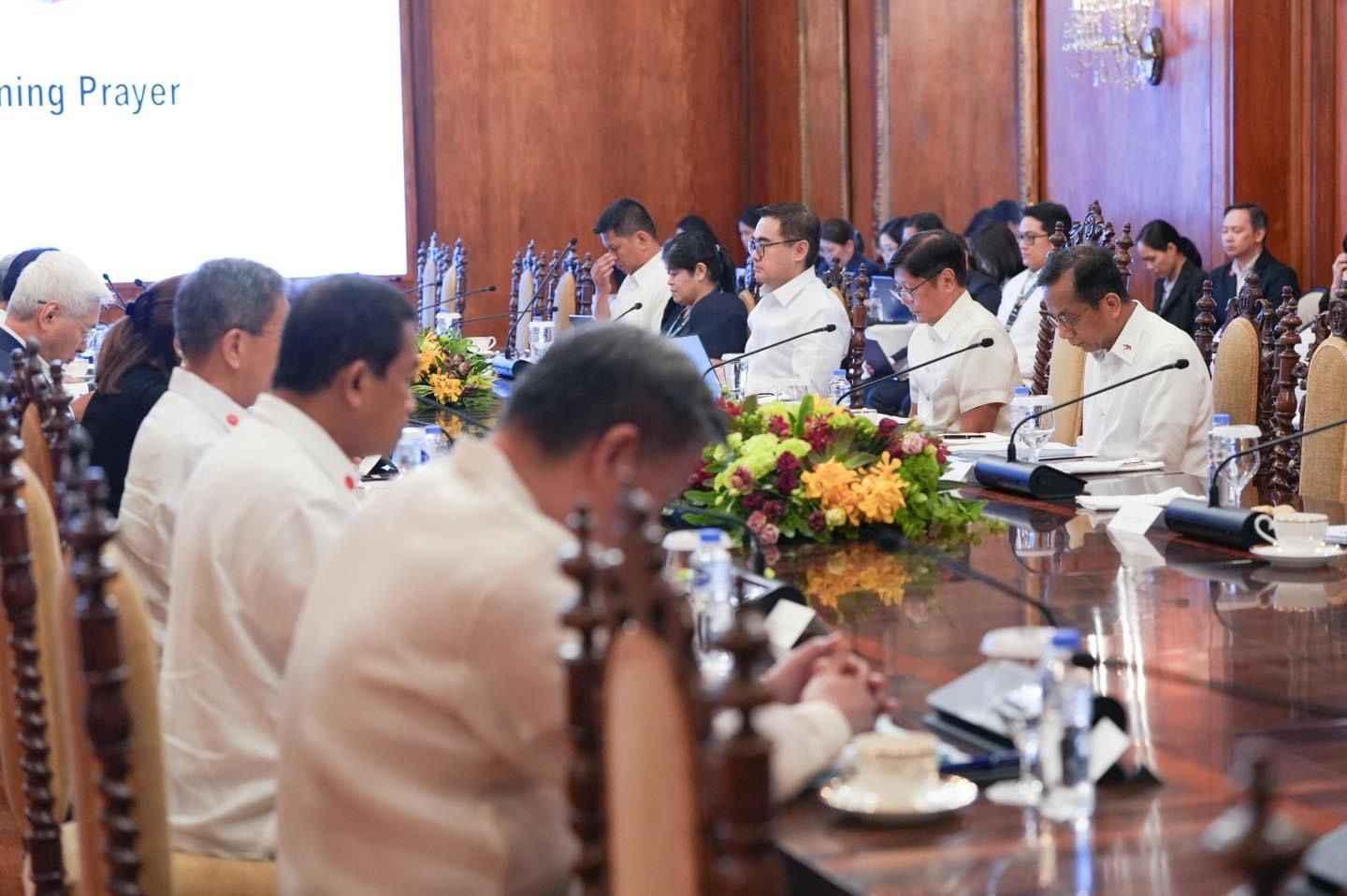
President Ferdinand 'Bongbong' Marcos Jr. presides over the 18th National Economic and Development Authority (NEDA) Board Meeting on June 25, 2024. (Photo from the Presidential Communications Office)
Department of Information and Communications Technology (DICT) Undersecretary Jeffrey Ian Dy on Wednesday, June 26, announced that the President has already okayed the PDIP during the 18th National Economic and Development Authority (NEDA) Board Meeting on Tuesday.
Describing it as a “development program,” the official explained that the PDIP is a World Bank loan worth $288 million that seeks to complete the country’s “national fiber backbone” spanning from Northern Luzon to Mindanao.
“It is the largest and actually the first of its kind in the Philippines for a loan for digital infrastructure,” he said.
“And I would also like to note that the national fiber backbone and the national broadband program has been a national vision for quite some time already and we are proud to say that with this project, we should be able to finish within…by 2028, this entire span of the national fiber backbone,” Dy added.
With “proper policies in place,” the official explained that the country would “be able to bring down the cost of internet and to also increase the speed of internet at par with our regional counterparts in the ASEAN (Association for Southeast Asian Nations) for this project.”
Noting that Marcos has already launched the first phase—which goes from Baler to Laoag to Metro Manila—last April, the DICT undersecretary shared that they are projecting to finish the second and third phases of the project this year, which will cover Metro Manila to Southern Luzon.
The loan will also allow the government to get a domestic submarine cables that could span “across Visayas and then connect it to Mindanao.”
The project will also provide 772 free Wi-Fi sites concentrating on Mindanao, particularly in Regions 11 and 13.
Such connectivity will also benefit the country’s economy because according to Dy, “for every 10 percent increase in internet penetration rate, it constitutes approximately 1.38 percent increase” in GDP.
“That is the reason why this project is very important,” he said.
Dy explained that Mindanao is being targeted by the PDIP because the disparity of internet penetration rate in the region is “larger” as the whole country has a rate of 73.6 percent, or approximately 86 million Filipinos, while Mindanao, especially in Region 13, has an internet penetration rate of lower than 17 percent.
“So, that’s really the target of this development fund,” the official stressed.