

ADVERTISEMENT

Yemen's Houthi rebels launch boat-borne bomb attack against Greek-owned ship in Red Sea

Published Jun 13, 2024 01:23 pm

ABOARD THE USS LABOON IN THE RED SEA (AP) — Yemen's Houthi rebels launched a boat-borne bomb attack against a commercial ship in the Red Sea on Wednesday, authorities said, the latest escalation despite a U.S.-led campaign trying to protect the vital waterway.
download.webp
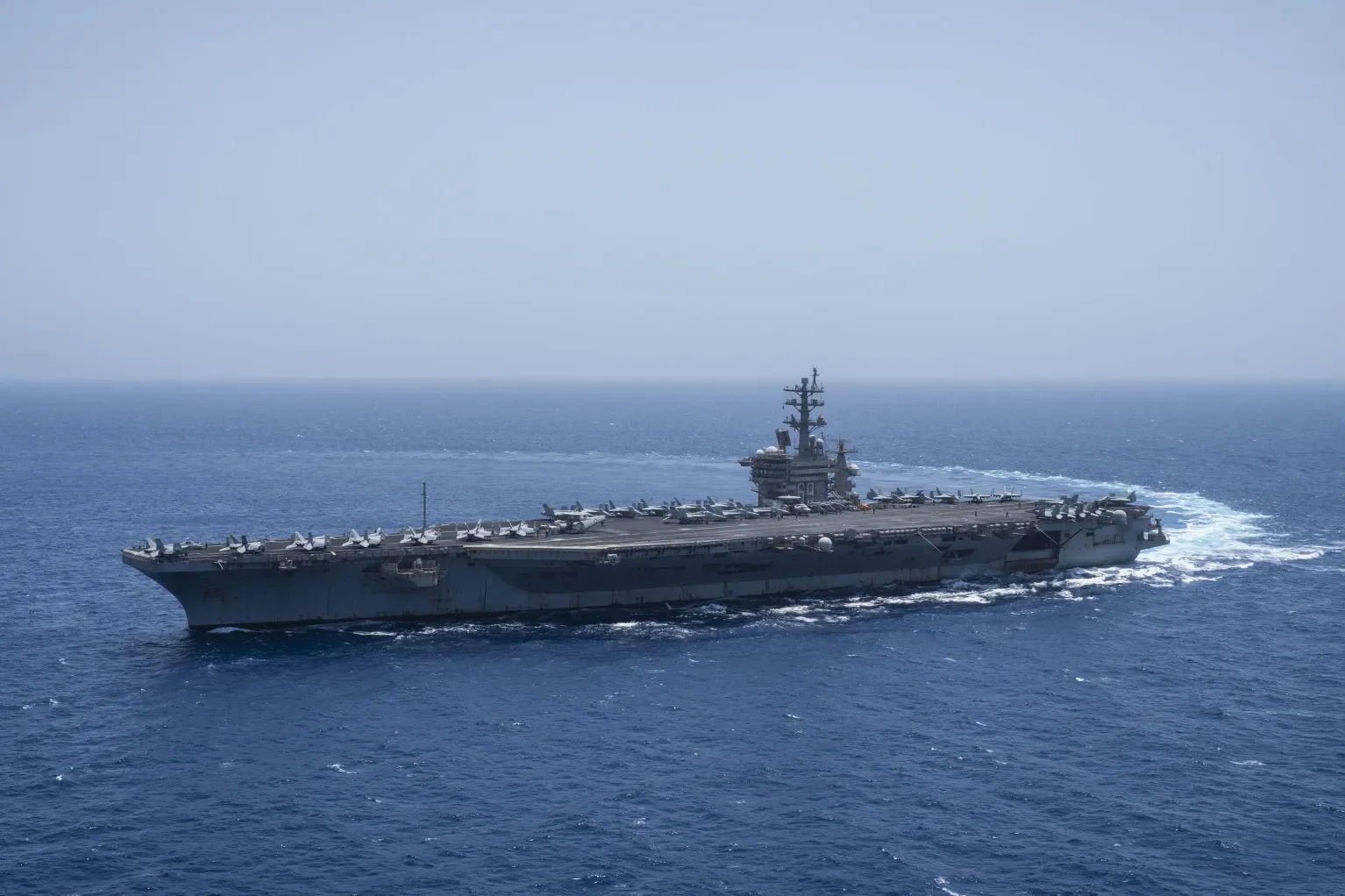
The USS aircraft carrier Dwight D. Eisenhower, also known as 'IKE', sails in the Red Sea on Wednesday, June 12, 2024. (AP Photo/Bernat Armangue)

The use of a boat loaded with explosives raised the specter of 2000's USS Cole attack, a suicide assault by al-Qaida on the warship when it was at port in Aden, killing 17 on board. Associated Press journalists saw the Cole in the Red Sea on Wednesday, now taking part in the U.S. campaign while visiting one of her sister ships, the USS Laboon.

Yemen's military spokesman Brig. Gen. Yahya Saree claimed responsibility for the attack, identifying the vessel targeted as the Liberian-flagged, Greek-owned bulk carrier Tutor. He described the attack as using a “drone boat,” as well as drones and ballistic missiles.

In a warning to shippers, the British military's United Kingdom Maritime Trade Operations center described the vessel as being hit in its stern by a small white craft southwest of the Houthi-controlled port city of Hodeida.

The captain “reports the vessel is taking on water, and not under command of the crew,” the UKMTO said. He also “reports the vessel was hit for a second time by an unknown airborne projectile."

The U.S. military's Central Command also acknowledged the attack, saying the Tutor “most recently docked in Russia.”

“The impact of the (drone boat) caused severe flooding and damage to the engine room,” it added.

The U.S. military separately destroyed three anti-ship cruise missile launchers in Houthi-held Yemen, as well as one rebel drone over the Red Sea. The Houthis launched two anti-ship ballistic missiles over the Red Sea, but they caused no damage, Central Command said.

The Houthis, who seized Yemen’s capital nearly a decade ago and have been fighting a Saudi-led coalition since shortly after, have been targeting shipping throughout the Red Sea corridor over the Israel-Hamas war in the Gaza Strip.

They say the attacks are aimed at stopping the war and supporting the Palestinians, though the attacks often target vessels that have nothing to do with the conflict.

The war in Gaza has killed more than 36,000 Palestinians there, while hundreds of others have been killed in Israeli operations in the West Bank. It began after Hamas-led militants attacked Israel on Oct. 7, killing about 1,200 people and taking around 250 hostage.

The Houthis have launched more than 50 attacks on shipping, killed three sailors, seized one vessel and sunk another since November, according to the U.S. Maritime Administration. A U.S.-led airstrike campaign has targeted the Houthis since January, with a series of strikes May 30 killing at least 16 people and wounding 42 others, the rebels say.

Associated Press journalists on an embark with the U.S. Navy were interviewing Cmdr. Eric Blomberg, the commanding officer of the Arleigh Burke-class guided missile destroyer Laboon, when the alert came in on the attack. Blomberg took multiple calls from sailors on board the vessel, giving updates on the apparent attack.

The Laboon is one of the destroyers accompanying the USS Dwight D. Eisenhower aircraft carrier and both has shot down Houthi fire and escorted vessels through the region. Though Blomberg and others stressed they were still investigating the attack, he said it appeared the vessel targeted had nothing to do with the Israel-Hamas war.

The Houthis “hit ships that are completely not associated or tied to the U.S. or Israel at all,” Blomberg said.

“These are just innocent merchant sailors carrying goods through the Red Sea, trying to get it through the least-expensive route, and they're paying for it,” he said.

Related Tags

WORLDNEWS
ADVERTISEMENT
.most-popular .layout-ratio{ padding-bottom: 79.13%; } @media (min-width: 768px) and (max-width: 1024px) { .widget-title { font-size: 15px !important; } }

{{ articles_filter_1561_widget.title }}

.most-popular .layout-ratio{ padding-bottom: 79.13%; } @media (min-width: 768px) and (max-width: 1024px) { .widget-title { font-size: 15px !important; } }

{{ articles_filter_1562_widget.title }}

.most-popular .layout-ratio{ padding-bottom: 79.13%; } @media (min-width: 768px) and (max-width: 1024px) { .widget-title { font-size: 15px !important; } }

{{ articles_filter_1563_widget.title }}

{{ articles_filter_1564_widget.title }}

.mb-article-details { position: relative; } .mb-article-details .article-body-preview, .mb-article-details .article-body-summary{ font-size: 17px; line-height: 30px; font-family: "Libre Caslon Text", serif; color: #000; } .mb-article-details .article-body-preview iframe , .mb-article-details .article-body-summary iframe{ width: 100%; margin: auto; } .read-more-background { background: linear-gradient(180deg, color(display-p3 1.000 1.000 1.000 / 0) 13.75%, color(display-p3 1.000 1.000 1.000 / 0.8) 30.79%, color(display-p3 1.000 1.000 1.000) 72.5%); position: absolute; height: 200px; width: 100%; bottom: 0; display: flex; justify-content: center; align-items: center; padding: 0; } .read-more-background a{ color: #000; } .read-more-btn { padding: 17px 45px; font-family: Inter; font-weight: 700; font-size: 18px; line-height: 16px; text-align: center; vertical-align: middle; border: 1px solid black; background-color: white; } .hidden { display: none; }
function initializeAllSwipers() { // Get all hidden inputs with cms_article_id document.querySelectorAll('[id^="cms_article_id_"]').forEach(function (input) { const cmsArticleId = input.value; const articleSelector = '#article-' + cmsArticleId + ' .body_images'; const swiperElement = document.querySelector(articleSelector); if (swiperElement && !swiperElement.classList.contains('swiper-initialized')) { new Swiper(articleSelector, { loop: true, pagination: false, navigation: { nextEl: '#article-' + cmsArticleId + ' .swiper-button-next', prevEl: '#article-' + cmsArticleId + ' .swiper-button-prev', }, }); } }); } setTimeout(initializeAllSwipers, 3000); const intersectionObserver = new IntersectionObserver( (entries) => { entries.forEach((entry) => { if (entry.isIntersecting) { const newUrl = entry.target.getAttribute("data-url"); if (newUrl) { history.pushState(null, null, newUrl); let article = entry.target; // Extract metadata const author = article.querySelector('.author-section').textContent.replace('By', '').trim(); const section = article.querySelector('.section-info ').textContent.replace(' ', ' '); const title = article.querySelector('.article-title h1').textContent; // Parse URL for Chartbeat path format const parsedUrl = new URL(newUrl, window.location.origin); const cleanUrl = parsedUrl.host + parsedUrl.pathname; // Update Chartbeat configuration if (typeof window._sf_async_config !== 'undefined') { window._sf_async_config.path = cleanUrl; window._sf_async_config.sections = section; window._sf_async_config.authors = author; } // Track virtual page view with Chartbeat if (typeof pSUPERFLY !== 'undefined' && typeof pSUPERFLY.virtualPage === 'function') { try { pSUPERFLY.virtualPage({ path: cleanUrl, title: title, sections: section, authors: author }); } catch (error) { console.error('ping error', error); } } // Optional: Update document title if (title && title !== document.title) { document.title = title; } } } }); }, { threshold: 0.1 } ); function showArticleBody(button) { const article = button.closest("article"); const summary = article.querySelector(".article-body-summary"); const body = article.querySelector(".article-body-preview"); const readMoreSection = article.querySelector(".read-more-background"); // Hide summary and read-more section summary.style.display = "none"; readMoreSection.style.display = "none"; // Show the full article body body.classList.remove("hidden"); } document.addEventListener("DOMContentLoaded", () => { let loadCount = 0; // Track how many times articles are loaded const offset = [1, 2, 3, 4, 5, 6, 7, 8, 9, 10]; // Offset values const currentUrl = window.location.pathname.substring(1); let isLoading = false; // Prevent multiple calls if (!currentUrl) { console.log("Current URL is invalid."); return; } const sentinel = document.getElementById("load-more-sentinel"); if (!sentinel) { console.log("Sentinel element not found."); return; } function isSentinelVisible() { const rect = sentinel.getBoundingClientRect(); return ( rect.top < window.innerHeight && rect.bottom >= 0 ); } function onScroll() { if (isLoading) return; if (isSentinelVisible()) { if (loadCount >= offset.length) { console.log("Maximum load attempts reached."); window.removeEventListener("scroll", onScroll); return; } isLoading = true; const currentOffset = offset[loadCount]; window.loadMoreItems().then(() => { let article = document.querySelector('#widget_1690 > div:nth-last-of-type(2) article'); intersectionObserver.observe(article) loadCount++; }).catch(error => { console.error("Error loading more items:", error); }).finally(() => { isLoading = false; }); } } window.addEventListener("scroll", onScroll); });

Sign up by email to receive news.