

ADVERTISEMENT

DOST, DENR unveil floating solid waste collector system

Published Jun 13, 2024 10:08 am

The Department of Science and Technology-Metals Industry Research and Development Center (DOST-MIRDC), in collaboration with the Department of Environment and Natural Resources (DENR), inaugurated the "Floating Solid Waste Collector System" on Thursday, June 13.
viber_image_2024-06-13_17-53-56-110.jpg
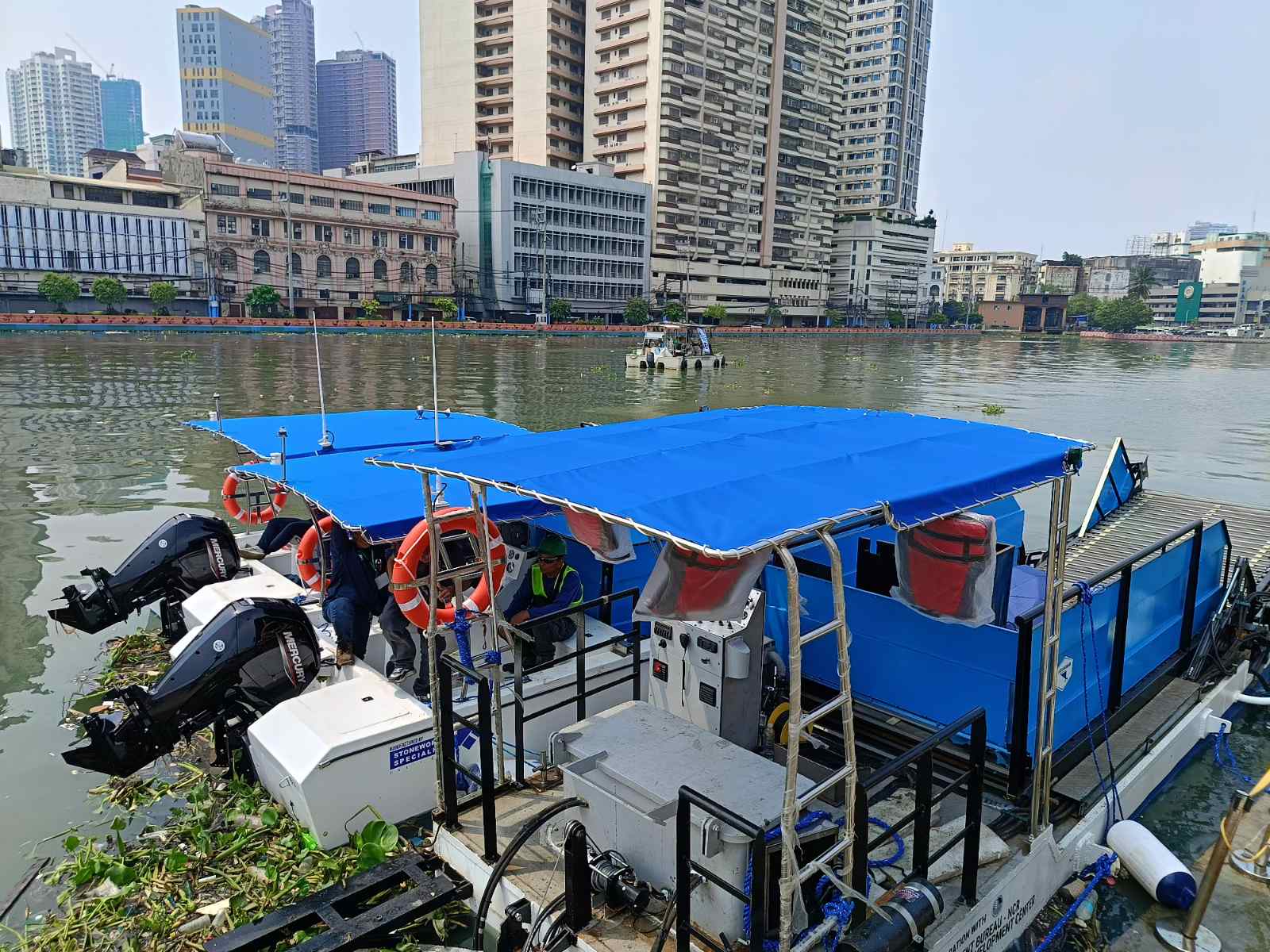
Actual photo of Floating Solid Waste Collector System -- Harvester. (Sonny Daanoy/MB)

This innovative technology was designed to efficiently remove, collect, and transfer water hyacinth and other solid waste from rivers and estuaries in Metro Manila.

Developed by DOST-MIRDC and funded by DENR, its launch is a significant highlight of the Environment Month celebration.

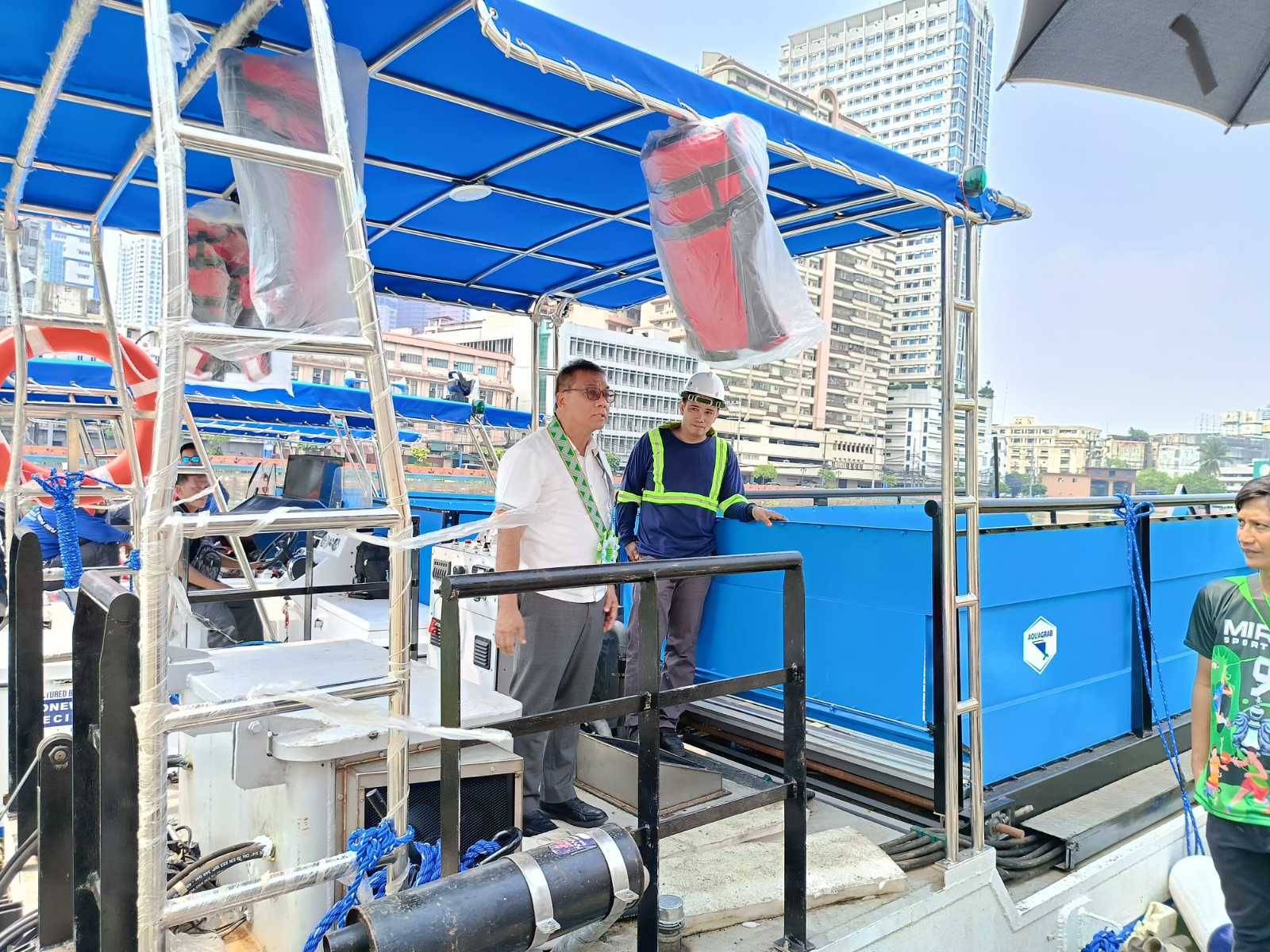
On the sidelines of the event, DOST Secretary Renato Solidum explained the initiative, emphasizing the roles of the Harvester, which collects the solid waste, and the Barge, which transfers the collected waste to dry areas.

"This DOST, in tandem with DENR, will help in cleaning the Pasig River and Laguna Lake," Solidum said in a mix of English and Filipino.

"And of course, to support the overall efforts of our government to clean up the Pasig River system," he added.

The DOST official noted that the actual cost of this floating solid waste collector system if imported, is P15 million, but since it was locally made, it costs P7 to P8 million.
viber_image_2024-06-13_17-53-55-848.jpg
DOST Secretary Renato Solidum explained the new Floating Solid Waste Collector System to the media. (Sonny Daanoy/ MB)

"Well, P15 million is usually imported. So, here, it's about P8 million to P7 million. If it's mass-produced, it might be cheaper," Solidum said.

Meanwhile, DENR-Environmental Management Bureau (DENR-EMB) Regional Director Atty. Michael Drake P. Matias explained to the media that the harvester can collect a huge amount of waste materials depending on the time of deployment.

Matias also emphasized that, unlike the manual methods of collecting waste from the river system, this project can operate continuously as long as there is an efficient diesel supply.

Technical specifications

The equipment has two parts: the "harvester" and the "barge."

The "harvester" has a steel frame with an eight cubic meter (m³) capacity and a harvesting rate of 1.5 cubic meters per minute (m³/min).

It also has a five-knot speed, 140 horsepower (hp) diesel engine, and 600 millimeters (mm) propeller diameter.

Meanwhile, the "barge" was made of fiberglass-reinforced plastic (FRP) hull material, has a 5.6 m³ capacity, a 2.5 m³/min unloading rate, and dimensions of 10.7 by 2.5 m.

It also has a 140 hp hydraulic engine, eight knots in speed, and 115 hp outboard motors.

Features

The harvester features an efficient conveyor system, streamlined for effective collection and discharge. Its compact propulsion ensures easy maneuverability, while extended operation capabilities allow for a minimum of eight hours of operation without refueling.

The harvester is designed for optimal performance with multiple modes for enhanced fuel efficiency. Keel cooling maintains optimal engine and hydraulic temperatures, and a precision cutter removes hyacinth roots.

Solenoid-actuated controls provide precise and responsive operation.

Meanwhile, the barge features lightweight FRP construction, ensuring durability and ease of handling.

Its compact outboard motor enhances speed, making it highly efficient. Versatile in transport, the barge can be transferred easily by land or water with the included trailer.

To improve them further, these machines remained under testing for a few months.

Related Tags

DENR DOST
ADVERTISEMENT
.most-popular .layout-ratio{ padding-bottom: 79.13%; } @media (min-width: 768px) and (max-width: 1024px) { .widget-title { font-size: 15px !important; } }

{{ articles_filter_1561_widget.title }}

.most-popular .layout-ratio{ padding-bottom: 79.13%; } @media (min-width: 768px) and (max-width: 1024px) { .widget-title { font-size: 15px !important; } }

{{ articles_filter_1562_widget.title }}

.most-popular .layout-ratio{ padding-bottom: 79.13%; } @media (min-width: 768px) and (max-width: 1024px) { .widget-title { font-size: 15px !important; } }

{{ articles_filter_1563_widget.title }}

{{ articles_filter_1564_widget.title }}

.mb-article-details { position: relative; } .mb-article-details .article-body-preview, .mb-article-details .article-body-summary{ font-size: 17px; line-height: 30px; font-family: "Libre Caslon Text", serif; color: #000; } .mb-article-details .article-body-preview iframe , .mb-article-details .article-body-summary iframe{ width: 100%; margin: auto; } .read-more-background { background: linear-gradient(180deg, color(display-p3 1.000 1.000 1.000 / 0) 13.75%, color(display-p3 1.000 1.000 1.000 / 0.8) 30.79%, color(display-p3 1.000 1.000 1.000) 72.5%); position: absolute; height: 200px; width: 100%; bottom: 0; display: flex; justify-content: center; align-items: center; padding: 0; } .read-more-background a{ color: #000; } .read-more-btn { padding: 17px 45px; font-family: Inter; font-weight: 700; font-size: 18px; line-height: 16px; text-align: center; vertical-align: middle; border: 1px solid black; background-color: white; } .hidden { display: none; }
function initializeAllSwipers() { // Get all hidden inputs with cms_article_id document.querySelectorAll('[id^="cms_article_id_"]').forEach(function (input) { const cmsArticleId = input.value; const articleSelector = '#article-' + cmsArticleId + ' .body_images'; const swiperElement = document.querySelector(articleSelector); if (swiperElement && !swiperElement.classList.contains('swiper-initialized')) { new Swiper(articleSelector, { loop: true, pagination: false, navigation: { nextEl: '#article-' + cmsArticleId + ' .swiper-button-next', prevEl: '#article-' + cmsArticleId + ' .swiper-button-prev', }, }); } }); } setTimeout(initializeAllSwipers, 3000); const intersectionObserver = new IntersectionObserver( (entries) => { entries.forEach((entry) => { if (entry.isIntersecting) { const newUrl = entry.target.getAttribute("data-url"); if (newUrl) { history.pushState(null, null, newUrl); let article = entry.target; // Extract metadata const author = article.querySelector('.author-section').textContent.replace('By', '').trim(); const section = article.querySelector('.section-info ').textContent.replace(' ', ' '); const title = article.querySelector('.article-title h1').textContent; // Parse URL for Chartbeat path format const parsedUrl = new URL(newUrl, window.location.origin); const cleanUrl = parsedUrl.host + parsedUrl.pathname; // Update Chartbeat configuration if (typeof window._sf_async_config !== 'undefined') { window._sf_async_config.path = cleanUrl; window._sf_async_config.sections = section; window._sf_async_config.authors = author; } // Track virtual page view with Chartbeat if (typeof pSUPERFLY !== 'undefined' && typeof pSUPERFLY.virtualPage === 'function') { try { pSUPERFLY.virtualPage({ path: cleanUrl, title: title, sections: section, authors: author }); } catch (error) { console.error('ping error', error); } } // Optional: Update document title if (title && title !== document.title) { document.title = title; } } } }); }, { threshold: 0.1 } ); function showArticleBody(button) { const article = button.closest("article"); const summary = article.querySelector(".article-body-summary"); const body = article.querySelector(".article-body-preview"); const readMoreSection = article.querySelector(".read-more-background"); // Hide summary and read-more section summary.style.display = "none"; readMoreSection.style.display = "none"; // Show the full article body body.classList.remove("hidden"); } document.addEventListener("DOMContentLoaded", () => { let loadCount = 0; // Track how many times articles are loaded const offset = [1, 2, 3, 4, 5, 6, 7, 8, 9, 10]; // Offset values const currentUrl = window.location.pathname.substring(1); let isLoading = false; // Prevent multiple calls if (!currentUrl) { console.log("Current URL is invalid."); return; } const sentinel = document.getElementById("load-more-sentinel"); if (!sentinel) { console.log("Sentinel element not found."); return; } function isSentinelVisible() { const rect = sentinel.getBoundingClientRect(); return ( rect.top < window.innerHeight && rect.bottom >= 0 ); } function onScroll() { if (isLoading) return; if (isSentinelVisible()) { if (loadCount >= offset.length) { console.log("Maximum load attempts reached."); window.removeEventListener("scroll", onScroll); return; } isLoading = true; const currentOffset = offset[loadCount]; window.loadMoreItems().then(() => { let article = document.querySelector('#widget_1690 > div:nth-last-of-type(2) article'); intersectionObserver.observe(article) loadCount++; }).catch(error => { console.error("Error loading more items:", error); }).finally(() => { isLoading = false; }); } } window.addEventListener("scroll", onScroll); });

Sign up by email to receive news.