







Trump becomes first former US president to be convicted of felony crimes


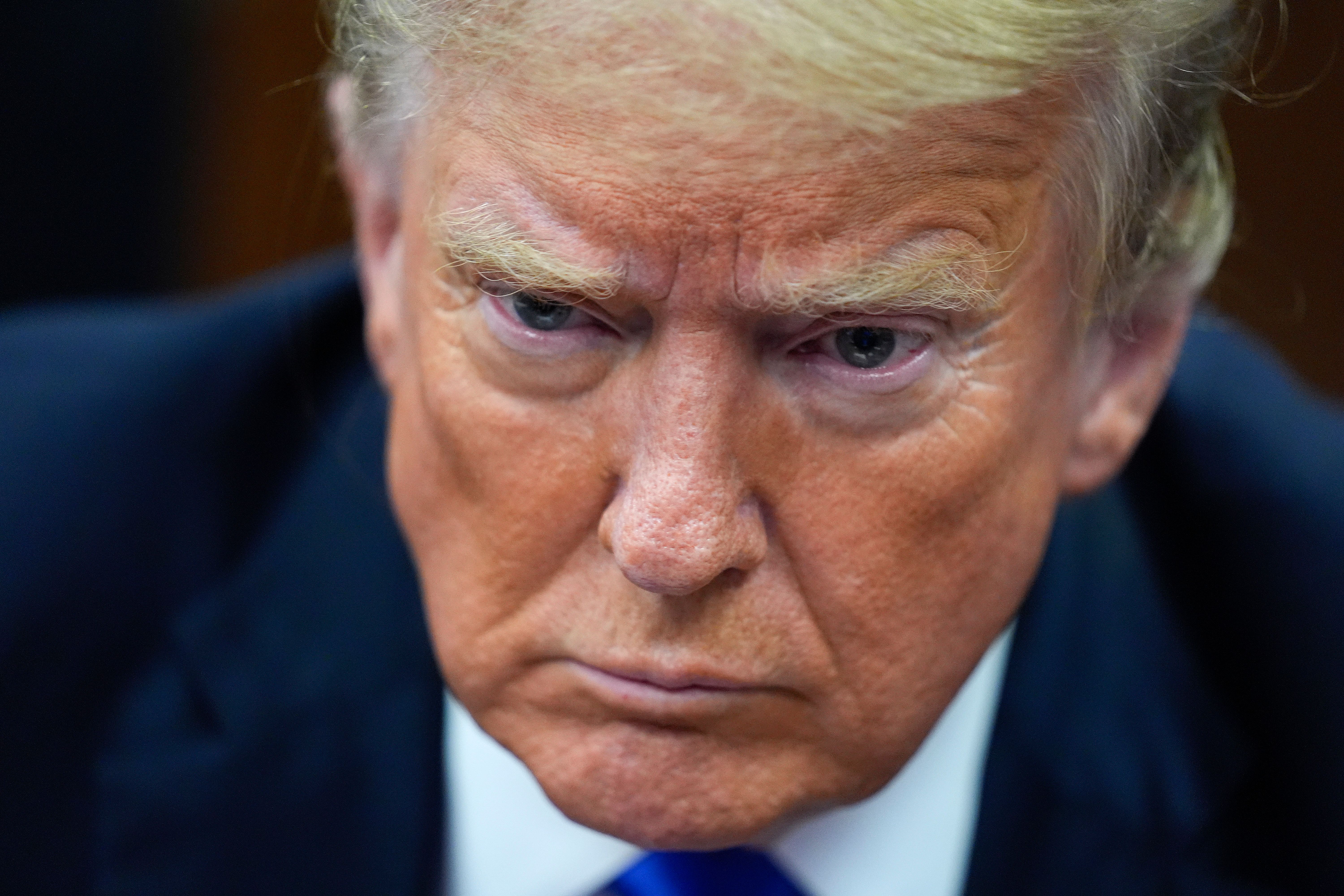
Former President Donald Trump appears at Manhattan criminal court in New York, Thursday, May 30, 2024. (AP Photo/Seth Wenig, Pool)
NEW YORK — Former President Donald Trump on Thursday was found guilty on all 34 felony counts in his criminal hush money trial.
It was the first time a former U.S. president was ever tried or convicted in a criminal case, and was the first of Trump’s four indictments to reach trial.
Prosecutors accused Trump of falsifying internal business records to cover up hush money payments tied to an alleged scheme to bury stories that might torpedo his 2016 White House bid.
At the heart of the charges were reimbursements paid to Trump’s former lawyer Michael Cohen for a $130,000 hush money payment to porn actor Stormy Daniels in exchange for not going public with her claim about a 2006 sexual encounter with Trump.
Prosecutors said the reimbursements were falsely logged as “legal expenses” to hide the true nature of the transactions.
The charges Trump faces are punishable by up to four years in prison. He has denied any wrongdoing and had pleaded not guilty.
Judge Juan M. Merchan has set Trump’s sentencing for July 11.
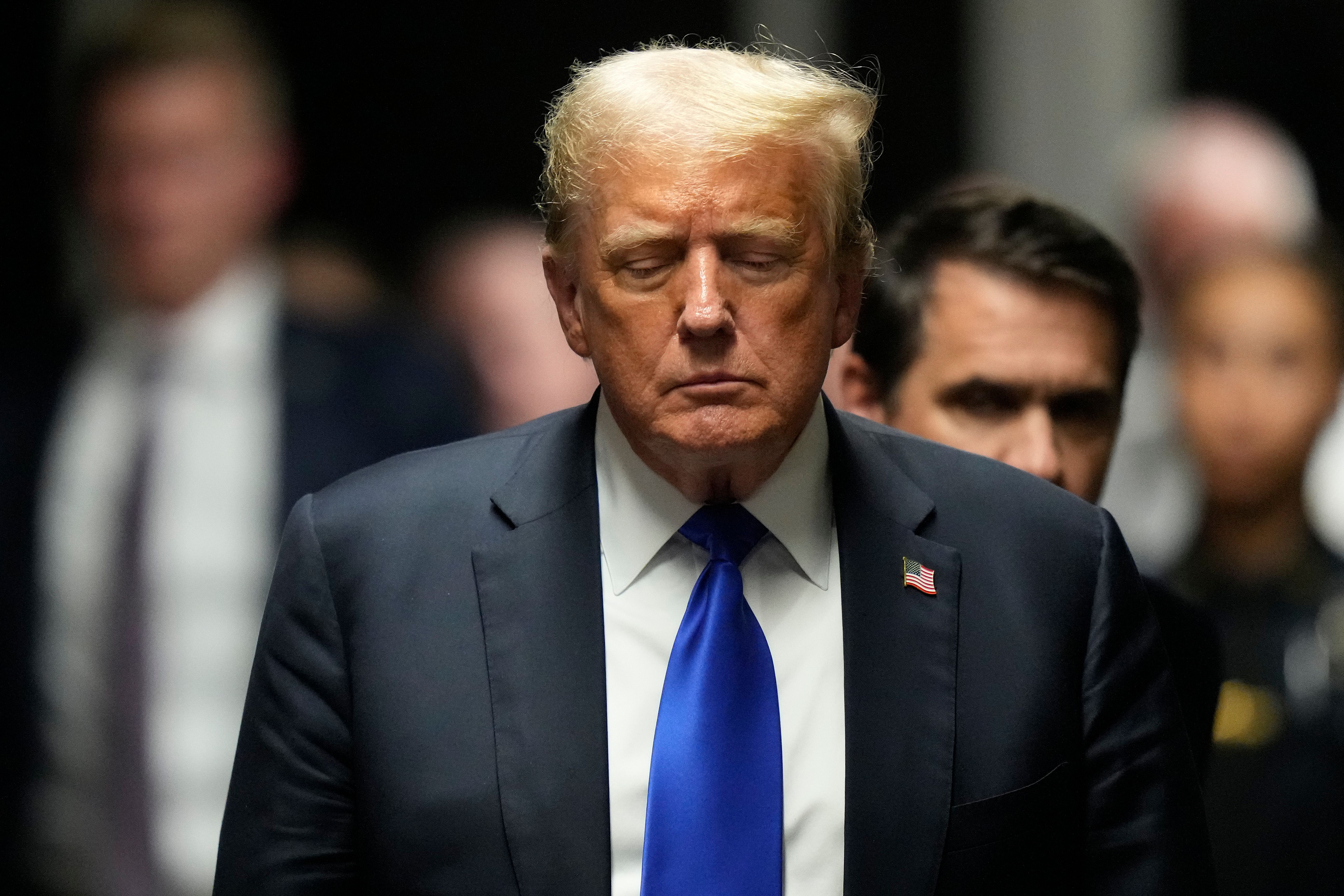
Former President Donald Trump walks to make comments to members of the media after being found guilty on 34 felony counts of falsifying business records in the first degree at Manhattan Criminal Court, Thursday, May 30, 2024, in New York. Donald Trump became the first former president to be convicted of felony crimes as a New York jury found him guilty of 34 felony counts of falsifying business records in a scheme to illegally influence the 2016 election through hush money payments to a porn actor who said the two had sex. (AP Photo/Seth Wenig, Pool)
Trump lawyer to appeal
Todd Blanche, Donald Trump's lawyer in his hush money trial, said in an interview after the verdict that he expects to appeal the trial judge’s decision not to recuse himself.
Asked on Fox News on Thursday night if he thought Trump got a fair trial, Blanche responded: “No, I don’t think so.”
Trump and his lawyers repeatedly argued Judge Juan M. Merchan should not have presided over the case, suggesting he had shown signs of bias.
Donald Trump left Trump Tower shortly before 8 p.m. Thursday night to attend a fundraiser at a private residence in New York City, according to a person familiar with his plans who was not authorized to speak publicly.
The fundraiser, held at a private residence in Manhattan, had been scheduled by his campaign before it was known that a verdict would be coming Thursday.
Trump's in-person event came as the campaign’s online fundraising platform briefly crashed shortly after the verdict came down. It was back up and running Thursday night.
Could Trump see prison time?
The big question now is whether Donald Trump could go to prison. The answer is uncertain.
Judge Juan M. Merchan set sentencing for July 11, just days before Republicans are set to formally nominate him for president.
The charge of falsifying business records is a Class E felony in New York, the lowest tier of felony charges in the state. It is punishable by up to four years in prison, though the punishment would ultimately be up to the judge and there’s no guarantee he would give Trump time bars.
After Donald Trump is sentenced, he can challenge his conviction in an appellate division of New York state’s trial court and possibly, the state’s highest court. His lawyers have already been laying the groundwork for appeals with objections to the charges and rulings at trial.
The defense has accused the judge in the trial of bias, citing his daughter’s work heading a firm whose clients have included President Joe Biden, Vice President Kamala Harris and other Democrats. The judge refused the defense’s request to remove himself from the case, saying he was certain of his “ability to be fair and impartial.”
Trump’s lawyers may also raise on appeal the judge’s ruling limiting the testimony of a potential defense expert witness. The defense wanted to call Bradley Smith, a Republican law professor who served on the Federal Election Commission, to rebut the prosecution’s contention that the hush money payments amounted to campaign finance violations.
But the defense ended up not having him testify after the judge ruled he could give general background on the FEC but couldn’t interpret how federal campaign finance laws apply to the facts of Trump’s case or opine on whether Trump’s alleged actions violate those laws.
There are often guardrails around expert testimony on legal matters, on the basis that it’s up to a judge — not an expert hired by one side or the other — to instruct jurors on applicable laws.
The defense may also argue that jurors were improperly allowed to hear sometimes graphic testimony from porn actor Stormy Daniels about her alleged sexual encounter with him in 2006. The defense unsuccessfully pushed for a mistrial over the tawdry details prosecutors elicited from Daniels.
Defense lawyer Todd Blanche argued Daniels’ description of a power imbalance with the older, taller Trump, was a “dog whistle for rape,” irrelevant to the charges at hand, and “the kind of testimony that makes it impossible to come back from.”