






 Philippines
National
Marcos calls on Brunei's energy sector: Take advantage of renewable energy growth in PH
Philippines
National
Marcos calls on Brunei's energy sector: Take advantage of renewable energy growth in PH
Marcos calls on Brunei's energy sector: Take advantage of renewable energy growth in PH


At A Glance
- Marcos said the government is trying to strengthen the whole system of power availability.
President Marcos has urged Brunei's energy business leaders to invest in Philippine renewable energy (RE), saying the country is making progress in the "very promising" sector.
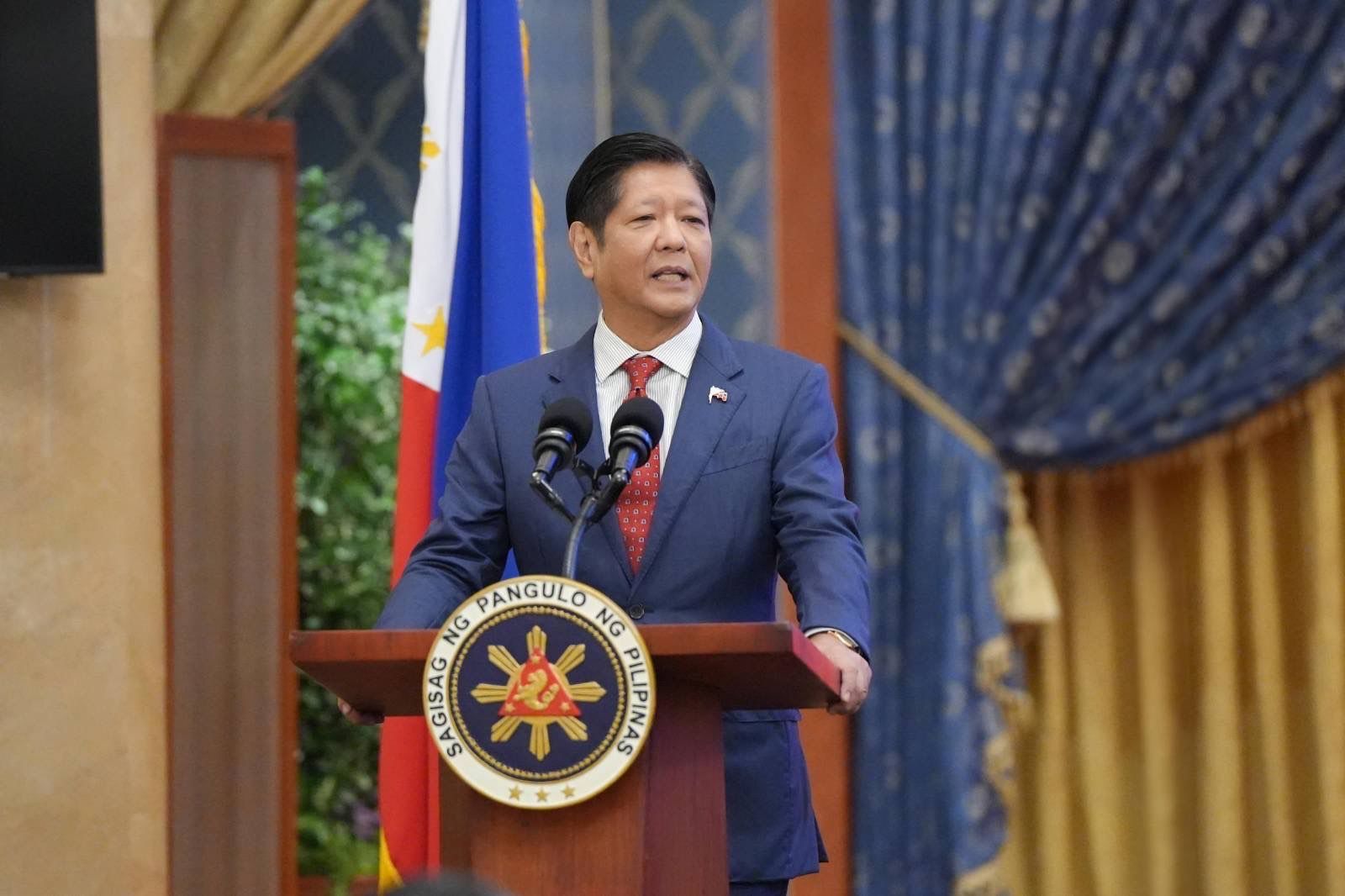
Marcos said this during his meeting with business leaders in Brunei Darussalam's energy sector on the sidelines of this State Visit to the Sultanate on May 29.
In his remarks, the President cited the Philippine government's efforts to develop other energy sources and minimize the use of fossil fuels.
“We now add to this the transformation of fossil fuels to renewables which is, I think, something that everyone is having to deal with,” he said.
“I’m sure everyone is aware— the Philippines is now trying to transform our whole energy from the production side to the transmission side, to the distribution side,” he added.
Marcos said the energy sector was previously divided into three — the production side, the transmission, and the distribution at the local level. He likewise cited how some of the huge gas and oil deposits are located in “conflict areas” of the West Philippine Sea.
“That’s why we tried to open up some sources. We have our own source but we need to further develop and explore some of the potential gas fuels that are in the Philippines,” he said.
“That’s why we are trying to diversify our suppliers. And, hopefully, we take to heart the lessons that we learned during the pandemic when supply chains suddenly were shown to be more vulnerable, much more vulnerable than we had imagined,” he added.
During the meeting, President Marcos also discussed the direction the Philippines is heading regarding the energy sector development. He said one of the problems of potential investors in the Philippines is the cost of power and energy.
“There are many aspects to that problem. Our transmission system, which has fallen behind in terms of development, and in terms of even their contractual obligations to the government in terms of building additional transmission lines. But we are working very hard on that,” he assured prospective investors.
“I think we’ve come up with some solutions with the sovereign fund getting involved in that. So we hope to put additional capital into the system to accelerate the production [and] the putting up of the towers and the transmission lines,” he added.
Marcos said the government is trying to strengthen the whole system of power availability.
“[We] are all doing this with the understanding that any form of industrialization of economic development requires an increase in — number one, the actual availability of power and, second, the cost of it and the efficiency in which this is distributed,” he said.
“We are just suffering the aftereffects of a typhoon. And immediately the power systems in those areas that were hit by the typhoon once again had to be turned off. And we are now slowly having to bring it back because we have to make sure that lines are still in good shape,” he said.