ADVERTISEMENT

Align economic goals with ecological sustainability

Published May 28, 2024 04:13 pm

E CARTOON MAY 29, 2024 (2).jpg


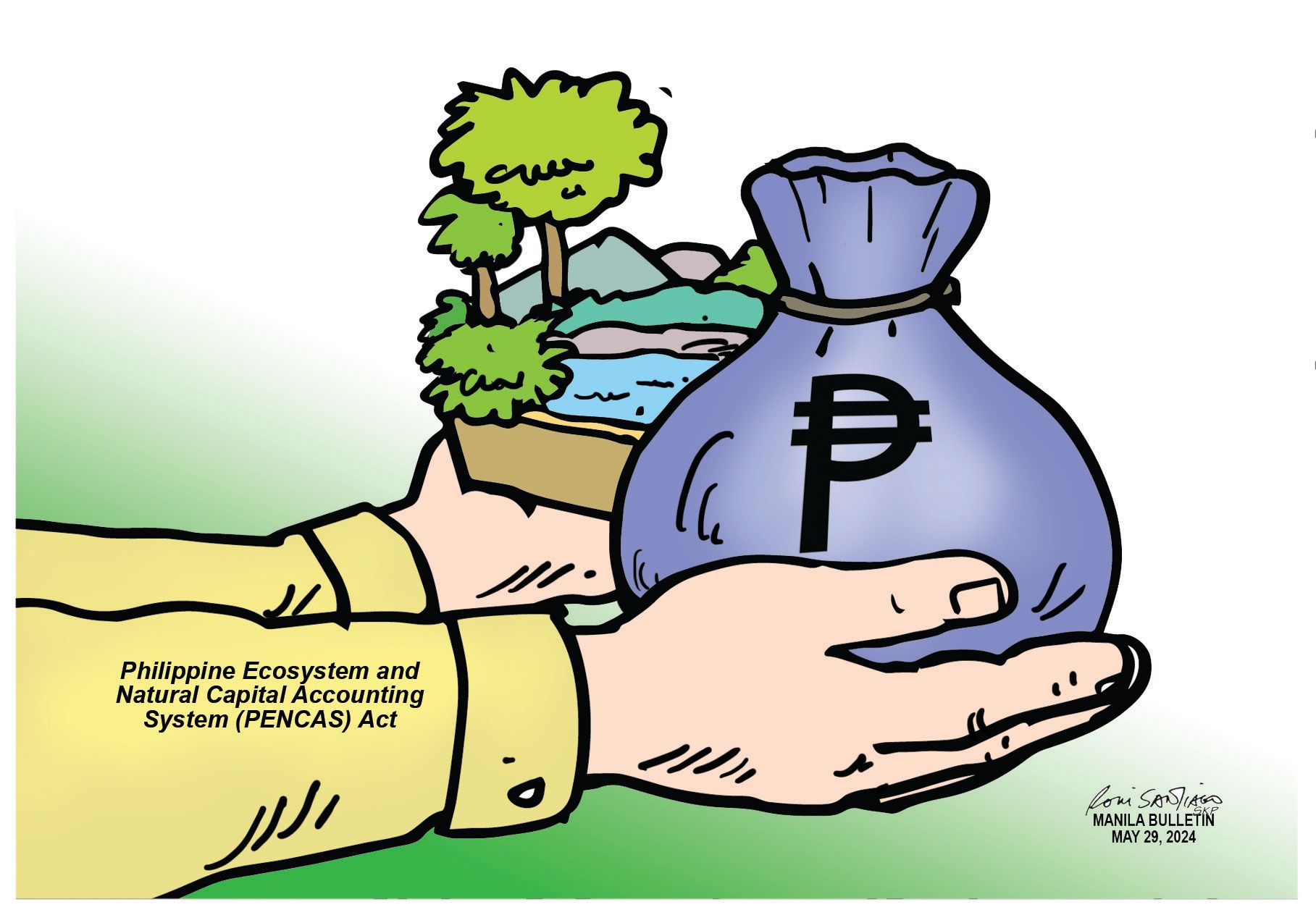
The signing into law of Republic Act No. 11995, known as the Philippine Ecosystem and Natural Capital Accounting System (PENCAS) Act, is a significant milestone for the country. The newly signed law seeks to establish a comprehensive information system and accounting framework that takes into consideration the role of our natural capital and its impact on the economy.


Natural capital refers to the stock of natural resources and ecosystems that provide essential services to society. These include forests, wetlands, oceans, biodiversity, and clean air and water.


By quantifying and valuing natural capital, the PENCAS Act enables policymakers, businesses, and communities to make informed decisions that balance economic growth with environmental conservation.


The PENCAS Act recognizes that a healthy environment is fundamental to economic prosperity. It provides a systematic approach to account for natural resources, allowing us to assess their contribution to our economy.


According to the World Bank, the global economy could lose $US 2.7 trillion by 2030 and the gross domestic product (GDP) of low-income countries could decline by 10 percent if the ecosystem fails. This is how crucial the PENCAS Act is for the Philippines.


With data on natural capital gathered under the PENCAS Act, we can better understand the economic benefits derived from ecosystem services. For instance, forests contribute to timber production, carbon sequestration, and ecotourism. Coastal ecosystems protect against storm surges and support fisheries. Biodiversity enhances agricultural productivity and pharmaceutical research.


By integrating natural capital accounting into policy and decision-making, we can optimize resource use, reduce waste, and promote sustainable industries.


The PENCAS Act mandates the use of natural capital accounts in development planning, programming, and policy analysis. This ensures that environmental considerations are embedded in our national strategies.


Policymakers can assess trade-offs between economic development and environmental protection. For instance, when planning infrastructure projects, they can evaluate the impact on ecosystems and biodiversity. By aligning economic goals with ecological sustainability, we create a roadmap for inclusive and resilient growth.


Natural capital plays a critical role in climate change adaptation and mitigation. Healthy ecosystems sequester carbon, regulate water flow, and buffer against extreme weather events. According to the National Oceanic and Atmospheric Administration of the United States’ Department of Commerce, carbon is the chemical backbone of life on Earth. Carbon compounds regulate the Earth’s temperature, make up the food that sustains us, and provide energy that fuels our global economy.


The PENCAS Act encourages investments in ecosystem restoration and conservation. Protecting mangroves, reforestation efforts, and sustainable land management contribute to climate resilience.


As the Philippines faces climate-related challenges, understanding our natural capital becomes essential for building adaptive communities.


The signing into law of the PENCAS Act is a welcome development as it aligns with international agreements such as the United Nations’ Sustainable Development Goals (SDGs) and the Convention on Biological Diversity.


By implementing natural capital accounting, the Philippines demonstrates its commitment to global environmental targets and enhances our reputation as responsible stewards of nature.


The PENCAS Act will serve as the country’s transformative tool for sustainable development. By valuing our natural capital, we pave the way for a resilient economy, healthier ecosystems, and a brighter future for generations to come. So let’s embrace this new law and work collectively to preserve our precious environment while fostering economic growth. 

Related Tags

EDITORIAL
ADVERTISEMENT
.most-popular .layout-ratio{ padding-bottom: 79.13%; } @media (min-width: 768px) and (max-width: 1024px) { .widget-title { font-size: 15px !important; } }

{{ articles_filter_1561_widget.title }}

.most-popular .layout-ratio{ padding-bottom: 79.13%; } @media (min-width: 768px) and (max-width: 1024px) { .widget-title { font-size: 15px !important; } }

{{ articles_filter_1562_widget.title }}

.most-popular .layout-ratio{ padding-bottom: 79.13%; } @media (min-width: 768px) and (max-width: 1024px) { .widget-title { font-size: 15px !important; } }

{{ articles_filter_1563_widget.title }}

{{ articles_filter_1564_widget.title }}

.mb-article-details { position: relative; } .mb-article-details .article-body-preview, .mb-article-details .article-body-summary{ font-size: 17px; line-height: 30px; font-family: "Libre Caslon Text", serif; color: #000; } .mb-article-details .article-body-preview iframe , .mb-article-details .article-body-summary iframe{ width: 100%; margin: auto; } .read-more-background { background: linear-gradient(180deg, color(display-p3 1.000 1.000 1.000 / 0) 13.75%, color(display-p3 1.000 1.000 1.000 / 0.8) 30.79%, color(display-p3 1.000 1.000 1.000) 72.5%); position: absolute; height: 200px; width: 100%; bottom: 0; display: flex; justify-content: center; align-items: center; padding: 0; } .read-more-background a{ color: #000; } .read-more-btn { padding: 17px 45px; font-family: Inter; font-weight: 700; font-size: 18px; line-height: 16px; text-align: center; vertical-align: middle; border: 1px solid black; background-color: white; } .hidden { display: none; }
function initializeAllSwipers() { // Get all hidden inputs with cms_article_id document.querySelectorAll('[id^="cms_article_id_"]').forEach(function (input) { const cmsArticleId = input.value; const articleSelector = '#article-' + cmsArticleId + ' .body_images'; const swiperElement = document.querySelector(articleSelector); if (swiperElement && !swiperElement.classList.contains('swiper-initialized')) { new Swiper(articleSelector, { loop: true, pagination: false, navigation: { nextEl: '#article-' + cmsArticleId + ' .swiper-button-next', prevEl: '#article-' + cmsArticleId + ' .swiper-button-prev', }, }); } }); } setTimeout(initializeAllSwipers, 3000); const intersectionObserver = new IntersectionObserver( (entries) => { entries.forEach((entry) => { if (entry.isIntersecting) { const newUrl = entry.target.getAttribute("data-url"); if (newUrl) { history.pushState(null, null, newUrl); let article = entry.target; // Extract metadata const author = article.querySelector('.author-section').textContent.replace('By', '').trim(); const section = article.querySelector('.section-info ').textContent.replace(' ', ' '); const title = article.querySelector('.article-title h1').textContent; // Parse URL for Chartbeat path format const parsedUrl = new URL(newUrl, window.location.origin); const cleanUrl = parsedUrl.host + parsedUrl.pathname; // Update Chartbeat configuration if (typeof window._sf_async_config !== 'undefined') { window._sf_async_config.path = cleanUrl; window._sf_async_config.sections = section; window._sf_async_config.authors = author; } // Track virtual page view with Chartbeat if (typeof pSUPERFLY !== 'undefined' && typeof pSUPERFLY.virtualPage === 'function') { try { pSUPERFLY.virtualPage({ path: cleanUrl, title: title, sections: section, authors: author }); } catch (error) { console.error('ping error', error); } } // Optional: Update document title if (title && title !== document.title) { document.title = title; } } } }); }, { threshold: 0.1 } ); function showArticleBody(button) { const article = button.closest("article"); const summary = article.querySelector(".article-body-summary"); const body = article.querySelector(".article-body-preview"); const readMoreSection = article.querySelector(".read-more-background"); // Hide summary and read-more section summary.style.display = "none"; readMoreSection.style.display = "none"; // Show the full article body body.classList.remove("hidden"); } document.addEventListener("DOMContentLoaded", () => { let loadCount = 0; // Track how many times articles are loaded const offset = [1, 2, 3, 4, 5, 6, 7, 8, 9, 10]; // Offset values const currentUrl = window.location.pathname.substring(1); let isLoading = false; // Prevent multiple calls if (!currentUrl) { console.log("Current URL is invalid."); return; } const sentinel = document.getElementById("load-more-sentinel"); if (!sentinel) { console.log("Sentinel element not found."); return; } function isSentinelVisible() { const rect = sentinel.getBoundingClientRect(); return ( rect.top < window.innerHeight && rect.bottom >= 0 ); } function onScroll() { if (isLoading) return; if (isSentinelVisible()) { if (loadCount >= offset.length) { console.log("Maximum load attempts reached."); window.removeEventListener("scroll", onScroll); return; } isLoading = true; const currentOffset = offset[loadCount]; window.loadMoreItems().then(() => { let article = document.querySelector('#widget_1690 > div:nth-last-of-type(2) article'); intersectionObserver.observe(article) loadCount++; }).catch(error => { console.error("Error loading more items:", error); }).finally(() => { isLoading = false; }); } } window.addEventListener("scroll", onScroll); });

Sign up by email to receive news.