






 Philippines
National
Senate leadership change enhances chances of economic Cha-cha, says Lagman
Philippines
National
Senate leadership change enhances chances of economic Cha-cha, says Lagman
Senate leadership change enhances chances of economic Cha-cha, says Lagman


At A Glance
- Despite his firm opposition to the proposed amendments to the Constitution's economic provisions, Albay 1st district Rep. Edcel Lagman admitted that the Senate's new leadership may improve the chances of its eventual approval.
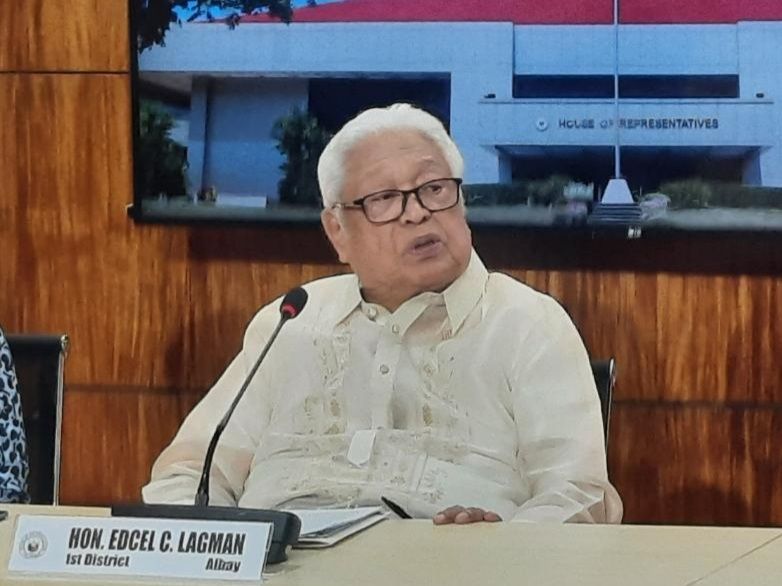 Albay 1st district Rep. Edcel Lagman (Ellson Quismorio/ MANILA BULLETIN)
Despite his firm opposition to the proposed amendments to the Constitution’s economic provisions, Albay 1st district Rep. Edcel Lagman admitted that the Senate’s new leadership may improve the chances of its eventual approval.
“Itong usapin sa Cha-cha ay tapos na sa mababang kapulungan (This Cha-cha issue is already over in the lower house) and I have said my piece then and it’s always possible that a change of leadership will also enhance the chances of Charter change,” Lagman said in a recent press briefing.
The veteran lawmaker is referring to the Resolution of Both Houses (RBH) No. 7, which proposes amendments to supposedly restrictive economic provisions in the Constitution.
Last March, the House of Representatives approved RBH No.7 on third and final reading.
However, the Senate’s counterpart version, RBH No. 6, remains pending at the subcommittee level.
Newly-elected Senate President Francis “Chiz” Escudero—who replaced Senator Juan Miguel “Migz” Zubiri after he resigned—says he wants to “repair” the relationship between the two chambers first before proceeding with Cha-cha talks.
Lawmakers from both the Senate and the House were recently involved in a “word war” over the proposed amendments.
Escudero himself remains hesitant in changing the 1987 Constitution, given the public’s doubts about certain political motives of some politicians.
For Lagman, this simply means that the Cha-cha issue is a matter of “wait and see”.
“Let the development unfold in the Senate because the House has already approved the Cha-cha resolution,” he said.
Once the upper chamber ultimately decides on what will happen with the proposed amendments, the Albay congressman said Congress will face another impasse--this time on the matter of voting jointly or separately.
“That issue is not resolved in the Constitution. The Constitution is ambiguous. It is possible that issue of joint or separate voting will go to the Supreme Court (SC) for a final decision,” he explained.
In a previous statement, Lagman noted that the two chambers should meet as a Constitutional Assembly (Con-Ass) and then vote jointly on the agreed-upon amendments.
He said doing so would leave out any form of partisanship because members of Congress would not act as legislators but rather as Con-Ass members entitled to one individual vote.
“Iba ‘yung trabaho ng Kongreso. Sapagkat sa Kongreso, kami ay nagle-legislate ng batas. Iba rin ‘yung trabaho ng Constituent Assembly na magpropose ng amendments to the Constitution,” Lagman underscored.
(Congress has a different job. Because in Congress, we legislate the law. The job of the Constituent Assembly is also different because it’s to propose amendments to the Constitution.)