ADVERTISEMENT

Norway further tightens its restrictions on the entry of Russians

Published May 23, 2024 11:48 am
AP24144267770380.jpg
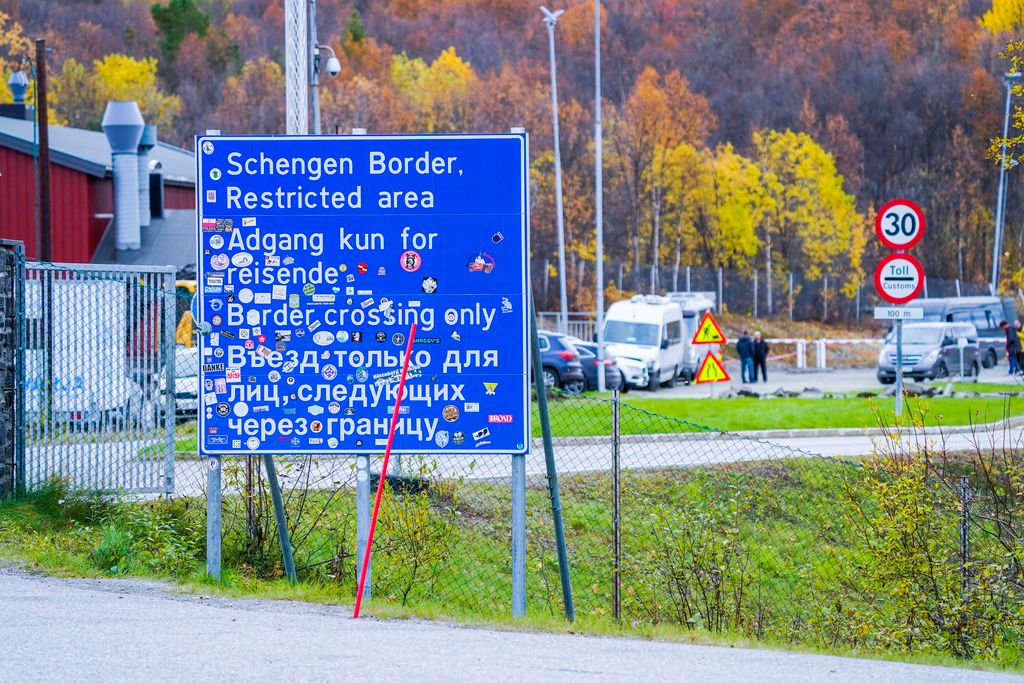
FILE - A sign indicating the Storskog border crossing between Russia and Norway is pictured near Kirkenes, Norway, on Sept. 28, 2022. Norway on Thursday May 23, 2024 said it would further tighten entry rules from Russia, saying those with tourist visas issued by Norway before regulations were strengthened in spring 2022 or issued by another European country, will be barred from entering the Scandinavian country as of next week. (Lise Aserud/NTB Scanpix via AP, File)


COPENHAGEN, Denmark (AP) — Norway on Thursday said it will further tighten its restrictions on the entry of people from Russia, saying those with tourist visas issued by Norway before regulations were tightened in 2022 or issued by another European country will be barred from entering the Scandinavian country as of next week.
Justice Minister Emilie Enger Mehl said the tightening was a response to "Russia's illegal war of aggression against Ukraine."
Norway has a 198-kilometer (123-mile) -long border with Russia in the Arctic.
Last week, Aftenposten, a major Norwegian daily, said Norway's domestic security agency, known by the acronym PST, was worried that Russians involved in intelligence gathering were entering at the sole border crossing at Storskog near the town of Kirkenes.
Inger Haugland, head of counterespionage for PST, said Wednesday that "Russia now sees itself benefiting from carrying out sabotage in European countries in order to weaken Ukrainian defense capabilities." He gave no further details.
On Wednesday, PST updated its overall risk assessment, saying "it appears" that the threat of sabotage has increased against Norwegian companies producing weaponry that goes to Ukraine.
Enger Mehl said exceptions to the new entry restrictions will be made, including for people visiting close relatives in Norway or for Russians who work or study in Norway. Those who live along the border have border resident certificates. Other Russians who plan to enter Norway for tourism or "other non-essential purposes" will be refused entry, he said. The ban takes effect next Wednesday.
"Of course, such decisions cannot remain unanswered," Kremlin spokesperson Dmitry Peskov said. "The decision is purely discriminatory."
Although not a member of the European Union, Norway is part of the European ID-check-free zone known as the Schengen Area, which allows more than 400 million Europeans and visitors to move within the zone without showing travel documents.
Two years ago, the Norwegian government stopped issuing tourist visas to Russians. In September, it barred Russian-registered passenger cars from entering the Scandinavian country, mirroring EU sanctions against Moscow over its war on Ukraine.
 

Related Tags

WORLDNEWS
ADVERTISEMENT
.most-popular .layout-ratio{ padding-bottom: 79.13%; } @media (min-width: 768px) and (max-width: 1024px) { .widget-title { font-size: 15px !important; } }

{{ articles_filter_1561_widget.title }}

.most-popular .layout-ratio{ padding-bottom: 79.13%; } @media (min-width: 768px) and (max-width: 1024px) { .widget-title { font-size: 15px !important; } }

{{ articles_filter_1562_widget.title }}

.most-popular .layout-ratio{ padding-bottom: 79.13%; } @media (min-width: 768px) and (max-width: 1024px) { .widget-title { font-size: 15px !important; } }

{{ articles_filter_1563_widget.title }}

{{ articles_filter_1564_widget.title }}

.mb-article-details { position: relative; } .mb-article-details .article-body-preview, .mb-article-details .article-body-summary{ font-size: 17px; line-height: 30px; font-family: "Libre Caslon Text", serif; color: #000; } .mb-article-details .article-body-preview iframe , .mb-article-details .article-body-summary iframe{ width: 100%; margin: auto; } .read-more-background { background: linear-gradient(180deg, color(display-p3 1.000 1.000 1.000 / 0) 13.75%, color(display-p3 1.000 1.000 1.000 / 0.8) 30.79%, color(display-p3 1.000 1.000 1.000) 72.5%); position: absolute; height: 200px; width: 100%; bottom: 0; display: flex; justify-content: center; align-items: center; padding: 0; } .read-more-background a{ color: #000; } .read-more-btn { padding: 17px 45px; font-family: Inter; font-weight: 700; font-size: 18px; line-height: 16px; text-align: center; vertical-align: middle; border: 1px solid black; background-color: white; } .hidden { display: none; }
function initializeAllSwipers() { // Get all hidden inputs with cms_article_id document.querySelectorAll('[id^="cms_article_id_"]').forEach(function (input) { const cmsArticleId = input.value; const articleSelector = '#article-' + cmsArticleId + ' .body_images'; const swiperElement = document.querySelector(articleSelector); if (swiperElement && !swiperElement.classList.contains('swiper-initialized')) { new Swiper(articleSelector, { loop: true, pagination: false, navigation: { nextEl: '#article-' + cmsArticleId + ' .swiper-button-next', prevEl: '#article-' + cmsArticleId + ' .swiper-button-prev', }, }); } }); } setTimeout(initializeAllSwipers, 3000); const intersectionObserver = new IntersectionObserver( (entries) => { entries.forEach((entry) => { if (entry.isIntersecting) { const newUrl = entry.target.getAttribute("data-url"); if (newUrl) { history.pushState(null, null, newUrl); let article = entry.target; // Extract metadata const author = article.querySelector('.author-section').textContent.replace('By', '').trim(); const section = article.querySelector('.section-info ').textContent.replace(' ', ' '); const title = article.querySelector('.article-title h1').textContent; // Parse URL for Chartbeat path format const parsedUrl = new URL(newUrl, window.location.origin); const cleanUrl = parsedUrl.host + parsedUrl.pathname; // Update Chartbeat configuration if (typeof window._sf_async_config !== 'undefined') { window._sf_async_config.path = cleanUrl; window._sf_async_config.sections = section; window._sf_async_config.authors = author; } // Track virtual page view with Chartbeat if (typeof pSUPERFLY !== 'undefined' && typeof pSUPERFLY.virtualPage === 'function') { try { pSUPERFLY.virtualPage({ path: cleanUrl, title: title, sections: section, authors: author }); } catch (error) { console.error('ping error', error); } } // Optional: Update document title if (title && title !== document.title) { document.title = title; } } } }); }, { threshold: 0.1 } ); function showArticleBody(button) { const article = button.closest("article"); const summary = article.querySelector(".article-body-summary"); const body = article.querySelector(".article-body-preview"); const readMoreSection = article.querySelector(".read-more-background"); // Hide summary and read-more section summary.style.display = "none"; readMoreSection.style.display = "none"; // Show the full article body body.classList.remove("hidden"); } document.addEventListener("DOMContentLoaded", () => { let loadCount = 0; // Track how many times articles are loaded const offset = [1, 2, 3, 4, 5, 6, 7, 8, 9, 10]; // Offset values const currentUrl = window.location.pathname.substring(1); let isLoading = false; // Prevent multiple calls if (!currentUrl) { console.log("Current URL is invalid."); return; } const sentinel = document.getElementById("load-more-sentinel"); if (!sentinel) { console.log("Sentinel element not found."); return; } function isSentinelVisible() { const rect = sentinel.getBoundingClientRect(); return ( rect.top < window.innerHeight && rect.bottom >= 0 ); } function onScroll() { if (isLoading) return; if (isSentinelVisible()) { if (loadCount >= offset.length) { console.log("Maximum load attempts reached."); window.removeEventListener("scroll", onScroll); return; } isLoading = true; const currentOffset = offset[loadCount]; window.loadMoreItems().then(() => { let article = document.querySelector('#widget_1690 > div:nth-last-of-type(2) article'); intersectionObserver.observe(article) loadCount++; }).catch(error => { console.error("Error loading more items:", error); }).finally(() => { isLoading = false; }); } } window.addEventListener("scroll", onScroll); });

Sign up by email to receive news.